Which Sharks You Will See On Oahu North Shore Tours
Oahu North Shore shark tours do not chase whatever happens to swim past. They visit deep pelagic water about three miles off Haleiwa where Galapagos and sandbar sharks aggregate year-round, with tiger sharks showing up seasonally in late summer and fall. Here is what the species list, the law and the tour reports all line up on.
Short answer
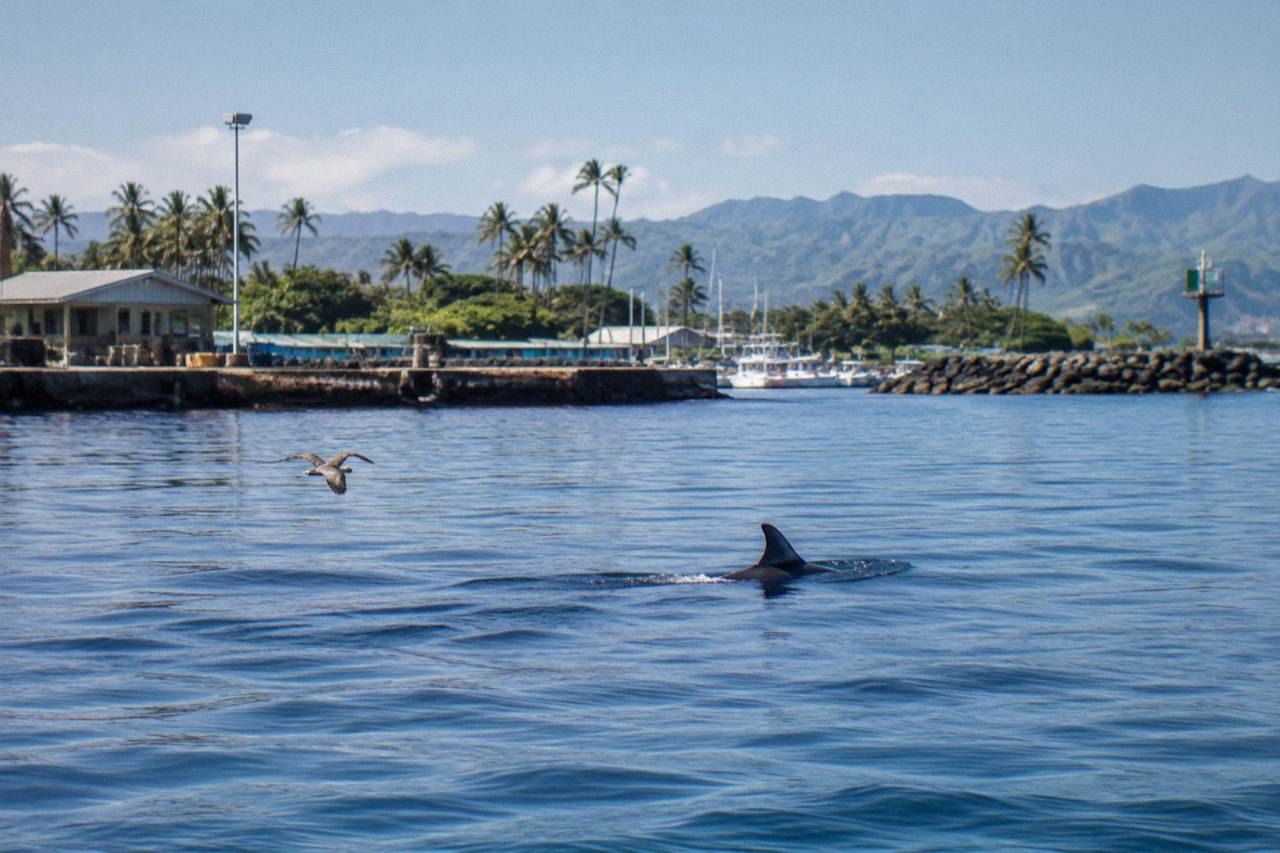
Oahu North Shore tours most consistently report Galapagos sharks and sandbar sharks, which visit the deep-water sites about three miles off Haleiwa year-round. Tiger sharks appear less often, mainly in late summer and fall. Great white sharks are not part of the encounter at all. The species mix comes from DLNR's own Hawaii shark species list plus what operators and recent guests describe.
What Sharks Will You Actually See On An Oahu North Shore Tour?
The two species Oahu North Shore tours report seeing most consistently are the Galapagos shark and the sandbar shark, both of which aggregate in deep pelagic water about three miles off Haleiwa through the year. Tiger sharks appear as a seasonal bonus, mainly from late summer into fall. Everything on the roster comes from DLNR's official Hawaii shark species list cross-checked against operator reports and recent guest reviews, not from marketing copy.
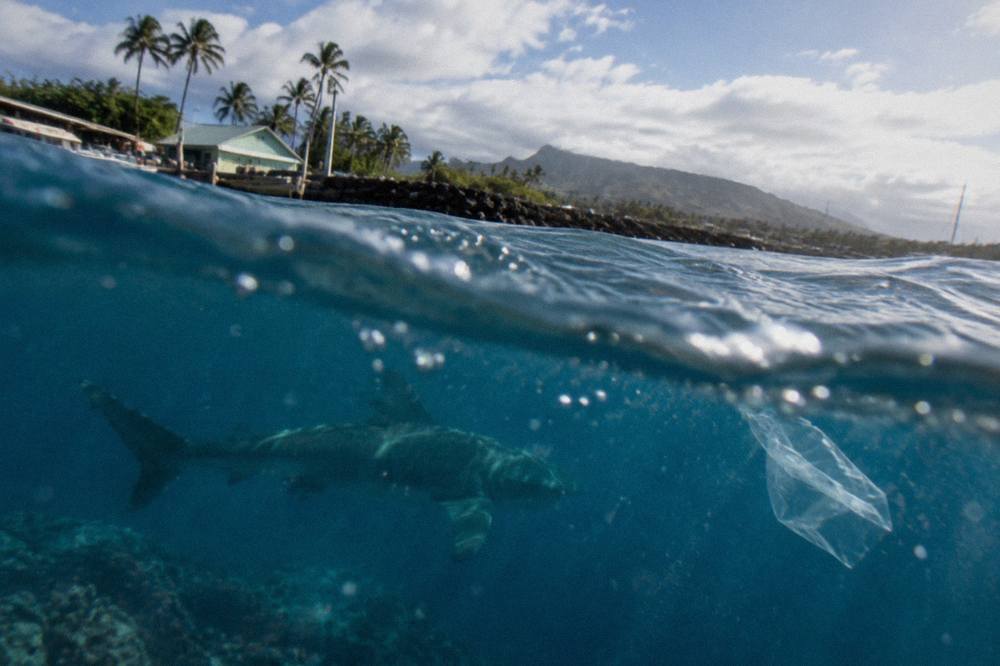
The Hawaii Division of Aquatic Resources maintains an official species list of sharks found in Hawaiian waters, and it is the right place to start. Galapagos sharks (Carcharhinus galapagensis), sandbar sharks (Carcharhinus plumbeus) and tiger sharks (Galeocerdo cuvier) are all on it, alongside reef species like whitetip and blacktip reef sharks, scalloped hammerheads, blue sharks and oceanic whitetips that live elsewhere in the islands. Being on the state list does not mean a species shows up at the tour site, though. What matters is where the boats go and why.
North Shore operators do not work the reefs or the bays. They run roughly three miles offshore from Haleiwa Boat Harbor, past the three-nautical-mile line that divides state from federal waters, and stop over deep blue water where visibility is often described at 150 feet or more. That location is not a comfort choice. It is a legal one, and it shapes the entire species mix, which we will get to in the next section.
Guest reviews from mid-2026 describe groups of Galapagos sharks, sometimes seven to twenty individuals in a single account, gliding calmly around the cage or the swim group. The sharks are curious, approaching within inches of the bars, but reviewers consistently describe them as relaxed rather than aggressive. Sizes reported run roughly in the five-to-fifteen-foot band across the species you meet out there, with Galapagos sharks in the eight-to-twelve-foot range in most accounts.
Here is the honest summary of what the deep-water sites deliver:
| Species | How often tours report it | Typical size at the tour site | IUCN status (per DLNR list) |
|---|---|---|---|
| Galapagos shark | Almost every trip, often several at once | Roughly 8-12 ft in guest reports | Near Threatened |
| Sandbar shark | Very common, frequently alongside Galapagos | Mid-size requiem shark, under 15 ft | Vulnerable |
| Tiger shark | Occasional, seasonal, late summer into fall | Larger when present | Near Threatened |
| Great white shark | Not part of the encounter | Not applicable | Rare winter visitor to Hawaii overall |
If you want the full rundown of the experience itself, from the boat ride to the cage rotation, our what happens on a shark cage dive guide walks through the whole trip step by step.
Why Do The Shark Tours Run Three Miles Offshore?
Hawaii law bans shark feeding in state marine waters, which extend three nautical miles from shore, so commercial tours cannot chum or bait for sharks inside that line. Operators therefore run past the boundary into federal waters, where sharks naturally aggregate around deep-water habitat and the state feeding ban does not apply. The three-mile figure is not a tour operator's marketing line, it is the legal geography of the industry.
The statute is HRS §188-40.6, enacted in 2002. It makes it unlawful to conduct any activity related to the feeding of sharks in state marine waters, with narrow exceptions for non-commercial traditional Hawaiian cultural or religious practices. The official legislative text defines commercial activity broadly, covering charters, tours and guide services, which is exactly what a shark cage operation is. A separate law, HRS §188-40.8, effective January 1, 2022, bans the intentional capture, entanglement or killing of sharks in state waters, a protection statute rather than a tour regulation, but part of the same legal picture.
The practical consequence for a visitor is simple: the water you snorkel in on these trips is deep, blue and pelagic, not a lagoon. The sites sit over water hundreds of feet deep, which is why the visibility is so striking and why the species mix skews toward open-ocean requiem sharks rather than reef species. The sharks are not being fed in state waters, and the aggregation behavior at these sites is tied to natural deep-water habitat and historical fishing-boat activity in the area rather than a daily chum line inside the reef.
The state-federal split also explains the permitting picture. Operators hold commercial use permits through the state's Division of Boating and Ocean Recreation, and reports from around 2025 indicated roughly three commercial permits specifically for shark tours operating out of Haleiwa. A 2026 enforcement case in which an unpermitted North Shore operator drew $10,000 in administrative fines is a reminder that the industry is actively regulated, which works in a visitor's favor: the boats you can book are the permitted ones.
| Zone | Distance from shore | Governing law for shark feeding | What it means for tours |
|---|---|---|---|
| State marine waters | 0 to 3 nautical miles | HRS §188-40.6 bans feeding | No baiting for commercial shark tours |
| Federal waters (EEZ) | 3 to 200 nautical miles | State ban does not apply | Where the cage and swim operations run |
Choosing among the permitted boats comes down to format and departure point, and the three below cover the main options: the flagship steel-cage dive, a cageless small-group swim, and a research-led trip with a shark-sighting guarantee (see Shark Sighting Odds).
What Is A Galapagos Shark, And How Do They Behave Around The Cage?
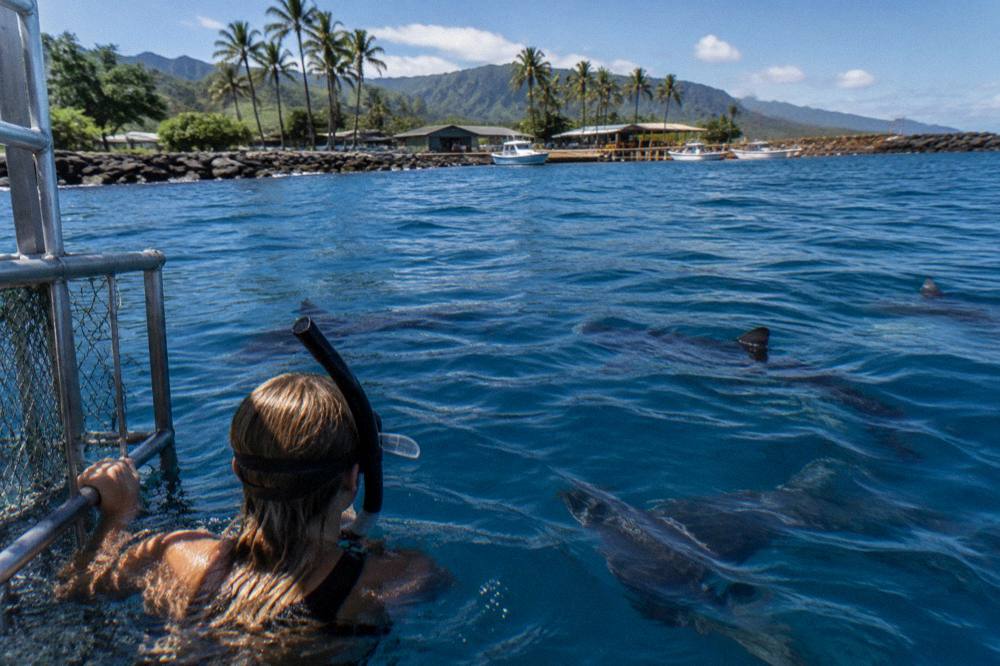
The Galapagos shark is a stocky requiem shark that grows to roughly twelve feet, and it is the headline species on North Shore tours, showing up on nearly every trip in groups that reviewers describe as calm and curious. Around the cage they glide in close, sometimes within inches of the bars, without charging or attacking it. Their behavior is investigative, not predatory, which is why the encounter format works at all.
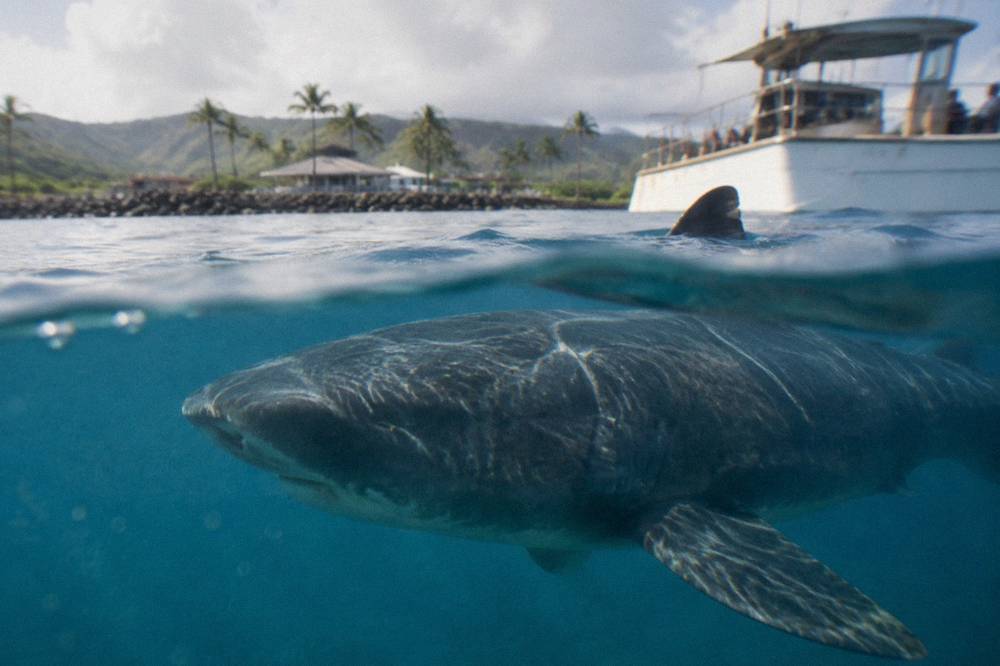
Galapagos sharks are named for the islands where they were first described, but they are widespread across the tropical Pacific, and Hawaii has a healthy population. On the DLNR species list they carry a Near Threatened IUCN status. Divers who know the species often describe them as bold: they will approach divers and boats to investigate, which makes them excellent tour animals precisely because they come to you rather than fleeing.
The mid-2026 guest accounts line up with that temperament. Reviewers describe multiple Galapagos sharks circling the cage in slow, deliberate loops, passing close enough to make eye contact, and lingering for the full time in the water. The species is also the one involved in the provoked incidents on record for swimming-with-sharks tours off Haleiwa, all of which the state classifies as provoked rather than unprovoked, a distinction covered in detail in our is shark cage diving safe guide. In a cage, with a barrier between you and the animals, the interaction stays observational on both sides.
One point worth knowing before you book: the Galapagos sharks you meet are not being lured to the boat with bait inside state waters. The aggregation at the three-mile sites is a natural one, tied to deep-water habitat and the historical presence of fishing boats in the area. Operators supplement the natural draw with surface attractants in federal waters, within the legal framework described above, and the sharks' interest in the cage is largely curiosity.
For photographers, the species' habit of close, repeat passes is a gift. Our GoPro and photo tips for shark cage diving guide covers the settings and angles that work in deep blue water, where the light falls off fast below the surface.
What About Sandbar Sharks, The Other Regular?
Sandbar sharks are the second pillar of the North Shore encounter, reported on most trips alongside the Galapagos sharks, and they are the numerically dominant shark species in recent scientific surveys of Oahu's nearshore and offshore waters. They are smaller and stockier than Galapagos sharks, typically well under fifteen feet, with the tall first dorsal fin that gives the species its name. Expect them in the same deep-water rotation, behaving with the same unhurried curiosity.
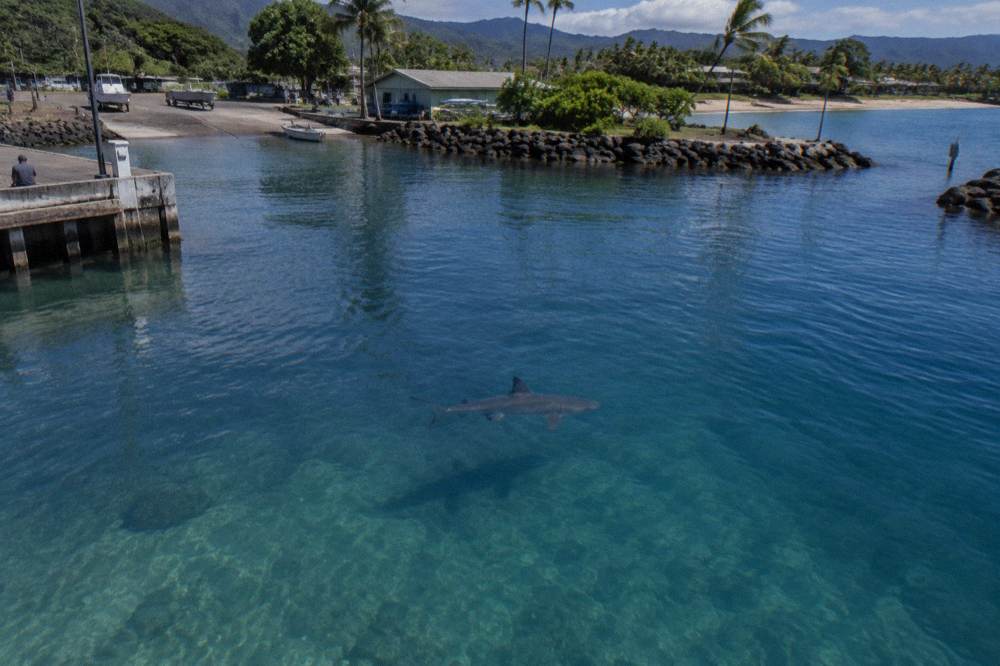
The sandbar shark's scientific profile is solid ground for a claim that tours rarely make: this is the most-studied abundant shark in the region. A recent baited remote underwater video study around Oahu documented twelve elasmobranch species across 283 deployments, and the assemblage was numerically dominated by sandbar sharks. The same study found that sandbar and Galapagos sharks both became more abundant with depth, which fits neatly with what the tours do: they take you to the deep water where those two species concentrate. The peer-reviewed study is worth reading if you enjoy the science behind the trip.
On the DLNR list the sandbar shark carries a Vulnerable IUCN status, one notch more concerning than the Galapagos shark's Near Threatened. Neither status affects the tours directly, since no sharks are taken or harmed, but it is part of why operators frame the trip as an education and conservation experience rather than a thrill ride. Several tours include briefings on the sharks' role in Hawaiian culture, including the shark god Kamohoaliʻi, before anyone gets in the water.
Behaviorally, sandbars around the cage tend to hold a slightly wider orbit than the Galapagos sharks, sweeping through in groups and passing at a respectful distance, then closing in when the group settles. Reviewers who notice the difference describe the sandbars as the polite ones in the crowd. In the water you will likely see both species within minutes of each other, which is part of what makes the site so reliable.
The steel-cage dive out of Haleiwa is the format most first-time visitors choose for exactly this mix, and Check availability on the operator's live listing to see current dates and pricing.
When Do Tiger Sharks Show Up On North Shore Tours?
Tiger sharks are the occasional giants of the North Shore encounter, seen on a minority of trips with a seasonal peak in late summer and fall, roughly August through November. A 2026 peer-reviewed analysis of long-term ecotourism data found sightings off Oahu's north coast peak in October, tied to mature females arriving from the Northwestern Hawaiian Islands. Most trips still deliver Galapagos and sandbar sharks, so treat a tiger sighting as a bonus, not the baseline.
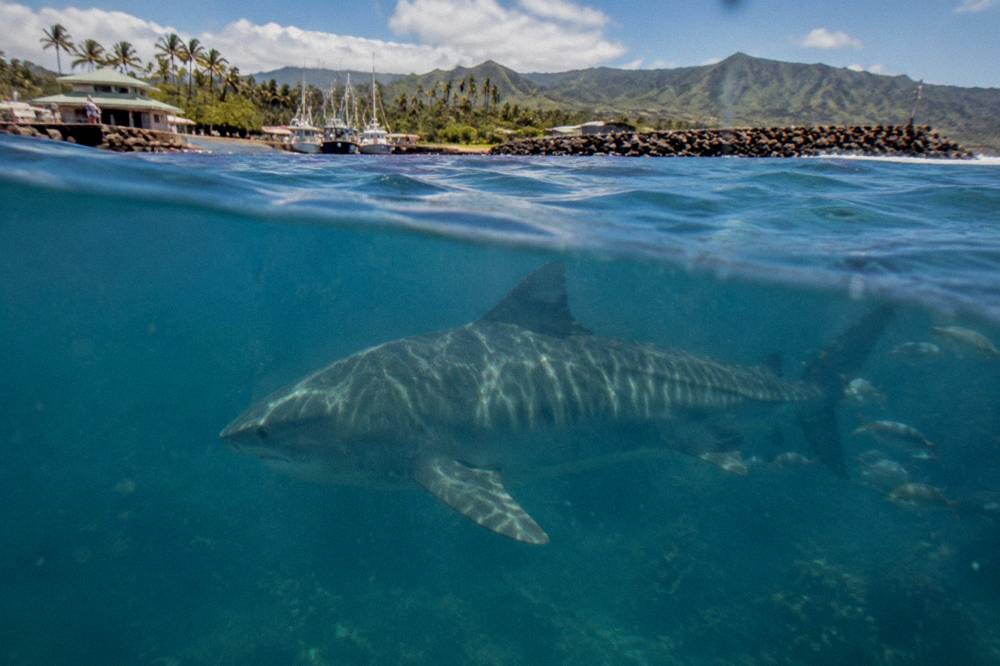
The seasonal pattern has a name in the diving community, Sharktober, and the science behind it is newer than the nickname. The Frontiers in Marine Science analysis linked the October peak to parturition and partial migration of mature female tiger sharks, and noted that October also sees a higher number of tiger shark bite incidents statewide, with tigers accounting for at least 63 percent of those. That statewide statistic covers ordinary ocean users, not tour guests, but it is a fair illustration of when the species is most active around the islands. If seeing a tiger shark is the goal, booking in the fall window is the honest play, and our best time of year for shark diving on Oahu guide covers the full calendar.
When tigers do appear at the tour site, they are unmistakable. They are larger than the resident Galapagos and sandbar sharks, with the vertical barring and blunt snout that give the species its name, and reviewers who catch one describe the water going quiet as the smaller sharks give way. Operators emphasize that the behavior around the cage or swim group remains investigative, and the same provoked-versus-unprovoked classification from the state's incident log applies across the board.
A note on the month-level claim: DLNR confirms tiger sharks are present in Hawaiian waters, but the month-by-month seasonality comes from operator reporting and the ecotourism study, not from a DLNR species calendar. Treat it as a strong pattern rather than a schedule. October is the best single month on the data, September and November bracket it, and outside that window tiger sightings thin out fast.
| Season | Tiger shark odds | Trip conditions | What to expect overall |
|---|---|---|---|
| Late spring and summer (May-Aug) | Low to occasional | Calmest seas, clearest water | Reliable Galapagos and sandbar sightings |
| Fall peak (Sep-Nov) | Best window | Calm early, transitioning later | Same residents plus the best tiger odds |
| Winter (Nov-Apr) | Low | Bigger swells, more cancellations | Sightings continue but trips are weather-dependent |
Will You See A Great White Shark On An Oahu North Shore Tour?
No. Great white sharks are not part of the commercial North Shore encounter and are not a resident species in Hawaii at all. They are rare winter visitors to Hawaiian waters overall, primarily offshore of Oahu and Maui between January and April, with very few confirmed records. The sharks on these tours are Galapagos, sandbar and occasional tiger sharks, and any expectation of a great white should be corrected before you book.
This comes up often enough to deserve its own heading, because a lot of visitors arrive with a mental image built from documentaries filmed in South Africa, Australia or California. Those cage dives are built around pinniped-rich coastlines where great whites hunt seals, and the operations there use heavily reinforced surface cages and bait draws suited to that species. Oahu's tours operate in a completely different ecological context: deep pelagic water, smaller requiem sharks, and a legal framework that pushes operations three miles offshore.
The distinction matters for choosing a trip, too. If your heart is set on a great white, no Oahu operator can honestly sell you one, and a booking made on that expectation will disappoint. If you want a reliable, close-range encounter with wild sharks in extraordinary blue water, the North Shore sites deliver that on almost every departure. Our cage versus cageless shark diving on Oahu comparison covers how the two formats handle the same species mix, since the barrier question matters more than the species question for most visitors.
The other Hawaiian species on the DLNR list, reef whitetips, blacktips, scalloped hammerheads, blue sharks and oceanic whitetips, live in different habitats around the islands and do not feature in the deep-water tour rotation. Snorkelers on the reefs sometimes see reef whitetips resting under ledges, which is a pleasant bonus but a completely separate experience from the pelagic encounter.
Which Tour Format Gives You The Best Shark Sightings?
All the permitted operators fish the same general deep-water zone, so the species mix is broadly similar across trips; what differs is format, group size and guide style. The steel-cage dives put a barrier between you and the sharks, the cageless swims put you in open water with a small group, and the research-led trips add a marine-scientist briefing and a sighting guarantee. Pick on comfort, not sharks, because the sharks are the constant.
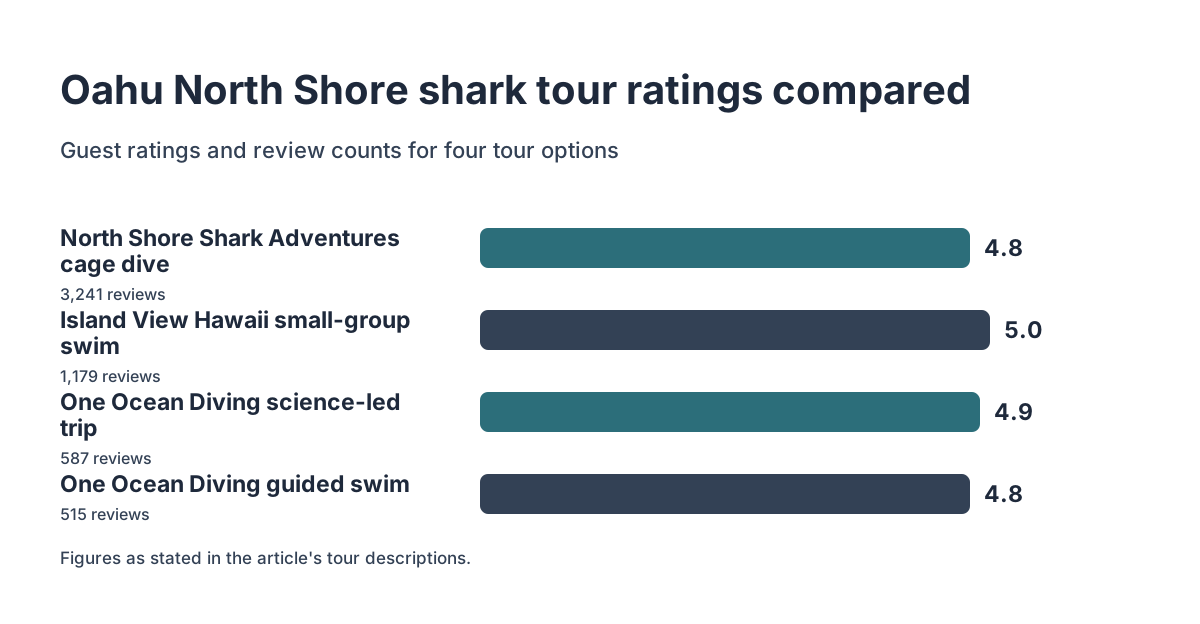
The flagship cage dive, North Shore Shark Adventures carries a 4.8 rating across 3,241 reviews, the largest review pool on the roster, with free cancellation. It is the default choice for first-timers and families, and it is the trip most of this site is built around. The cageless side is led by Island View Hawaii's small-group swim, which holds a 5.0 rating from 1,179 reviews, remarkable numbers for a format that puts you in the water with no barrier at all.
The research-oriented option is One Ocean Diving's science-led trip, rated 4.9 from 587 reviews, with a shark-sighting guarantee. Its sister swim trip, guided by marine scientists in the water with you, carries a 4.8 from 515 reviews and is the one to pick if the educational angle matters as much as the adrenaline.
For visitors staying in Waikiki without a car, transport is as important as the species question. No tour on this roster includes hotel pickup, including Haleiwa Shark Tours at 4.9 from 313 reviews. The drive from Waikiki to Haleiwa Boat Harbor runs roughly 32 to 35 miles and typically takes 45 to 75 minutes depending on traffic, a trip our Waikiki to Haleiwa guide covers in full.
Every price on these trips is listed on the operator's live listing rather than quoted here, since rates shift with season and demand. All of the above hold the required state commercial permits, and the review counts printed here come from each operator's own listing.
How Reliable Are Sightings Month By Month?
Sightings of Galapagos and sandbar sharks are close to year-round constants at the deep-water sites, while trip reliability is a weather question rather than a shark question: summer, May through September, brings calmer seas, lighter winds and the clearest water, while winter swells from November through April raise cancellation rates. The sharks are the steady variable. The ocean is the one that moves.
The seasonal driver is the North Pacific swell. Winter storms send large north and northwest swells toward Oahu's North Shore, producing the big-wave surf the area is famous for and rougher seas offshore that can cancel small-boat trips. Summer flips the pattern: lighter trades, smaller swells, and the deep blue visibility the tour photographs are known for. Water temperature barely moves, from roughly 75 to 76 degrees Fahrenheit in the coolest months of February and March to around 80 to 81 degrees in September, per the long-term averages for the Haleiwa area, so cold is never the real constraint.
The state's own shark incident log, updated through September 2026, is the best single source on risk context, and it supports the aggregate claim this site makes throughout: no fatalities have been found in DLNR's records for commercial North Shore shark tours. The official incident list distinguishes provoked from unprovoked cases, and the tour-related entries off Haleiwa are classified as provoked.
| Month window | Sea conditions off Haleiwa | Galapagos and sandbar odds | Tiger shark odds |
|---|---|---|---|
| May-Sep | Calmest, clearest water | Near-constant | Low, rising in August |
| Oct-Nov | Calm to transitional | Near-constant | Peak window |
| Dec-Feb | Largest swells, most cancellations | Good when trips run | Low |
| Mar-Apr | Transitional, improving | Good | Low |
If the calendar is flexible, September is a quiet sweet spot: peak water clarity, warm water, thinner crowds, and the leading edge of the tiger window. If the trip is locked to a winter visit, book early in your stay so a weather cancellation leaves room to rebook.
Once the dates are settled, the North Shore shark cage dive tour page puts departure options, check-in logistics, and the weather cancellation policy in one place.
Whichever month and format you land on, the trio below covers the reliable core: the flagship cage dive, the cageless small-group swim, and the research-led guaranteed trip.
Common Questions About Sharks Seen On Oahu North Shore Tours
What sharks will you actually see on an Oahu North Shore tour?
Galapagos sharks and sandbar sharks, on almost every trip, with tiger sharks as a seasonal possibility mainly from late summer into fall. The species mix matches DLNR's official Hawaii shark species list and the consistent reports from operators and recent guests at the deep-water sites about three miles off Haleiwa.
Will you see a great white shark on an Oahu tour?
No. Great whites are not a resident species in Hawaii and are not part of the commercial North Shore encounter. They are rare winter visitors to Hawaiian waters overall, primarily offshore of Oahu and Maui between January and April, with very few confirmed records. The tours feature Galapagos, sandbar and occasional tiger sharks instead.
Why do the tours run three miles offshore?
Hawaii law, HRS §188-40.6, bans shark feeding in state marine waters, which extend three nautical miles from shore. Commercial tours therefore operate past that line in federal waters, where the state ban does not apply, over deep pelagic habitat where Galapagos and sandbar sharks naturally aggregate.
When are tiger sharks most likely on a North Shore tour?
From late summer into fall, with October the peak. A 2026 peer-reviewed analysis tied the October spike to the parturition and partial migration of mature female tiger sharks from the Northwestern Hawaiian Islands. Outside that window, tiger sightings are occasional at best, and most trips deliver the resident Galapagos and sandbar sharks.
Are the sharks on these tours dangerous?
The species encountered, Galapagos and sandbar sharks, behave curiously rather than aggressively around cages and swim groups, and DLNR's incident log classifies the documented tour-related bites off Haleiwa as provoked rather than unprovoked. No fatalities have been found in DLNR's records for commercial North Shore shark tours. The cage format adds a physical barrier on top of that baseline.
Does the tour format change which sharks you see?
Not much. The permitted operators work the same general deep-water zone, so the species mix is similar across cage dives, cageless swims and research-led trips. The format changes your position in the water, group size and briefing style, not the sharks that show up. Choose based on comfort, and see Shark Cage Diving Honolulu for the full comparison of formats and operators.