How Likely Are You To See A Shark On An Oahu Tour?
Honest odds of seeing a shark on an Oahu shark tour: which species show up, how seasonality changes your chances, and how to read operator sighting claims.
 By Shark Cage Diving Honolulu Editorial Desk, Honolulu shark cage diving charter research and booking desk
How Likely Are You To See A Shark On An Oahu Tour?
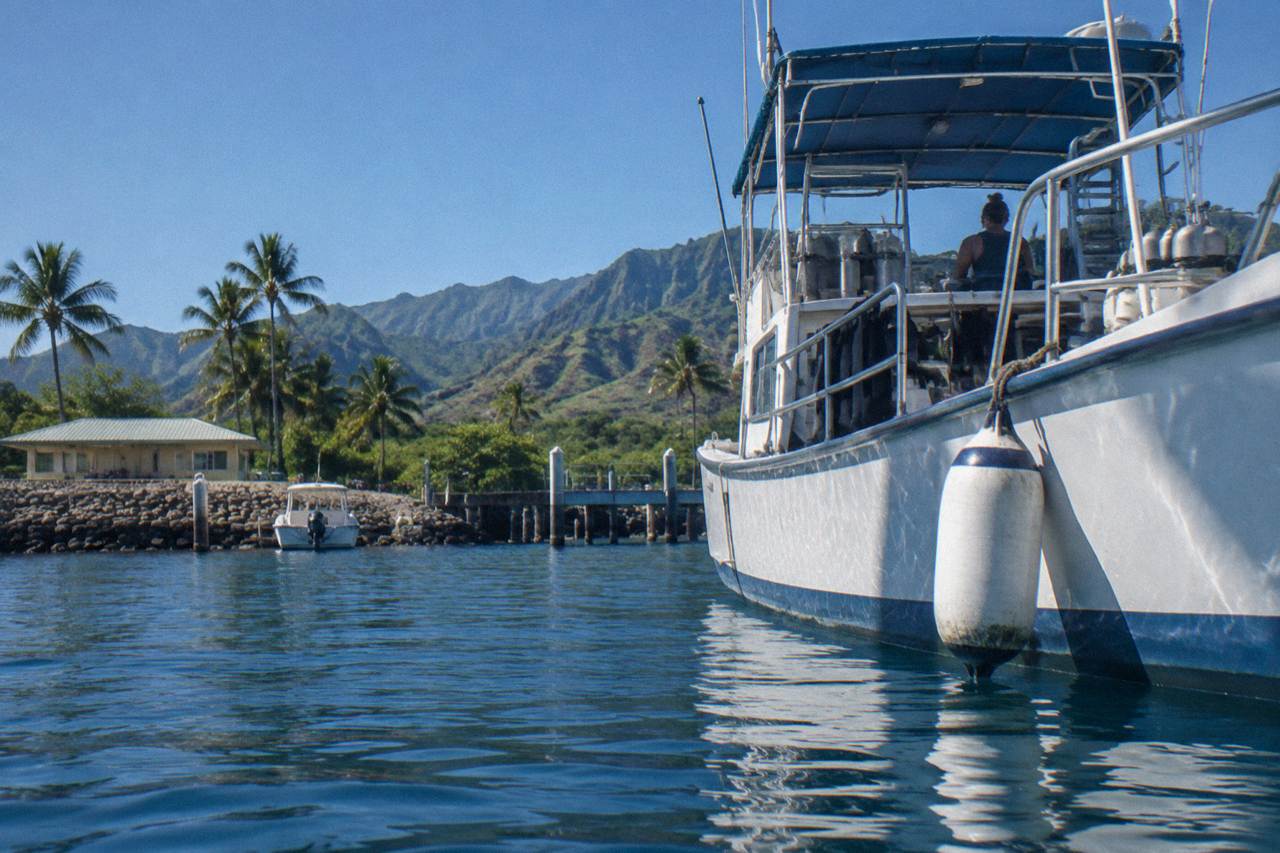
Very likely, close to a certainty, provided you book a dedicated shark tour rather than hoping for a chance encounter while snorkeling. Pelagic tours run about three miles off Haleiwa to spots where Galapagos and sandbar sharks naturally aggregate, and operators report sightings on the overwhelming majority of trips. A beach snorkeler, by contrast, can go years without seeing a single shark, and that contrast is the whole point.
For visitors who want the near-guaranteed version of the experience, this North Shore shark tour departing from Haleiwa offers exactly the kind of dedicated trip those odds depend on.
The gap between those two experiences is not luck. It is geography and law. Hawaii banned shark feeding in state marine waters in 2002 under HRS §188-40.6, so commercial operators cannot chum the water inside the three-nautical-mile line the way some destinations do. Instead they run their boats out past that boundary into federal waters, to deep blue pelagic zones where sharks already gather around historical crab-boat fishing grounds. The sharks are there because the ocean floor drops away and the food web is rich, not because a tour company put bait in the water.
That has a practical consequence for your odds. The tour is not creating an artificial sighting, it is visiting a real aggregation site. Reviews from the 2026 season consistently describe groups of Galapagos sharks, sometimes seven to twenty individuals in a single account, gliding within inches of the cage bars. When a site is that reliable, the honest answer to "how likely" stops being a probability and starts being a question of which sharks, how many, and how close.
It is worth separating this from the other question people often mean. If you are asking whether you will see a shark while swimming at Waikiki or Hanauma Bay, the answer is usually no, and the DLNR incident log is the primary record for how rare problematic encounters are. If you are asking whether a dedicated tour will show you sharks, the answer is that the roster of Haleiwa operators exists precisely because the sightings are dependable. For a deeper look at the species side, see our guide to what sharks you will see on the North Shore.
Which Sharks Are You Actually Looking At?
Galapagos sharks and sandbar sharks are the two species you will almost certainly see, with tiger sharks as a seasonal bonus rather than a baseline expectation. Sharks on these tours range roughly 5 to 15 feet, and the Galapagos in particular are curious, approaching the cage calmly without charging it. Great whites are not part of this experience at all; they are rare winter visitors to Hawaiian waters and never a North Shore tour sighting.
That last correction matters, because a surprising amount of search traffic assumes Oahu cage diving is a great white experience like South Africa or California. It is not, and no honest operator claims it is. What Oahu offers instead is reliable access to reef-associated and pelagic requiem sharks in astonishingly clear water, often with visibility beyond 150 feet at the dive sites. The DLNR maintains an official Hawaii shark species list that confirms Galapagos, sandbar and tiger sharks among the state's resident species, and those are exactly the three that turn up off Haleiwa.
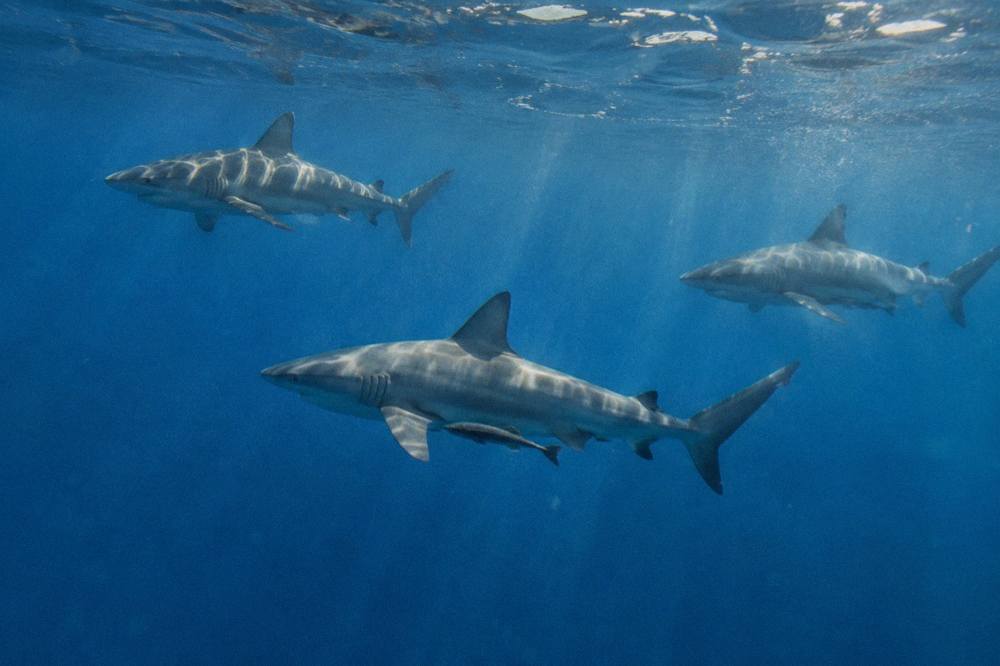
Sandbar sharks are the numerically dominant species in Oahu's coastal waters, which a recent baited-video study of 283 deployments around the island confirmed. The same study found that Galapagos and sandbar sharks both became more abundant with depth, which fits with why the tours run to deep water three to four miles out rather than lingering near the reef. Tiger sharks showed the opposite pattern in that research, decreasing with depth, which helps explain why tigers are the less predictable part of any North Shore tour.
Here is the species picture in one view:
| Species | Typical size on tours | How often seen | Behavior around the cage |
|---|---|---|---|
| Galapagos shark | 8-12 ft | On most trips, often in groups | Curious, glides close, does not charge |
| Sandbar shark | 5-7 ft | On most trips | Calm, circles at a slight distance |
| Tiger shark | 10-14 ft | Occasional, seasonal | Larger, passes through rather than lingering |
The flagship cage dive for this experience is North Shore Shark Adventures, rated 4.8 across 3,241 reviews, the largest review pool of any shark tour on Oahu. That pool is itself evidence: thousands of guests describing what they saw, season after season, is a better sighting record than any marketing claim. Check availability
Does The Time Of Year Change Your Odds?
Yes, but less than you might think. Galapagos and sandbar sharks are reported year-round, so the base sighting rate stays high in every month. What changes seasonally is the water: May through September brings calmer seas and clearer visibility on the North Shore, while winter swells from November through April can bump up the ride and occasionally cancel trips outright. October is the interesting outlier, because that is when tiger shark sightings peak.
The winter North Pacific swell is the dominant force on this coast. December and January can bring 15 to 50-foot surf to spots like Waimea Bay and Pipeline, and the same energy that produces those waves makes the offshore run rougher for small boats. Tours still run in winter and still see sharks, but the sea state decides whether the trip happens at all and how comfortable the ride is. Summer flips that equation: lighter trades, smaller swells, steadier schedules.
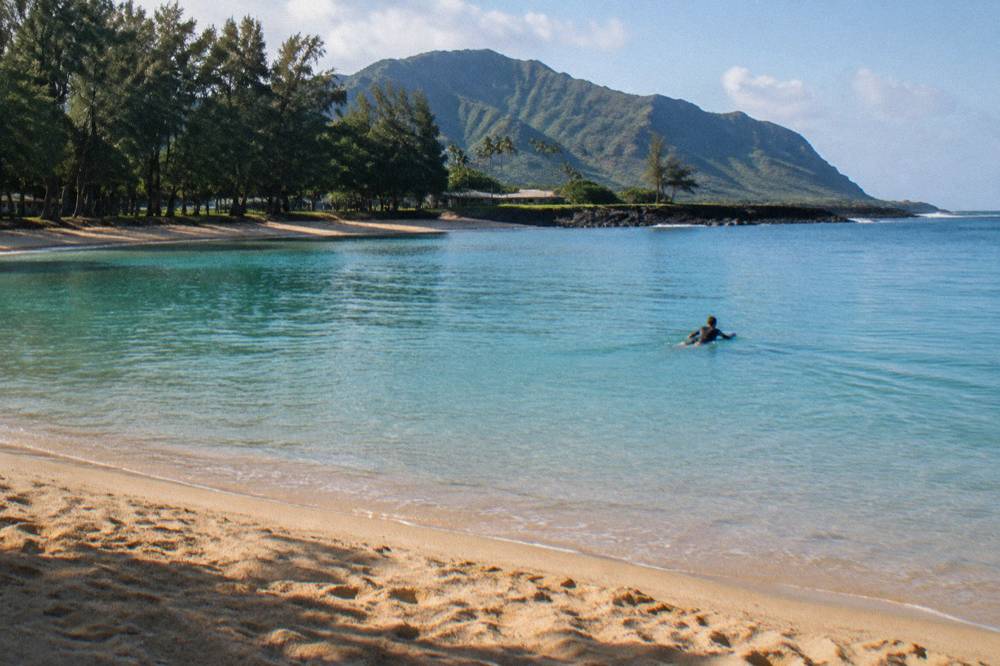
Water temperature barely moves the needle. The Waimea Bay buoy, part of the PacIOOS and NOAA observation network, recorded sea surface temperatures around 80 to 81 degrees in late September, and the coolest months of February and March still average roughly 75 to 76 degrees. That is swimmable year-round, and it is one reason the sharks do not go anywhere in winter. For month-by-month detail, our piece on what month sharks are most active in Oahu breaks down the seasonal pattern.
The tiger shark seasonality is the part worth flagging honestly. A 2026 analysis in Frontiers in Marine Science tied peak October tiger sightings off Oahu's north coast to the parturition and partial migration of mature females, a phenomenon the dive community calls Sharktober. So if your heart is set on a tiger shark, October is your month; if you simply want calm water and guaranteed Galapagos, book summer.
How Much Can You Trust Operator Sighting Claims?
Treat "guaranteed sharks" as an operator-reported claim, not a state-verified statistic, and then notice that the review pools back it up anyway. DLNR licenses and permits these tours but does not publish an official sighting-rate figure for any of them. The evidence you actually have is the review record, and on this coast it is unusually deep: the flagship tours carry hundreds to thousands of guest reviews describing sharks on their trips.
That distinction matters because this site's policy is honesty about sourcing. When an operator says sharks are guaranteed, that is a marketing promise backed by their own trip logs. It happens to be a credible one here, because the aggregation sites are genuinely reliable and because a tour that repeatedly failed to deliver sharks would show up in the review record fast. One Ocean Diving's research-focused trip, rated 4.9 across 587 reviews, is one of the operators that frames its sighting claims most carefully, with marine-scientist guides who name and count the individual animals.
The honest caveats are about conditions, not sharks. A trip can be canceled for swell, and a rough day can mean a shorter time in the water. Weather, not the absence of sharks, is the real risk to your plans, which is why booking with free cancellation and checking the marine forecast the day before matters more than any guarantee language. Our guide to the best time of year for shark diving on Oahu covers the timing side in depth.
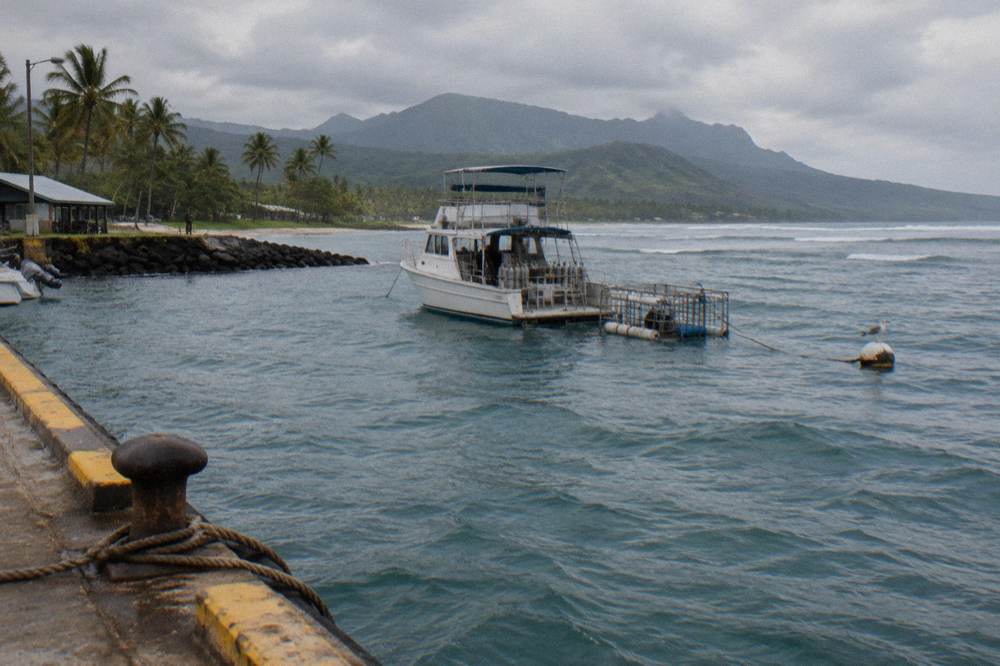
For a wider comparison of how the operators stack up, including which ones meet at Haleiwa Boat Harbor from Waikiki, our guide on choosing a shark tour operator on Oahu walks through the roster tour by tour.
What About Seeing Sharks Outside A Tour?
Near zero, and that is a good thing. The odds of a casual swimmer or snorkeler encountering a shark on an Oahu beach are extremely low, and DLNR's statewide incident figures, roughly 6 to 10 confirmed incidents per year across all Hawaiian waters, underline how rare meaningful encounters are. Millions of people enter Hawaii's ocean every year; the number who see a shark doing anything other than fleeing is a tiny fraction.
Most sharks near shore are small reef species like whitetip reef sharks, and they avoid people. The pelagic species the tours target, Galapagos and sandbar sharks, live offshore in deep water, which is exactly why the boats travel three miles out to reach them. If you want to see a shark in Hawaii, waiting for one to appear under your snorkel is statistically the worst strategy available; taking a boat to where the sharks actually live is the best.
There is a framing trap to avoid here too. High-profile incident stories can make sharks feel omnipresent, but DLNR's data distinguishes provoked from unprovoked encounters, and the tour-related incidents on record off Haleiwa are classified as provoked, meaning they involved deliberate interaction with attracted sharks, not random attacks on the public. No fatalities have been found in DLNR's records for commercial North Shore shark tours. The beach-going public and the tour-going public are, in effect, two different statistical populations.
So the realistic picture for a visitor looks like this:
| Activity | Realistic chance of seeing a shark | What you would likely see |
|---|---|---|
| Beach swimming or snorkeling | Very low | A fleeting reef shark, if anything |
| Snorkel boat trip to a reef site | Low | Whitetip reef shark resting under a ledge |
| Pelagic shark tour from Haleiwa | Near certain | Multiple Galapagos and sandbar sharks |
The takeaway is not that the ocean is dangerous, it is that the ocean is big, and sharks occupy a specific part of it. A tour simply takes you to that part. This is why Shark Cage Diving Honolulu exists as a resource at all: the question visitors ask is rarely whether Hawaii has sharks, it is where to go so the answer becomes yes.
Which Tour Maximizes Your Chances?
Any licensed Haleiwa operator will show you sharks; the choice is about format, not odds. The steel-cage dive with North Shore Shark Adventures carries the deepest review pool at 3,241 reviews and a 4.8 rating, the strongest evidence of consistent delivery. The cageless swim with Island View Hawaii, rated 5.0 across 1,179 reviews, trades the barrier for open water.
Think about what kind of certainty you want. If it is the certainty of standing behind bars while sharks glide past at arm's length, the cage is the format. If it is the certainty of being in the water with them, cageless is the choice, and the review record shows guests see the same animals either way. Island View Hawaii's small-group cageless swim, rated 5.0 across 1,179 reviews, is the standout in that category, while One Ocean Diving's research trip, rated 4.9 across 587 reviews, adds scientist guides and a shark-sighting emphasis. Haleiwa Shark Tours, rated 4.9 across 313 reviews, meets at Haleiwa Boat Harbor and suits families who want a smaller group and a flexible schedule.
One planning note that genuinely affects your odds of getting on the water at all: book the first departure of the day. Morning conditions on the North Shore are typically the calmest, and an early slot gives the operator a fallback if sea state changes. The drive from Waikiki to Haleiwa Boat Harbor runs 45 to 75 minutes depending on traffic, so an early start is part of the same decision. Our guide on getting from Waikiki to a Haleiwa shark tour covers the drive, bus and rideshare options.
Whichever you choose, check the marine forecast, book with free cancellation where it is offered, and go early. The sharks will do their part.
Common Questions About Seeing Sharks In Oahu
How Likely Are You to See a Shark on an Oahu Tour?
Very likely, close to certain, on a dedicated pelagic shark tour from Haleiwa. Operators run to aggregation sites about three miles offshore where Galapagos and sandbar sharks gather year-round, and guest reviews across the 2026 season consistently describe multiple sharks per trip. A chance encounter while beach snorkeling, by contrast, is rare.
What species will I see on a North Shore shark tour?
Galapagos sharks and sandbar sharks are the reliable sightings, typically ranging from 5 to 15 feet. Tiger sharks appear occasionally, with sightings more likely in late summer and fall, peaking around October. Great whites are not part of the Oahu tour experience at all.
Is there a best month for shark sightings on Oahu?
Sightings of Galapagos and sandbar sharks are reported year-round. May through September offers the calmest seas and clearest water, making trips more reliable. October is notable for tiger shark activity, while winter months bring bigger swells that can occasionally cancel trips.
Are operator "sharks guaranteed" claims official?
No. DLNR permits these tours but publishes no state-verified sighting rate, so guarantees are operator-reported claims. They are credible on this coast because the review pools are deep: the flagship cage dive alone carries 3,241 guest reviews describing sharks on trips.
Will I see a shark while swimming at an Oahu beach?
Almost certainly not. Most nearshore sharks are small reef species that avoid people, and DLNR records roughly 6 to 10 confirmed incidents per year statewide across all ocean users. The pelagic species tours target live offshore in deep water, which is why the boats travel three miles out.