Best Time Of Year For Shark Diving On Oahu: A Month-By-Month Guide
Shark tours leave Haleiwa Boat Harbor every month of the year, but the ocean off Oahu's North Shore changes dramatically with the seasons. Summer brings glassy, clear water and steady sightings. Winter brings giant swells, rougher rides and more cancelled departures. Here is how the calendar actually works.
Short answer
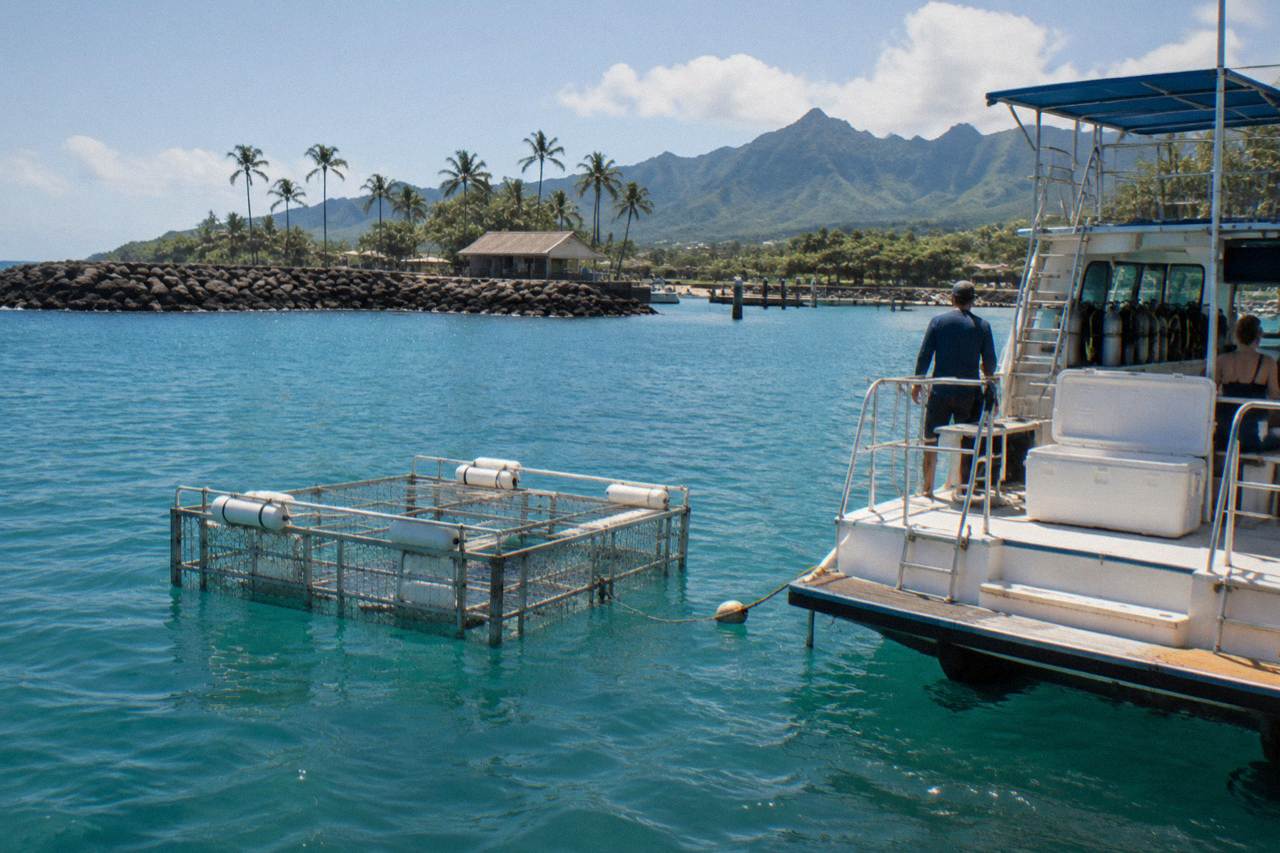
The best time of year for shark diving on Oahu is May through September, when North Pacific swells ease off, water visibility peaks and Galapagos and sandbar shark sightings are most consistent. Tours run year-round from Haleiwa, roughly three miles offshore in federal waters, but winter departures face higher cancellation odds from big surf.
What Is The Best Time Of Year For Shark Diving On Oahu?
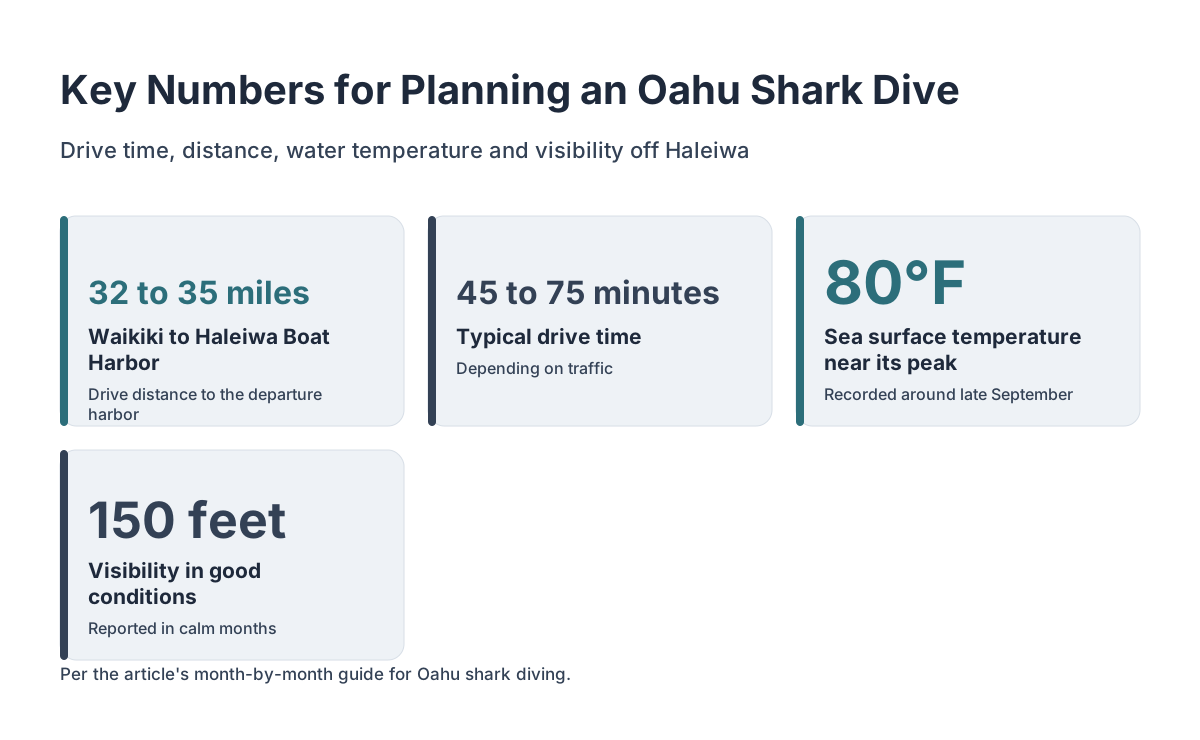
The best window is May through September, when the North Pacific swell machine switches off, sea surface temperatures sit near 80°F and underwater visibility is at its yearly peak. Galapagos and sandbar sharks are seen consistently in every month, tours depart from Haleiwa year-round, and the main thing the calendar changes is the ride out, not the sharks. September is often called the sweet spot: calm water, strong sightings and thinner crowds than midsummer.
That answer surprises people who assume shark diving has a "season" the way whale watching does. It does not, at least not in the sense of sharks leaving the area. The pelagic aggregation sites roughly three miles off Haleiwa hold Galapagos sharks and sandbar sharks in every month of the year, and the tours that work those sites, including the flagship Shark Cage Diving Honolulu roster, run through winter, spring, summer and fall.
What changes is everything around the sharks. The North Shore of Oahu is one of the most seasonally dramatic coastlines in the Pacific. From November through April, distant North Pacific storms send huge northwest swells toward these beaches, producing the big-wave surfing the area is famous for and, at the same time, rougher seas for small boat operations. From May through September the swells shrink, the trades lighten, and the run offshore becomes the smooth, glassy trip most people picture when they book.
For travelers weighing timing, a North Shore shark tour booked for the calm season generally means a smoother run offshore and clearer water at the cage.
So the honest framing is: the sharks show up all year, and you choose your month for the ocean, the visibility, the crowds and the tiger shark odds (see Shark Sighting Odds). The rest of this guide walks through each of those factors so you can match a booking window to what you actually want from the day.
How Do Oahu's Seasons Change The Ocean Off Haleiwa?
Oahu's North Shore has two distinct seasons. Winter, roughly November through April, brings large north and northwest swells that can push surf to 15 to 50 feet at spots like Waimea Bay, rough up the offshore run and raise cancellation rates for boat tours. Summer, May through September, brings lighter trades, smaller swells and far more reliable departures, with October and April acting as variable shoulder months.
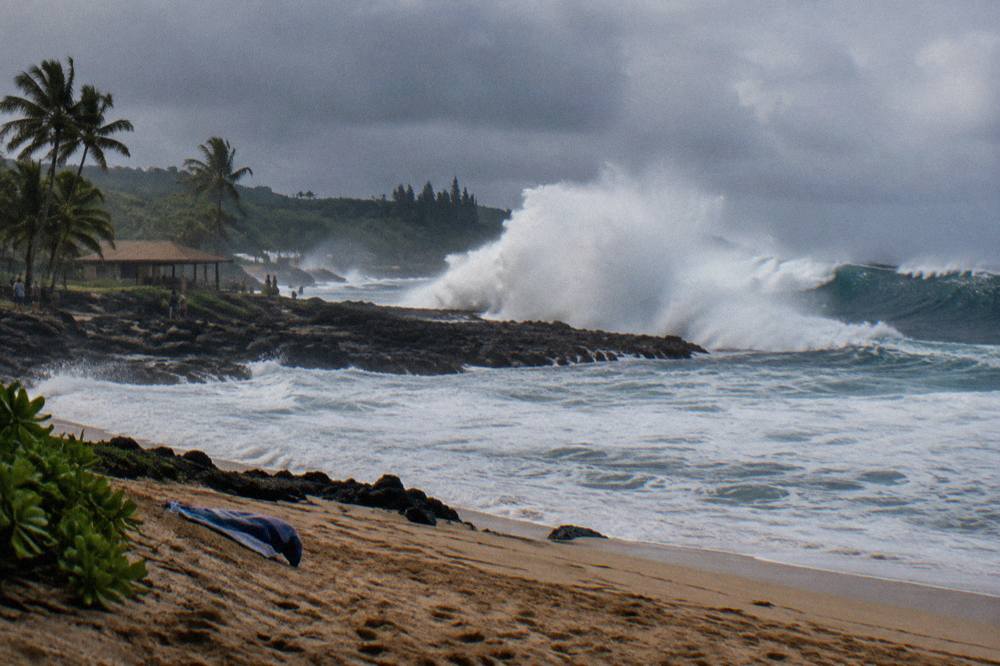
The engine behind this is the North Pacific storm track. In winter, low-pressure systems thousands of miles away generate long-period swell that travels down to Hawaii and focuses on north- and west-facing coasts. That is why the same stretch of coastline that hosts the Pipeline masters in December is a snorkeler's paradise in July. The swell does not just affect the surf breaks, it affects the three-mile run out to the shark sites, the stability of the boat at anchor and how much the surface water gets churned up.
For a shark tour, the practical difference is concrete. In summer, the ride out is typically smooth, the boat holds station comfortably, and the surface layer stays clear enough that you can see the cage from the deck. In winter, operators watch the buoy data closely, and when a big northwest pulse arrives, morning trips get bumped to the afternoon, rescheduled or refunded. Operators and guides consistently describe summer as the season of reliable schedules and winter as the season of flexibility requirements.
The shoulder months deserve a note. April and October are coin flips: some years they behave like summer, some years like early winter. If you are booking far ahead for a shoulder month, build a spare morning into your itinerary in case the first choice of departure gets moved.
| Season | Months | Typical ocean state | Effect on shark tours |
|---|---|---|---|
| Summer | May–September | Small swells, lighter trades, calmer seas | Most reliable departures, smoothest rides |
| Shoulder | April, October | Variable, depends on the swell pattern | Workable, but keep a backup morning free |
| Winter | November–March | Large north and northwest swells, rougher seas | Higher reschedule and cancellation odds |
The seasonal pattern is well documented in Oahu surf and travel reporting, including Hawaii Guide's overview of the North Shore winter surf season.
Within that summer window, though, there is still a real choice of which tour format to book, and the calm season is the best time to consider the cage-free side of the roster as well as the classic cage dive.
Which Months Give The Clearest Water For Shark Diving?
May through September gives the best underwater visibility off Haleiwa, with operators regularly describing deep blue, high-clarity water in the calm months and winter swells churning sediment and dropping visibility. Sea surface temperatures near the North Shore run roughly 75 to 76°F at their coolest in February and March and about 80 to 81°F at their warmest in September, per long-term buoy and temperature records.
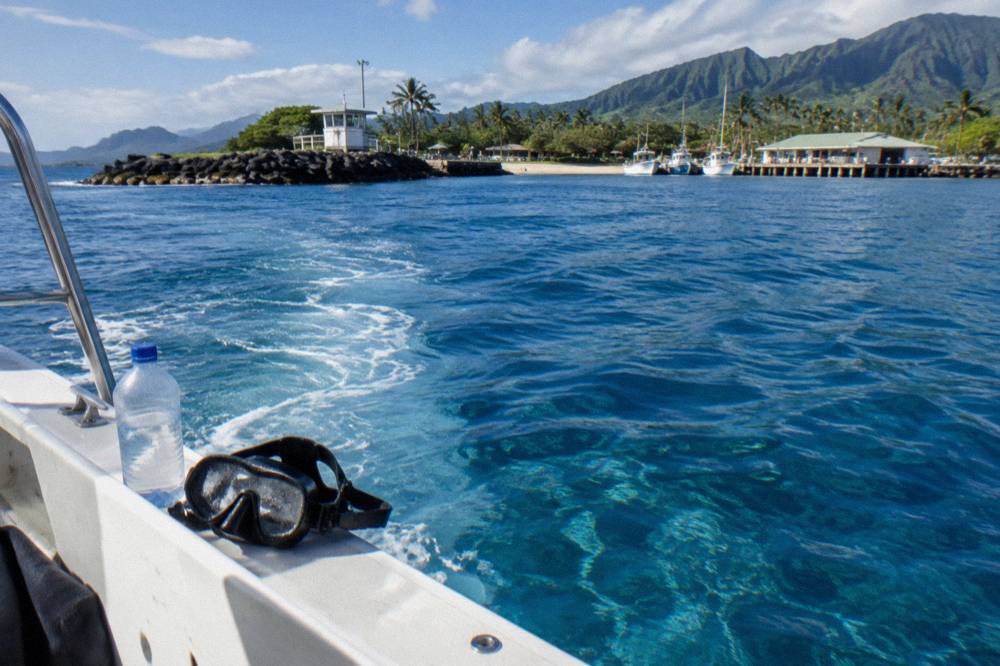
Water clarity matters more on a shark tour than on almost any other ocean activity, because the whole experience is visual (see Best Cage Experience). The dive sites sit in deep pelagic blue water, sometimes described as nearly 300 feet deep, and in good conditions visibility can exceed 150 feet. That is what lets you watch a Galapagos shark materialize out of the blue thirty seconds before it reaches the cage. When winter swell stirs the water column, that cinematic reveal shrinks to a shark appearing a few body lengths away, still thrilling, but a different show.
Temperature is the other comfort factor, and it is a smaller range than most visitors expect. The Waimea Bay buoy on the North Shore records sea surface temperatures around 80°F in late September and historical averages dip only into the mid-seventies in the coolest months. In other words, the water is swimmable year-round; it is the sea state above the water, not the temperature in it, that separates the seasons. A shorty wetsuit or the wetsuit top some operators include is enough for most people even in February.
| Factor | Best months | Why |
|---|---|---|
| Underwater visibility | May–September | Calm seas keep sediment settled; operators report deep blue clarity |
| Water temperature | September warmest | Long-term averages peak near 80–81°F |
| Sea state for the boat ride | June–August | Smallest swells, lightest trades |
| Surface interval comfort | May–October | Warm air, less spray on the run out |
Real-time conditions for the North Shore are tracked by the PacIOOS and NOAA buoy network, and the Waimea Bay buoy is the primary reference point operators and divers check for wave height and sea surface temperature.
When Are Tiger Sharks Most Likely On An Oahu Shark Tour?
Tiger shark sightings off Oahu's North Shore peak in fall, with long-term ecotourism data showing the highest daily sighting rates in October, a period some in the diving community call Sharktober. Galapagos and sandbar sharks are the everyday species seen in every month, while tigers are the seasonal bonus, with August through November the window in which your odds are best.
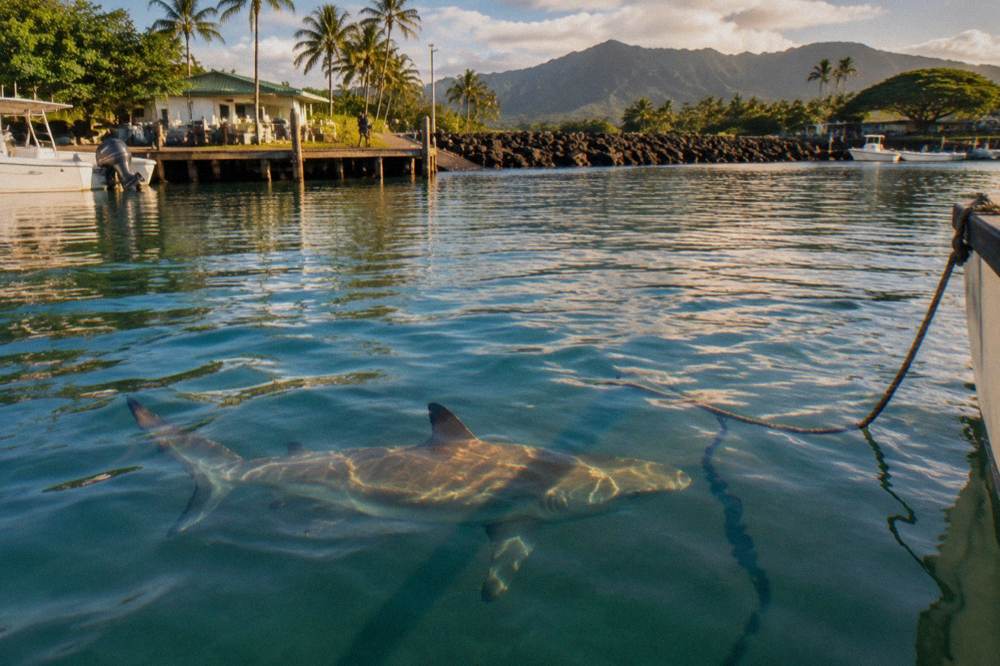
This is the one place where the calendar and the species list genuinely interact. The everyday cast on these tours is remarkably stable: Galapagos sharks and sandbar sharks, typically in the five to fifteen foot range, often in groups, approaching the cage or swimmers with calm, curious behavior. DLNR's official Hawaii shark species list confirms both as resident Hawaiian waters species. Reviews from the 2026 season regularly describe seven to twenty Galapagos sharks around the boat at once.
Tigers are different. A 2026 analysis in Frontiers in Marine Science tied long-term sighting data from North Shore ecotourism sites to a strong October peak, linked to the parturition and partial migration of mature female tiger sharks from the Northwestern Hawaiian Islands (see Best Island for Sharks). The same paper connected that October peak to a rise in statewide October bite incidents, tigers accounting for the majority of them. For a tour guest, the takeaway is simpler: if seeing a tiger shark is the goal, late summer into fall is when to point your calendar, and October is the statistical bullseye.
The trade-off is that October sits at the edge of the calm season. Early October is often still glassy; a late-October northwest swell can scrub a morning. If a tiger is your priority, book a few days of flexibility around your departure and treat the tour as the anchor of a North Shore day rather than a one-morning errand.
| Species | How often seen | Best months | Typical size |
|---|---|---|---|
| Galapagos shark | On nearly every trip | All year | Often 8–12 ft in reports |
| Sandbar shark | Very common | All year | Smaller, in groups |
| Tiger shark | Occasional, seasonal | August–November, peaking in October | Larger, the bonus sighting |
One species note worth correcting while we are here: no great white sharks are part of the commercial North Shore encounter. Great whites are rare winter visitors to Hawaiian waters at most, and the Oahu tours are a Galapagos, sandbar and occasional tiger show.
If the cage-free format appeals and you like the sound of the fall window, the small-group cageless swim run by Island View Hawaii is the roster's flagship cageless option, with a 5.0 rating across 1,179 reviews.
Do Shark Tours Run All Winter On The North Shore?
Yes, shark tours run year-round out of Haleiwa Boat Harbor, including deep winter, but winter bookings carry a real chance of rescheduling when large northwest swells move through. Operators monitor buoy data and will move a trip to a calmer slot, or cancel and refund, when the sea state makes the run unsafe or unpleasant. Book the first days of your stay, not the last, so a bump has room to land.
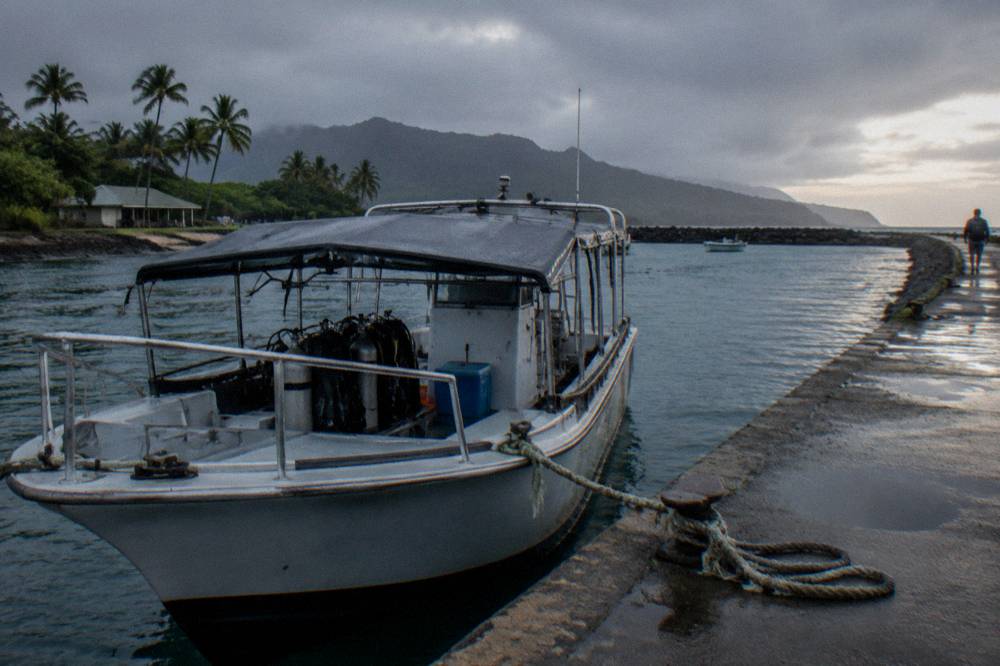
Winter shark diving on the North Shore is not a myth, and plenty of trips go out between swells. The North Pacific does not send giant surf every day of the season; there are flat spells in December and pulses in July. The difference is variance. A summer booking is close to a sure thing; a winter booking is a probability that improves the more flexible your dates are.
The sharks themselves do not take the winter off. Cooler water pushes some pelagic activity around, and operators report sightings in every month, but the predictability of the surface experience is what drops. Some winter guests actually prefer it: the light is dramatic, the boats are emptier, and the sharks that do show up in clear windows between swells can be as close and curious as any summer encounter.
If winter is your only option, the planning rules are straightforward. Watch the forecast in the days before, not weeks. Choose an operator with a clear reschedule and refund policy, which every permitted operator on this roster has. And pair the trip with a North Shore day that works regardless: the winter surf itself is the show on the beaches, and the same swell that bumps your boat trip fills Waimea Bay with the waves that make this coastline famous.
For a marine-scientist-guided perspective on the water in any season, One Ocean Diving's swim program is the research-anchored option on the roster, with a 4.8 rating across 515 reviews.
What About Crowds, Prices And How Far Ahead To Book?
Summer is the busy season, so June through August departures fill first, while shoulder months like September, April and May offer thinner crowds with nearly identical ocean conditions. Prices sit on the live listings and shift with demand, so there is no honest month-by-month price table to print here. What you can control is booking lead time: two to four weeks ahead is sensible for summer, less in shoulder months.
Crowds on these tours are bounded by boat capacity, not beach space, so "crowded" means a full boat and a busy check-in rather than a line. Even so, the difference between a half-full Tuesday in September and a full Saturday in July is real: more room at the rail, more time in the water on some formats, and a harbor lot that is easy to park in versus one you circle.
September keeps coming up in this guide for a reason. The water is at its warmest, the swell is usually still asleep, tiger shark odds are climbing toward their October peak, and the family-travel wave of midsummer has gone home. If a single month had to be named for the best overall combination of conditions, crowd level and sighting variety, September is the defensible pick.
Booking lead time matters more in summer. The flagship cage dive on this roster, North Shore Shark Adventures carries a 4.8 rating across 3,241 reviews, which makes it the default choice for a lot of visitors; popular formats like that one are the first to sell out in peak weeks. The general rule: lock in your first choice of date early in summer, and stay flexible in winter.
How Should You Plan The Day Around Your Shark Dive?
Plan for a North Shore morning, not just a boat ride: the drive from Waikiki to Haleiwa Boat Harbor runs about 32 to 35 miles and typically takes 45 to 75 minutes depending on traffic, so most guests leave Waikiki well before dawn for a morning departure. The harbor has free parking and restrooms, Haleiwa town sits right there for afterward, and early starts beat both the rush hour and the tour crowds.
For the morning departures described above, tickets for the North Shore shark cage experience can be booked ahead, which keeps the pre-dawn logistics to a simple harbor check-in.
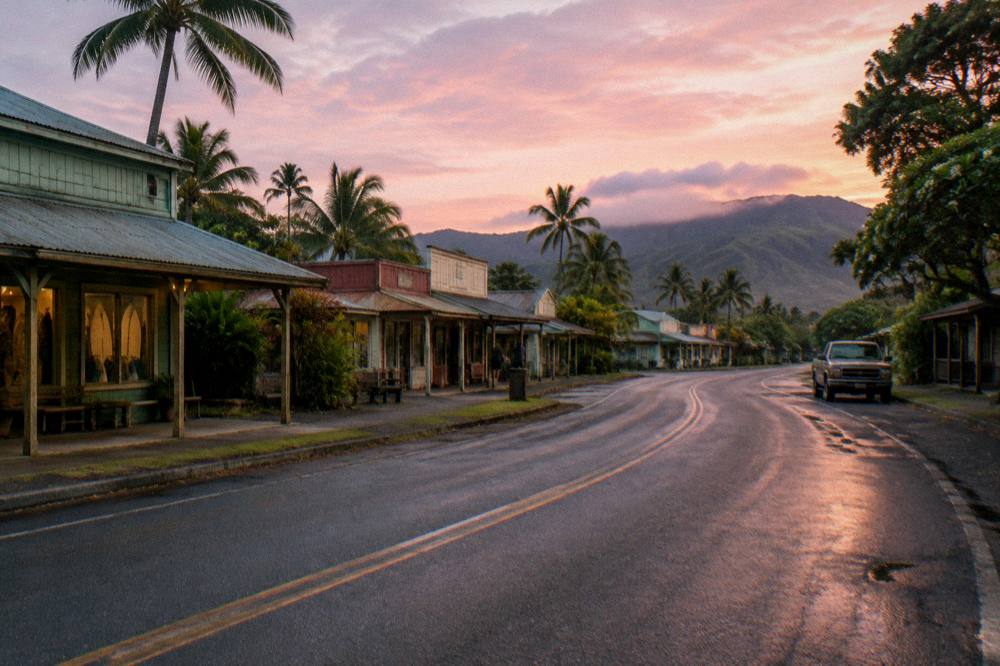
The logistics are the same in every season, but the stakes rise in summer, when Friday afternoons and weekend northbound traffic thicken, and on big-surf winter days, when the whole island drives north to watch. The fastest route runs H-1 west to H-2 north, then Kamehameha Highway through Wahiawa, with a two-lane section near Weed Circle that slows at rush hours. A morning shark departure neatly sidesteps all of it, since you are driving against the grain before dawn.
Once the boat is back, the day is yours and Haleiwa makes it easy. The harbor area has ample free parking, and the town's shops and food spots are minutes away. If you want the full planning picture, the site's Haleiwa harbor and North Shore guide covers parking, facilities and what to do before and after your slot, and the Waikiki to Haleiwa guide walks through transport if you would rather not drive at all.
Season shapes the after-boat part of the day too. In summer, the beaches between Haleiwa and Waimea are calm enough for swimming, which pairs nicely with a morning on the water. In winter, those same beaches host the surf spectacle, and a bumped or completed shark trip slots neatly into a day of watching fifty-foot faces from the sand. Either way, treat the tour as the anchor of a full North Shore day and the calendar starts working for you rather than against you.
If you are weighing operators as well as months, the site's comparison of Oahu shark tour operators breaks down the formats, and for guests who prefer a smaller group, Haleiwa Shark Tours, rated 4.9 across 313 reviews, meets guests at Haleiwa Boat Harbor; you arrange your own ride there.
Common Questions About The Best Time Of Year For Shark Diving On Oahu
What is the best time of year for shark diving on Oahu?
May through September is the best overall window, combining the calmest seas, the clearest water and the most consistent Galapagos and sandbar shark sightings. September is often the standout month, adding warm water, rising tiger shark odds and thinner crowds to that mix.
Do Oahu shark tours run year-round?
Yes. Tours depart from Haleiwa Boat Harbor in every month of the year, roughly three miles offshore in federal waters. Winter trips run between swells, with a higher chance of rescheduling when large northwest surf moves through.
When is the water clearest for shark diving on Oahu?
Summer, roughly May through September, when calm seas keep sediment settled and operators regularly report deep blue, high-clarity water at the pelagic sites. Winter swells churn the water column and reduce visibility.
What month are tiger sharks most likely on a North Shore shark tour?
October, according to long-term sighting data from North Shore ecotourism sites, with August through November the broader window. Galapagos and sandbar sharks are seen consistently in every month; tigers are the seasonal bonus.
Is winter shark diving on Oahu worth it?
It can be. The sharks are still there, boats are emptier and the winter surf spectacle on the beaches is a destination in itself. The trade-off is a real chance of rescheduling, so book early in your stay and keep a backup morning free.
How cold is the water for shark diving on Oahu?
Not very. Sea surface temperatures near the North Shore run roughly 75 to 76°F at the coolest in February and March and about 80 to 81°F at the warmest in September, warm enough that most guests need only a shorty wetsuit or wetsuit top year-round.