Are You Safe Cage Diving With Sharks In Hawaii?
Honest answer to whether cage diving with sharks in Hawaii is safe, including why great whites are not part of the Oahu North Shore encounter and what the actual record shows.
 By Shark Cage Diving Honolulu Editorial Desk, Honolulu shark cage diving charter research and booking desk
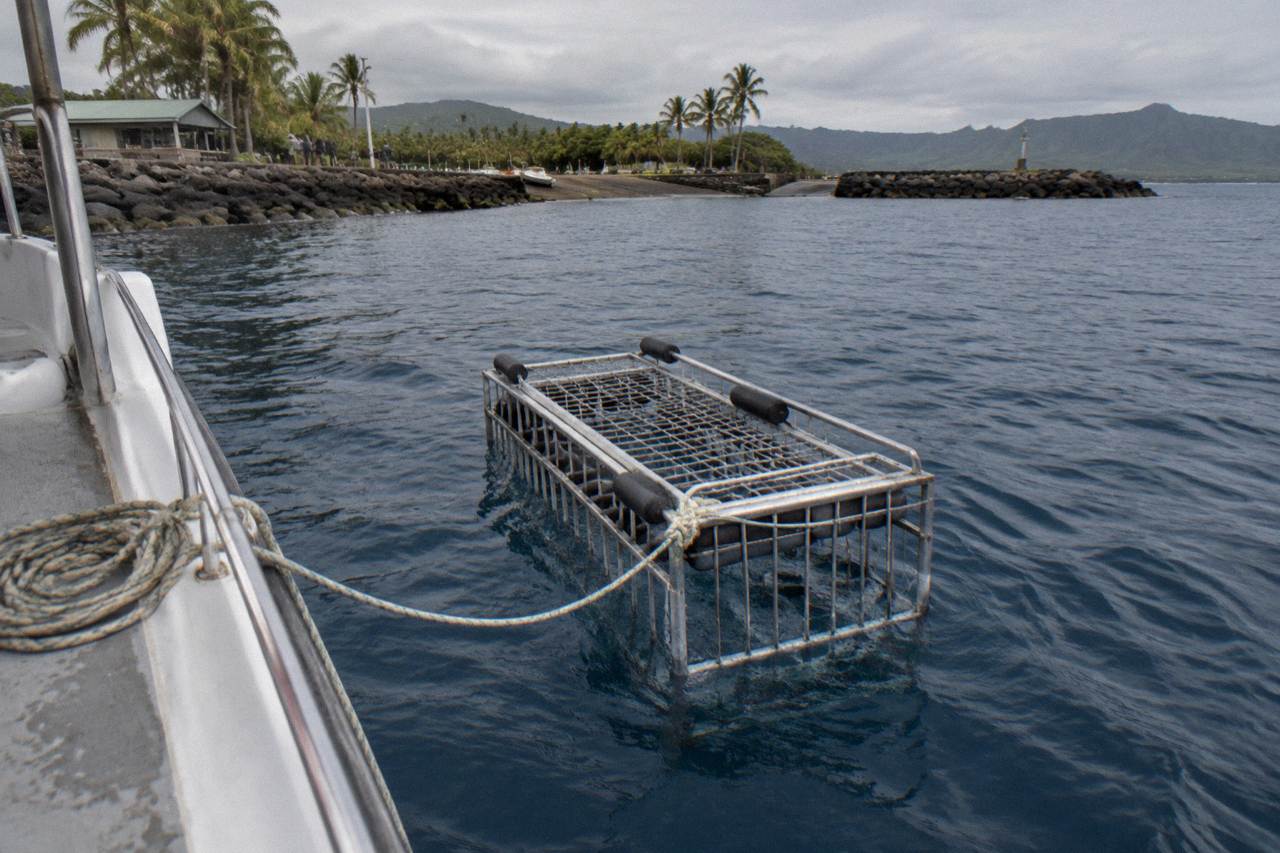
Are You Safe Cage Diving With Sharks In Hawaii?
No ocean activity is 100 percent safe, and honest operators do not claim otherwise. That said, commercial cage dives off Oahu's North Shore have one of the stronger safety records in Hawaii ocean recreation: no fatalities have been found in DLNR's public incident log for these tours, the sharks involved are smaller reef and pelagic species, and the cage itself is a hard physical barrier between you and the animals.
The question usually arrives in two parts, and the second part is where the premise goes wrong. People ask about safety, picturing a great white shark ramming a cage off South Africa or Australia, not oceanic whitetips. That image has almost nothing to do with what happens three miles off Haleiwa. Hawaii's resident shark population does not include great whites in any commercially relevant way; the species that reliably show up at the North Shore dive sites are Galapagos sharks and sandbar sharks, with occasional tiger sharks in late summer and fall. The DLNR species list for Hawaiian waters confirms Galapagos, sandbar and tiger sharks as the resident species of note, and great whites only as rare winter visitors to Hawaiian waters overall, not as part of the North Shore encounter.
So the safety conversation has to start with a correction: you are not in the water with the animal most people fear. You are in a floating steel cage with curious, generally calm requiem sharks that typically range from about five to fifteen feet, drawn to a natural aggregation site in deep blue federal waters. That is a very different proposition, and it deserves an honest answer rather than a marketing one.
If you want the full anatomy of the experience before booking anything, the guide to what happens on a cage dive walks through every stage from the harbor briefing to the moment the cage door closes behind you.
What Sharks Are Actually Around The Cage Off Oahu?
Galapagos sharks and sandbar sharks are the two species you will almost certainly see, with tiger sharks as a seasonal bonus in late summer and fall. Great whites are not part of the commercial North Shore encounter at all, which means the dramatic footage people associate with cage diving in other countries describes a different animal, a different cage design and a different risk profile entirely.
Galapagos sharks run roughly eight to twelve feet on the North Shore tours, and reviews routinely describe groups of seven to twenty individuals gliding past the cage calmly, sometimes close enough to touch the bars. Sandbar sharks are smaller and stockier. Both species are what marine biologists call investigative rather than predatory toward cages: they approach, circle, look, and leave. The behavior that makes great white footage so intense, the open-mouthed strike on a bait or a cage, is simply not how these species interact with the setup off Oahu.
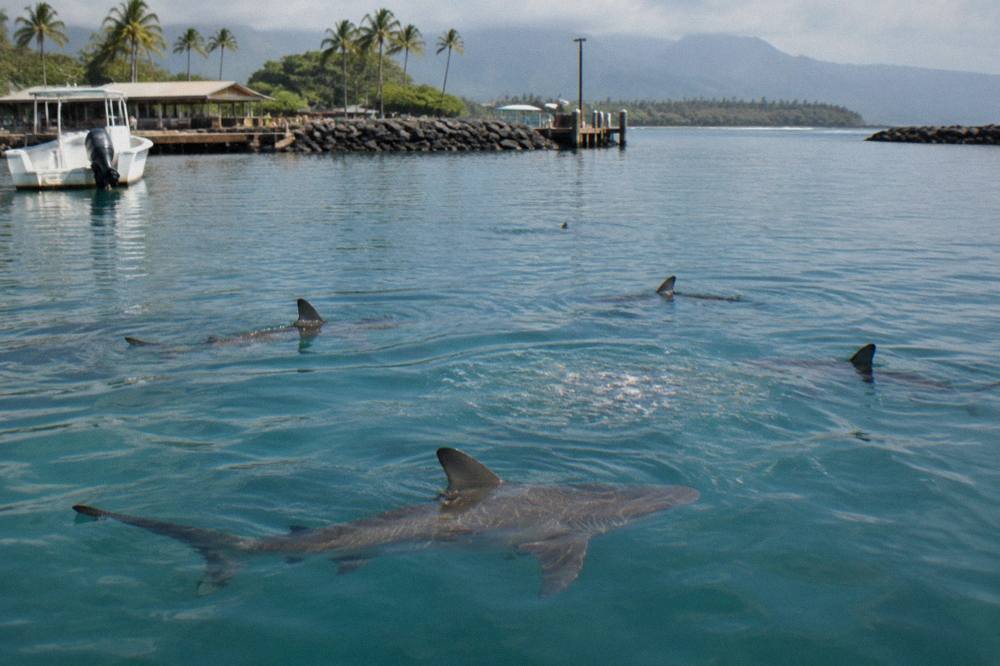
The state's own species registry, maintained by the DLNR Division of Aquatic Resources, lists the Galapagos shark as Near Threatened, the sandbar shark as Vulnerable and the tiger shark as Near Threatened, which speaks to why the tours frame themselves as conservation and education experiences rather than stunt attractions. Operators talk about the Hawaiian cultural significance of sharks, including the shark god Kamohoaliʻi, and the science supports the calm framing: a recent baited underwater video study around Oahu documented sandbar sharks as the numerically dominant species, with encounter rates comparable to other tropical basins.
| Species | Typical size on tours | How often seen | Behavior near the cage |
|---|---|---|---|
| Galapagos shark | 8-12 ft | Almost every trip | Curious, calm circling |
| Sandbar shark | 5-7 ft | Very common | Steady, unbothered passes |
| Tiger shark | 10-14 ft | Seasonal, late summer/falt | Cautious, keeps distance |
| Great white | Not present | Never on these tours | Not applicable |
Tiger shark seasonality deserves one honest caveat. Operators and reviewers report more tiger sightings from August through November, and a 2026 analysis in Frontiers in Marine Science tied peak October sightings off Oahu's north coast to the movement of mature females. Treat the month-level pattern as an operator-supported observation rather than a guarantee, but the underlying seasonality is real.
The flagship option is North Shore Shark Adventures, the steel-cage dive out of Haleiwa rated 4.8 across 3,241 reviews, the largest review pool on the roster. Check availability on the operator's live listing, and read the detailed safety guide before you commit.
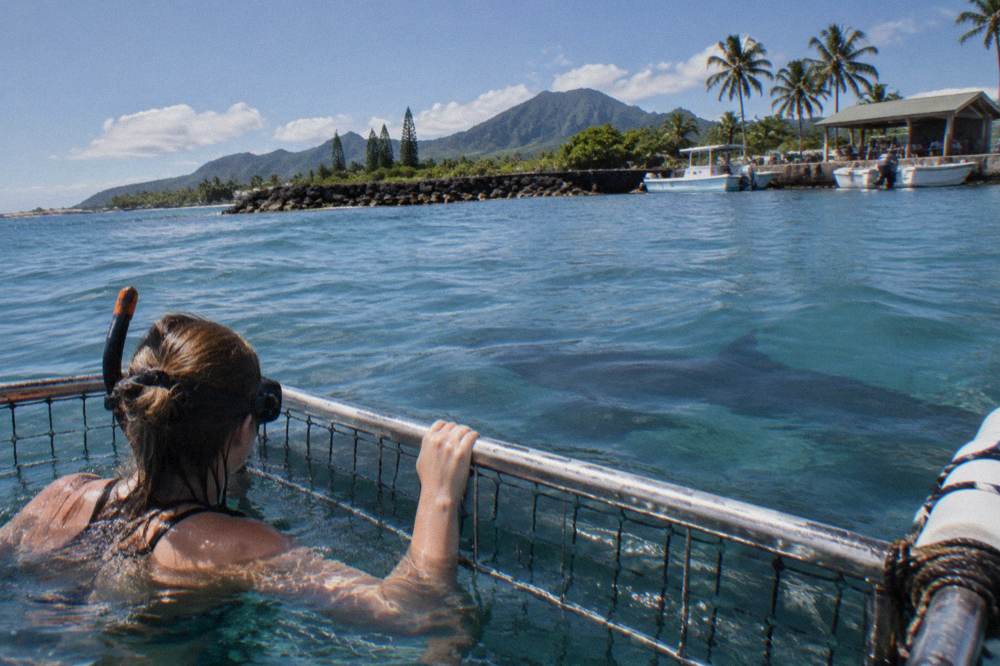
A few practical notes help you set expectations for what you will actually watch from the cage. The cage sits at the surface rather than being submerged, so you view the sharks through panels while breathing normally, no dive certification or prior experience required. Visibility on the North Shore is generally excellent, and the sharks approach on their own terms: some passes are slow and distant, others bring an eight-foot Galapagos within arm's reach of the bars. Reviewers consistently describe the animals as unbothered by the cage itself, which matches the investigative behavior pattern above.
Timing matters more than most first-timers expect. Morning departures tend to offer calmer surface conditions and better water clarity, and trips later in the day can be rescheduled or shortened when the swell picks up. If seeing a tiger shark is a priority, book within the August-to-November window, but go in with the understanding that the core experience, Galapagos and sandbar sharks in numbers, is what virtually every trip delivers year-round.
One last identification tip for the water itself: Galapagos sharks are sleeker and more streamlined with a taller first dorsal fin, while sandbars are recognizable by their stocky build and the noticeably large, tall first dorsal fin set high on the body. Watching for those two silhouettes, plus the occasional bigger, more cautious outline of a tiger, covers nearly everything you will see off Haleiwa.
How Safe Is The Cage Itself?
The cage is a rigid steel structure that floats at the surface, you stay inside it with the bars between you and the sharks, and you can surface at any point because the top of the cage is open to the air. The main risks are not the sharks at all: they are seasickness, the boat ride out, and the ordinary hazards of open ocean.
The design matters more than most first-timers realize. North Shore cages are surface-floating, not submerged, which means you are snorkeling at the waterline with your head above water whenever you want. There is no diving certification, no heavy gear, no enclosed space. You hold the interior rail, watch the sharks through the bars, and pull yourself up to breathe whenever you like. For anyone nervous about being trapped underwater with a predator, this is the single most reassuring design detail: you are never more than a second from air.
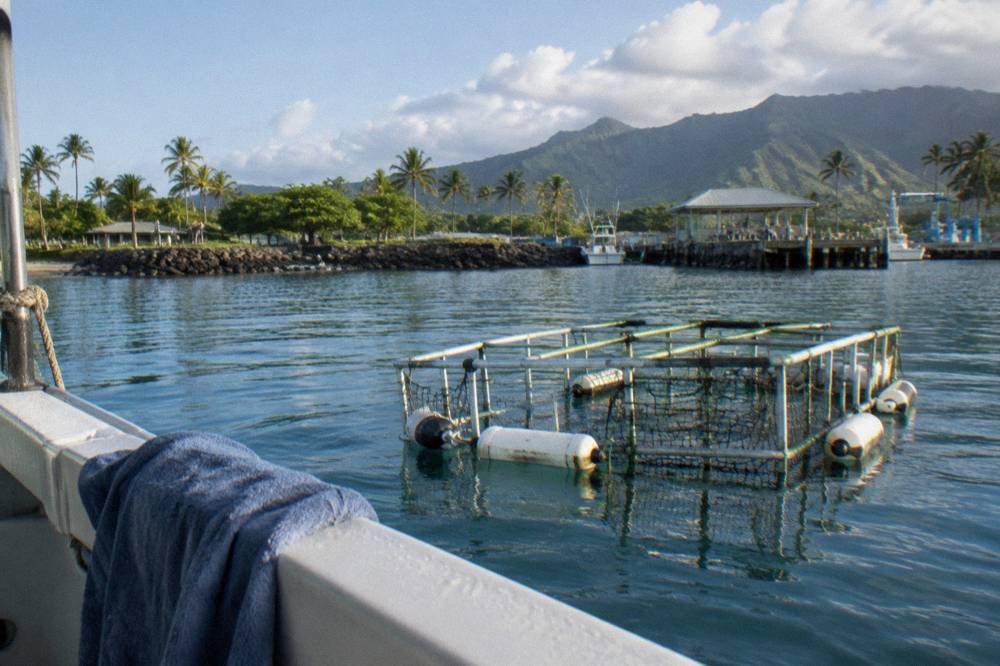
The sharks, for their part, do not charge the cage. The verified reporting on these tours describes Galapagos and sandbar sharks approaching closely and calmly, sometimes inches from the bars, without aggressive strikes. That is consistent with species biology: these are mid-sized requiem sharks investigating a floating object in their territory, not predators responding to the chum-and-bait setup that produces the explosive surface breaches people have seen in documentaries about great whites elsewhere (see Oahu Tour Sharks).
The practical risks are mundane. The run out to the dive site takes about fifteen to twenty minutes across open water, and it is the part of the trip where guests most often struggle. If you are prone to motion sickness, the guide on handling seasickness on a shark boat tour covers what actually works, and the guide on what to wear shark cage diving handles the gear question. Operators cancel or reschedule in rough winter conditions precisely because the boat ride, not the sharks, is the variable they cannot control.
What Does Hawaii's Safety Record Actually Show?
No fatalities on commercial North Shore shark tours have been found in DLNR's public incident records, and the documented tour-related bites in that log are classified as provoked incidents tied to cageless swims, not cage dives. Statewide, Hawaii sees roughly six to ten confirmed shark incidents per year across all ocean users, surfers and swimmers included, which puts commercial cage diving far down the list of things that hurt people in Hawaiian waters.
That claim can be checked directly. The DLNR shark incident log distinguishes provoked from unprovoked incidents, and the tour-related entries on it are provoked cases involving cageless swimming programs, where guides and participants are in the open water without a barrier. The cage dives are a different product with a different risk profile, and the record reflects that distinction (see Cage Diving Risk). No unprovoked fatalities attributed to these tours appear in the state's records.
It is worth being precise about what "provoked" means here, because the word sounds like blame. In the incident-classification sense it means the person was engaged in an activity that placed them in direct interaction with sharks, such as open-water swims at an aggregation site, rather than being approached at random while surfing or swimming. The distinction matters for you as a cage customer: the incidents in the log that involve tours do not describe the product you would be buying. The cage is the barrier that defines the category.
To see what that barrier looks like in practice, the North Shore cage tour lays out the vessel, the cage, and the terms under which you would enter the water with them.
The regulatory picture backs the record up. Hawaii banned shark feeding in state marine waters in 2002 under HRS §188-40.6, which is why every commercial operator runs out past the three-nautical-mile line into federal waters, where the tours operate under DLNR commercial use permits and standard US commercial passenger vessel rules. A 2026 enforcement case saw an unpermitted North Shore operator fined $10,000, which tells you the state actively polices who is allowed to run these trips. Permitted operators are the ones carrying insurance, meeting vessel requirements and answering to DLNR.
Which Tour Should You Book For A First Cage Dive?
For a first-time cage dive, pick a permitted operator out of Haleiwa with a steel cage, a strong review history and a clear cancellation policy. North Shore Shark Adventures is the flagship option at 4.8 across 3,241 reviews, Hawaii Shark Encounters runs at 4.8 across 1,556 reviews, and Haleiwa Shark Tours, rated 4.9 across 313 reviews, meets you at Haleiwa Boat Harbor. Prices are on each operator's live listing.
The differences between them are mostly logistical rather than safety-related, because the dive site, the species and the cage concept are broadly the same across permitted operators. What varies is how you get there, how many people share the cage, and what the trip includes. Hawaii Shark Encounters suits travelers staying in Waikiki who do not want to drive; the run from Waikiki to Haleiwa Boat Harbor is roughly 32 to 35 miles, typically 45 to 75 minutes depending on traffic. Haleiwa Shark Tours suits small groups who want a quieter boat. The flagship North Shore trip suits almost everyone else, and its review pool of over three thousand guests is the largest sample on the island.
If the cage feels like too much barrier and the open-water version appeals instead, the honest comparison is in cage vs cageless shark diving on Oahu, and the deeper question is covered in is cage free shark diving in Oahu safe. The short version: cageless swims are the format behind the provoked incidents in the state log, so the cage is the conservative choice if safety is your top priority.
For planning around conditions, summer, roughly May through September, is the calmer and more reliable season on the North Shore, with water temperatures around 80 degrees in September dropping to about 75 to 76 degrees by February and March. Winter swells bring bigger seas and more cancellations, which is covered in detail in the best time of year for shark diving on Oahu. Whichever tour you choose, Shark Cage Diving Honolulu keeps the operator comparisons current so you can book the trip that matches your risk comfort.
Common Questions About Cage Diving Safety In Hawaii
Are You Safe Cage Diving With Sharks in Hawaii?
No ocean activity is 100 percent safe, but commercial cage dives off Oahu's North Shore have a strong record: no fatalities appear in DLNR's public incident log for these tours, and the sharks involved are Galapagos and sandbar sharks, not great whites. The cage is a rigid steel barrier at the surface, and you can lift your head above water at any time.
Are there great white sharks in Hawaii cage dives?
No. Great whites are not part of Hawaii's resident shark population and are only rare winter visitors to Hawaiian waters overall. The North Shore cage dives feature Galapagos sharks and sandbar sharks, with occasional tiger sharks in late summer and fall. Any image of a great white striking a cage comes from operations in other countries.
Has anyone been hurt on a Hawaii shark tour?
The DLNR incident log documents tour-related bites classified as provoked, and those involve cageless swimming programs rather than cage dives. No fatalities on commercial North Shore shark tours have been found in the state's records. The cage format is the barrier that separates you from the open-water incidents in the log.
Is the cage fully enclosed underwater?
No, and that is a safety feature. North Shore cages float at the surface, so you snorkel at the waterline with the top open to the air. You can surface to breathe at any moment, and no dive certification or heavy equipment is required.
What is the biggest risk of a shark cage dive in Hawaii?
The boat ride, not the sharks. Seasickness on the run out to the dive site is the most common complaint, and operators cancel or reschedule trips in rough conditions, especially during winter swells from November through April. Take motion sickness precautions and book a morning departure in the calmer summer season if you are worried.
Do I need to know how to swim or dive?
You need to be comfortable floating in a life vest or wetsuit inside the cage, but no dive certification is involved. The experience is snorkeling at the surface while holding the cage rail. Operators brief every guest before departure, and you stay inside the bars for the entire water portion of the trip.