Seasickness On An Oahu Shark Boat Tour: Conditions, Prevention, And What To Expect
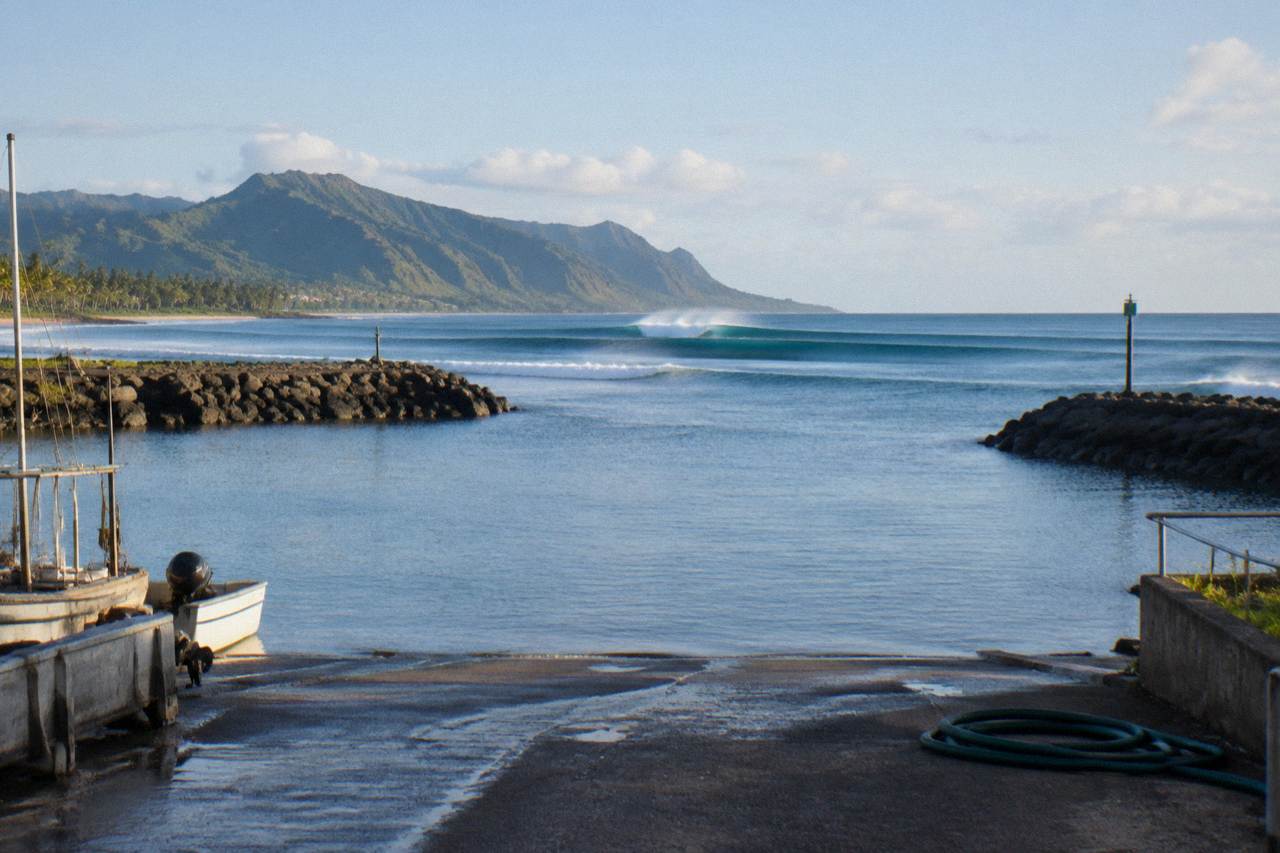
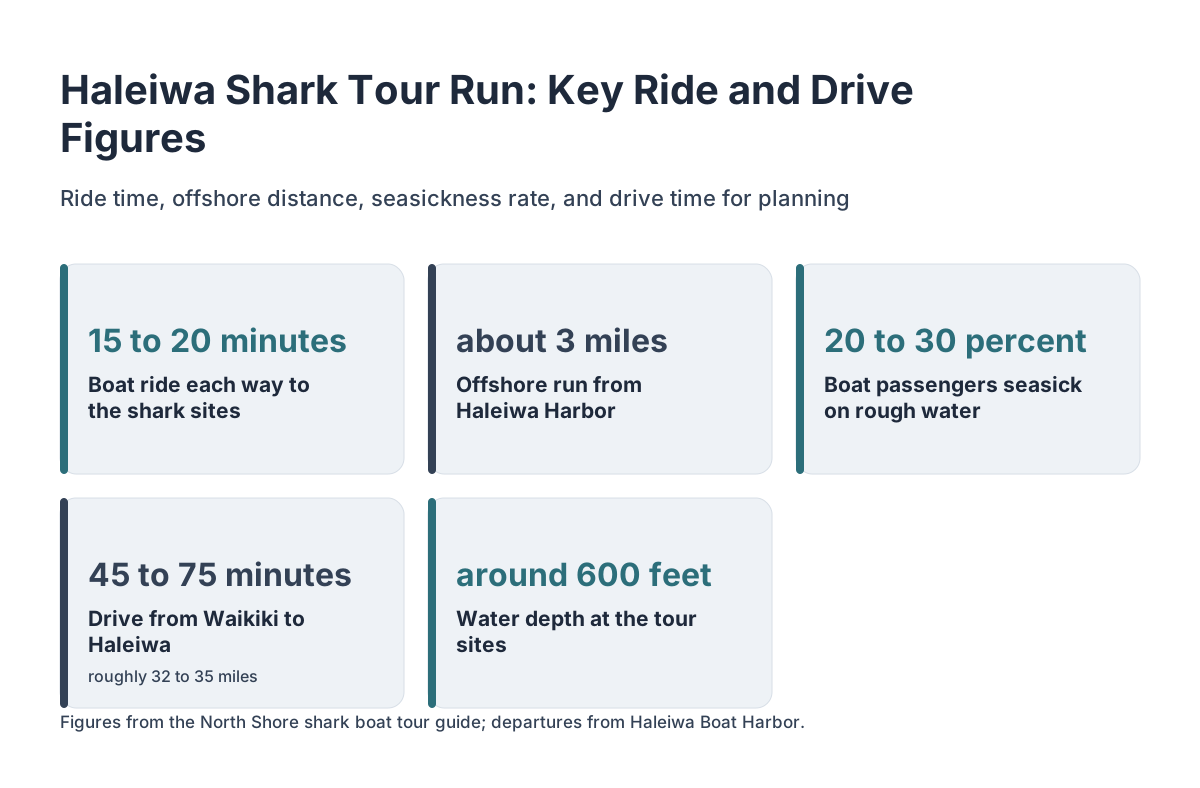
The boat ride from Haleiwa Harbor to the shark grounds takes roughly 15 to 20 minutes over open Pacific swell, and for a meaningful share of guests that ride, not the sharks, is the hardest part of the day.
Short answer
The run from Haleiwa Harbor goes about 3 miles offshore into deep, open water, and sea state varies with the season: summer brings calmer swells, winter often brings chop and higher cancellation rates. Roughly 15 to 30 minutes of boat travel each way is typical. Motion-sickness medication works best taken before departure, and most tours offer free cancellation if conditions look rough.
The shark tours that leave from Haleiwa Boat Harbor do not put you in the water next to the dock. They motor roughly 3 miles offshore, past the state waters boundary, into deep pelagic blue where Galapagos and sandbar sharks naturally aggregate. That means every guest, eager or nervous, spends part of the morning on a small boat crossing open ocean. For most people it is a short, scenic ride. For a meaningful minority it is the part of the tour they remember for the wrong reasons, and a little preparation changes it completely.
This guide covers what the ride actually feels like, how the seasons change it, who is most likely to get sick, and which countermeasures have real evidence behind them. It also flags the booking decisions, departure times and cancellation policies, that matter most if you already know your stomach and the ocean do not always agree.
The most sensible move is to compare early departure slots and cancellation terms on the North Shore shark cage tour booking page before your stomach makes the decision for you.
How Rough Is The Boat Ride To The Shark Grounds?
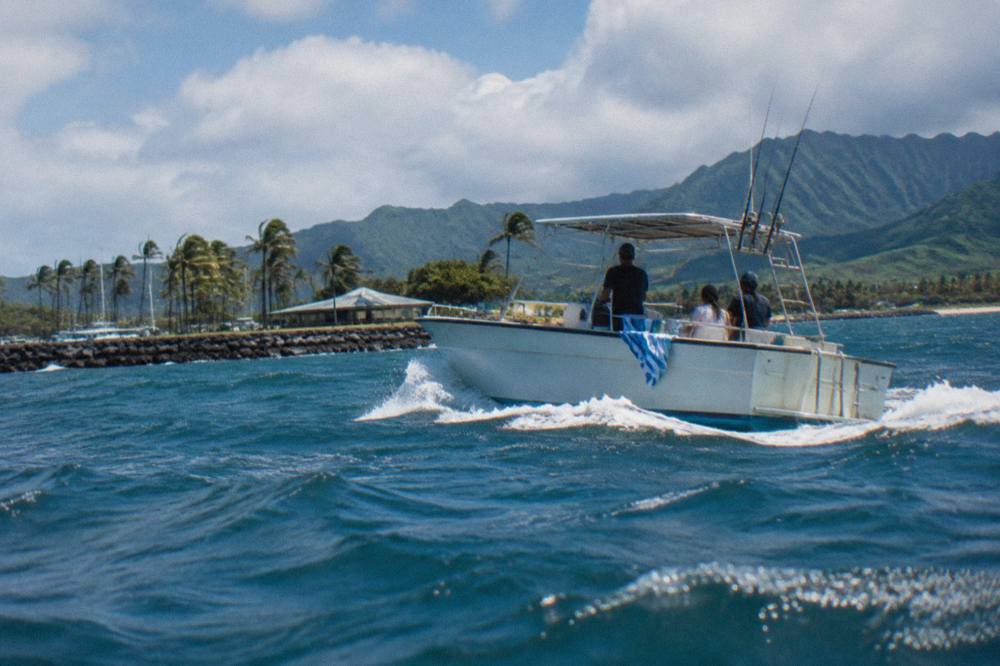
The run from Haleiwa Harbor to the shark sites covers about 3 miles of open ocean and typically takes 15 to 20 minutes each way, over swell that ranges from near-glassy in summer to genuinely bumpy during winter north swells. The boats are small commercial vessels, not cruise-ship stabilizers, so you feel the water directly. Seasickness is common enough that crews brief on it before every departure, and winter trips see higher cancellation rates for exactly this reason.
The North Shore's sea state is driven by North Pacific swell. From roughly November through April, distant storms send large north and northwest swells toward Oahu, producing the big-wave surf the region is famous for and rougher conditions for small boats. From May through September the trade winds lighten, swells shrink, and the crossing is usually steadier. October and April sit in between and can go either way. Operators and seasonal guides consistently describe summer as the more reliable window for smooth rides and clearer water.
Two structural facts about the ride matter for your stomach. First, the boats stop at the shark site and hold position, and a stationary boat rocking on swell is the classic trigger for motion sickness, far more than the transit itself. Second, the water out there is deep, around 600 feet and more at the tour sites, so there is no sheltered anchorage: you rock for as long as you are out. Guests who feel fine on the way out sometimes struggle during the hour at the site, which is why the prevention advice below starts before you leave the harbor.
Seasonal water temperature matters less for nausea but more for comfort. The Waimea Bay buoy, the primary North Shore reference, recorded surface temperatures around 80 degrees Fahrenheit in late September, while the February and March average sits nearer 75 to 76 degrees. Neither is cold enough to worsen seasickness, but the winter months pair cooler water with the rougher surface conditions, which is why many nervous guests book summer. The buoy's near-real-time wave and temperature data is public through PacIOOS at the Waimea Bay station, worth a glance the day before your tour.
Who Actually Gets Seasick On The Shark Boat?
Motion sickness hits an estimated 20 to 30 percent of boat passengers on rough water, and susceptibility rises sharply with swell height, time spent stationary, and looking down at fixed near objects like a phone or a camera screen. Women report it somewhat more often than men, children between roughly 2 and 12 are a high-susceptibility group, and a history of car sickness or migraines predicts it. None of these make the tour impossible, they just change your preparation.
The mechanism is a sensory mismatch: your inner ear registers motion your eyes do not confirm, and the brain reacts as if something is wrong. On a rocking boat that mismatch is constant, which is why the classic advice, keep your eyes on the stable horizon, works. Reading, scrolling a phone, or fussing with camera settings in your lap while the boat rocks are the fastest ways to trigger it. Ironically, shark tours concentrate the risk at the exact moment guests most want to look down: the cage or swim itself, when your eyes lock onto sharks and gear while your body keeps rocking (see Cage Diving Risk).
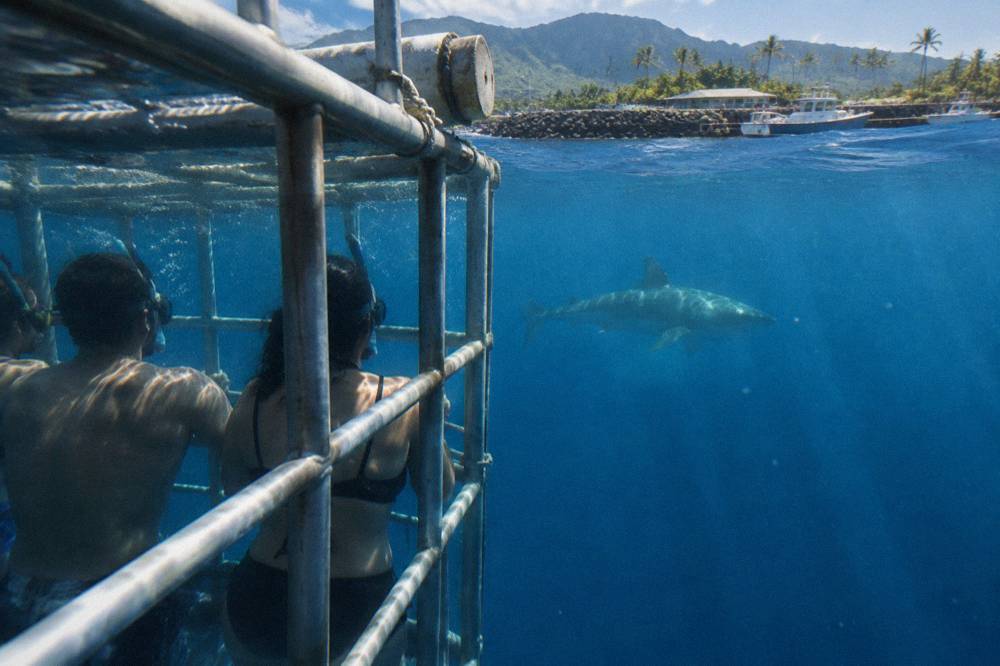
The good news is that the cage or the water helps many people. Once you are floating in the cage, your body moves with the ocean rather than fighting it from a deck, and several motion-sickness patterns ease in the water. The hard minutes are usually the hold at the site while other guests rotate through the cage, and the ride home, when the boat turns back into swell and any medication taken at the dock has started to fade.
| Risk factor | Effect on seasickness likelihood | What to do about it |
|---|---|---|
| History of car or airsickness | Strong predictor of boat sickness | Take medication before departure, not after symptoms start |
| Age 2 to 12 | Peak susceptibility window | Dose kids carefully, check age limits on medication |
| Swell height on the day | Single biggest environmental factor | Check the buoy forecast, book summer for calmest odds |
| Time stationary at the site | Worse than the transit for many | Stay on deck mid-boat, eyes on the horizon |
| Phone or camera use on deck | Fastest common trigger | Set cameras up before the boat leaves the dock |
| Alcohol the night before | Worsens nausea and dehydration | Skip it, hydrate instead |
What Should You Take Before The Boat Leaves?
The two best-evidenced options are dimenhydrinate, sold as Dramamine, and meclizine, sold as Bonine, both over the counter; scopolamine patches are the strongest choice for people who know they get severely sick. All three work far better taken before symptoms begin: meclizine about an hour before boarding, dimenhydrinate 30 to 60 minutes before, and patches applied the night before. Ginger, acupressure bands and green apples are gentler backups with weaker but real support for mild cases.
Timing is the whole game. Once nausea starts, swallowed tablets may not stay down, and the ride is short enough that a tablet taken at the dock does almost nothing for the first hour. The standard schedule that experienced guests follow: medication with a light breakfast, a calm drive north, boarding, and a symptom-free crossing. Heavy, greasy food and alcohol the night before both raise the odds of trouble; a normal light meal is better than an empty stomach, which can make nausea worse.
Non-drug options deserve their place. Ginger, as candy, chews or capsules, has modest evidence for motion sickness and no drowsiness downside. Acupressure wrist bands target the P6 point and help a subset of users. The behavioral basics cost nothing: sit mid-boat where motion is least, face the direction of travel, keep your eyes on the horizon, and get fresh air rather than sitting in a cabin. If you know you are a severe case, ask your doctor about scopolamine well before the trip, since patches need a prescription in the United States and are applied hours ahead.
| Remedy | When to take it | Strength | Main drawback |
|---|---|---|---|
| Meclizine (Bonine) | About 1 hour before boarding | Good, less sedating for many | Mild drowsiness still possible |
| Dimenhydrinate (Dramamine) | 30 to 60 minutes before | Good, fast acting | Noticeable drowsiness |
| Scopolamine patch | The night before, on prescription | Strongest, lasts days | Dry mouth, blur, needs a doctor |
| Ginger chews or capsules | Morning of, and on the boat | Mild, decent for mild cases | Not enough for severe cases |
| Acupressure wrist band | Put on before boarding | Mild, helps some users | Evidence is thin |
| Behavioral: horizon, mid-boat, air | Always, free | Meaningfully reduces triggers | No help once vomiting starts |
If you are still choosing which tour to book, the roster has options that differ in ways a nervous stomach cares about: the flagship steel-cage dive, a sharks-guaranteed educational tour, and a small-group cageless swim.
The flagship option is the North Shore steel-cage dive, rated 4.8 across 3,241 reviews, the largest review pool on the roster. Eating a normal meal after the boat returns, wherever you get it, settles a shaken stomach better than rushing off hungry. For a deeper look at the whole day, our guide to what actually happens on a shark cage dive walks through the full sequence from dock briefing to cage time.
Does The Time Of Day Or Season Matter For A Calmer Ride?
Yes, meaningfully. Summer, May through September, delivers the calmest swells, lighter winds and the most reliable departures, while winter, November through April, brings choppy crossings and higher cancellation rates. Early morning departures usually catch the lightest winds of the day, and September is often described as a sweet spot: calm conditions with thinner crowds than midsummer.
The physics are simple. North Pacific swells are generated by distant winter storms and arrive on the North Shore from late fall through spring; the same swells that make Waimea Bay and Pipeline famous make the offshore run bumpy. Summer reverses the pattern: smaller swell, gentler trades, water clarity that operators describe as deep blue. If your only concern is a smooth boat, book a summer morning. If your trip is locked to a winter date, pick the earliest departure available and check the forecast the day before, because operators do cancel for safety when the swell is too big, and a cancellation is better than a miserable crossing.
Time of day is the lever you control at booking. Trade winds in Hawaii typically build through the morning and peak in the afternoon, so an early trip rides out before the wind chop stacks on top of the swell. Early departures also pair well with the drive: Waikiki to Haleiwa is roughly 32 to 35 miles, typically 45 to 75 minutes depending on traffic, and leaving early beats both the rush-hour bottlenecks around Wahiawa and the beach traffic that thickens on big-surf days. Our guide to getting from Waikiki to Haleiwa covers the route and timing in detail.
| Period | Typical sea state on the run | Notes for queasy guests |
|---|---|---|
| May to September | Calmest, smaller swell, clearer water | Best odds of a smooth crossing |
| October | Transitional, often still calm | A good shoulder-season bet |
| November to April | Bigger swell, chop, more cancellations | Earliest departure, medication ready |
| Early morning, any season | Lightest winds of the day | Pairs with beating the drive traffic |
| Afternoon | Wind chop on top of swell | Highest-risk slot for motion sickness |
What If You Get Sick Anyway, Mid-Tour?
If nausea hits on the water, tell the crew immediately: they deal with this daily and can move you mid-boat, hand you water, or get you into the cage, where many people feel better quickly. Once vomiting starts, medication by mouth will not help; the practical recovery is fresh air, eyes on the horizon, small sips of water, and in stubborn cases an early ride back to the dock. Almost everyone recovers fully within a few hours of landing.
Crews on these boats are not fazed. Seasick guests are a routine part of the job, and no operator on this roster treats it as an embarrassment. The worst move is suffering silently in the stern, head down, trying to tough it out while the boat rocks at the site. The best moves are the opposite: say something, get to the center of the boat where motion is least, face forward, and breathe open air. Getting in the water, counterintuitively, is often the fix, because floating in the cage removes the rocking-deck mismatch that is causing the problem. The wider set of guides lives on Shark Cage Diving Honolulu.
One planning note softens the stakes. These tours do not run in dangerous conditions, and operators cancel or reschedule when the swell is beyond their limits, which is exactly the weather that would make the ride unbearable. So the conditions that produce a genuinely miserable crossing are also the conditions most likely to be cancelled in advance. Booking through an operator with a clear free-cancellation policy means a rough forecast costs you nothing but a reschedule. Haleiwa Shark Tours, rated 4.9 across 313 reviews, is worth a look here for its smaller groups and flexible schedule on an already early morning.
Is The Cage Or Cageless Format Better For A Sensitive Stomach?
For most motion-sensitive guests, the cage is the safer format: you float at the surface holding the bar, your body moves with the water, and there is no deck rocking beneath you. Cageless swims are also surface swims, not scuba dives, so they share much of that benefit, but they add swimming effort and more time face-down watching sharks, which some sensitive guests find harder. Neither format involves depths, currents or diving skills.
The key fact, which surprises people, is that both formats are surface experiences. The cage floats at the top of the water column and you hold on, breathing through your snorkel, while sharks circle below and beside you. Cageless swims are the same thing minus the bars: a small group floats on the surface with a guide while Galapagos and sandbar sharks pass underneath. Nobody descends, so there is no equalization, no tank, and no pressure-related nausea of the kind divers know.
For a queasy guest the differences are subtle but real. In the cage you can hang still and do nothing but watch. Cageless, you are kicking gently and choosing where to look, and the moment you put your face down for minutes at a time, the sensory setup shifts. Plenty of motion-sensitive guests do cageless swims happily, but if you are booking specifically because you are worried about your stomach, the cage removes the most variables. Our comparison of cage versus cageless shark dives on Oahu breaks the tradeoffs down format by format.
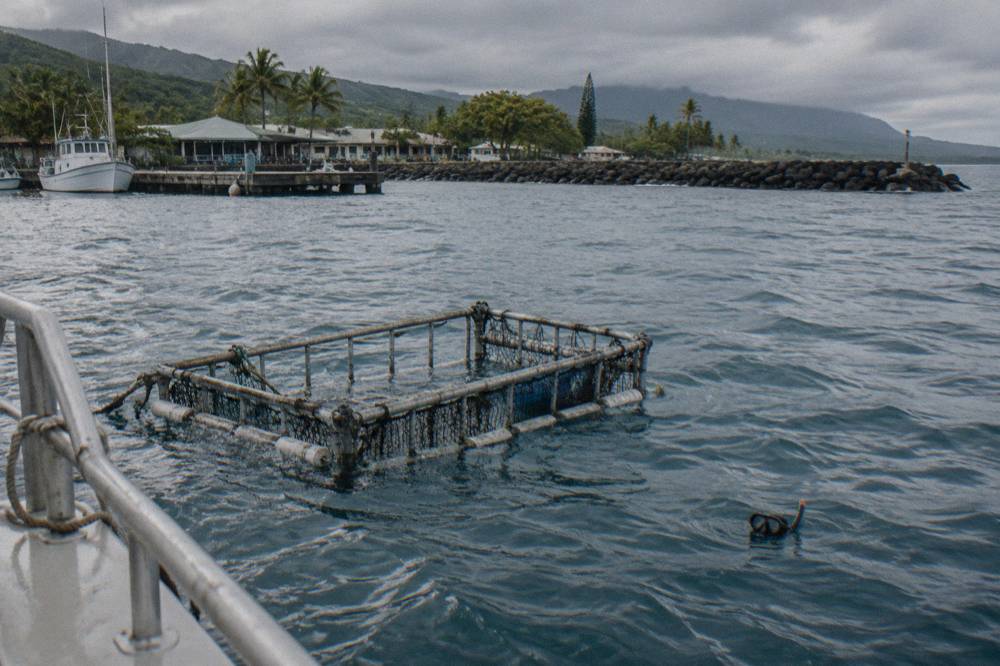
If the cageless format appeals despite a nervous stomach, the small-group cageless swim rated 5.0 across 1,179 reviews is the flagship option in that family, and its marine-scientist guides are practiced at coaching anxious guests through the surface swim.
What Should You Bring, And What Should You Leave On Shore?
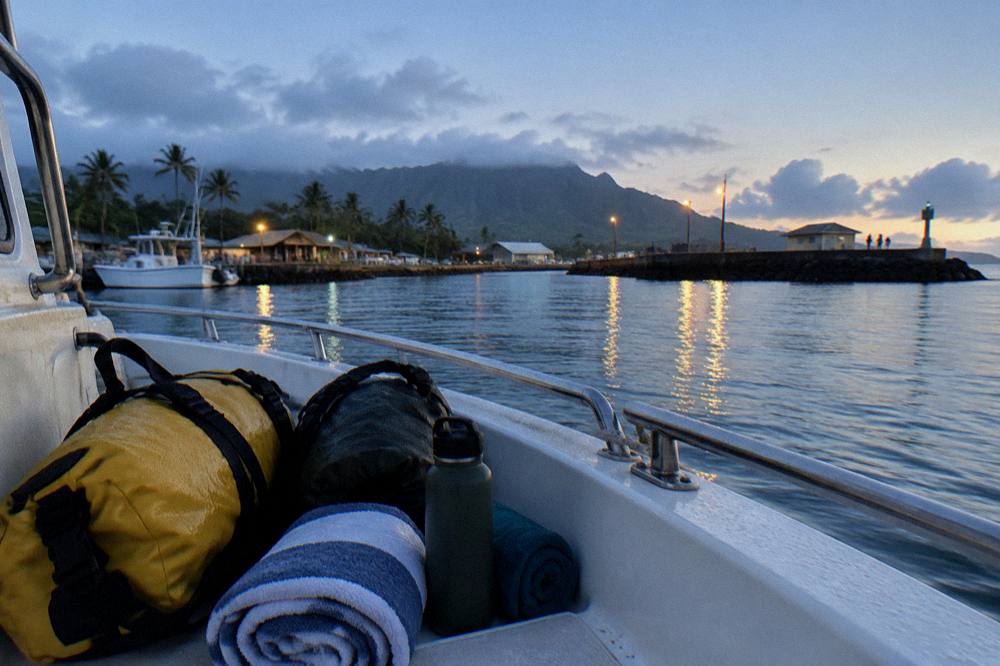
Bring: motion medication taken on schedule, ginger chews as backup, a light breakfast beforehand, water, reef-safe sunscreen applied at the dock, and a towel plus a dry layer for the ride home. Leave on shore: heavy greasy food, alcohol from the night before, dangling hats and loose phones, and any expectation that you will read or scroll comfortably on deck. A plastic bag in your day pack is not pessimism, it is standard kit.
The ride home deserves its own mention. It is the same crossing in reverse, often with the swell on the beam, and by then you have been on the water an hour or more. Guests who felt fine all morning sometimes wobble on the return, so keep the ginger handy, stay mid-boat, and keep talking to the person next to you: conversation forces your eyes up and out, which is half the battle. Within a couple of hours of landing, the odd feeling fades for almost everyone, and the day settles into what you came for, the sharks.
One reassurance worth having in writing: the safety record behind these trips is solid at the level DLNR tracks. The state's official shark incident log, maintained by the Division of Aquatic Resources and updated through September 2026, shows no fatalities on commercial North Shore shark tours in its records, and the incidents that do appear on tour-related entries are classified as provoked, a category distinct from the nearshore unprovoked bites people usually fear. The DLNR shark incidents list is public and worth reading directly if safety questions are part of your pre-trip nerves.
The deeper safety picture, including how the state's shark feeding ban shapes where these tours operate, is covered in our guide to whether shark cage diving is safe. The short version: the tours run in federal waters about 3 miles out precisely because Hawaii law prohibits shark feeding in state marine waters, a rule that has shaped the industry's operating model since 2002.
Booking Choices That Protect A Sensitive Stomach
Three booking decisions matter more than any remedy: choose a summer or early-morning departure for the calmest water, pick an operator with a clear free-cancellation policy so a rough forecast costs nothing, and take your medication on schedule rather than reactively. Guests who do all three rarely have a bad day, even among people who consider themselves motion-sensitive.
Once those choices are settled, reserving a spot becomes the easy part, and the tour's booking page shows departure times that make a calm-water morning easy to plan around.
Cancellation policy is the quiet one. Conditions on the North Shore change day to day, and an operator who lets you reschedule freely turns a scary forecast into a non-event. Check the live listing's terms before you pay, and look specifically for weather-cancellation language rather than generic refund promises. Operators here, including the marine-scientist-guided swim rated 4.8 across 515 reviews, generally reschedule or refund when they cancel for sea state, but the exact terms live on each listing.
Timing is the second decision. The earliest slot of the day gets the lightest winds, and it also protects your drive: the route from Waikiki runs about 45 minutes without traffic but stretches past an hour when the Wahiawa section bottlenecks, so an early start is calmer on the road as well as the water. The third decision is honesty with yourself. If you are the person who cannot sit in the back seat of a car, plan like it: medication the night before if you use patches, meclizine at breakfast, ginger in your pocket, and zero guilt about telling the crew how you feel. That is a routine morning for them.
If you are still comparing, these three picks span the formats and price points worth a look.
Common Questions About Seasickness On A Shark Boat Tour
How rough is the boat ride on an Oahu shark tour?
The crossing from Haleiwa Harbor runs about 3 miles offshore and typically takes 15 to 20 minutes each way. In summer, May through September, it is usually calm; in winter, November through April, swell and chop are common and cancellation rates rise. The time spent stationary at the shark site, often an hour, is usually rougher on sensitive stomachs than the transit itself.
What is the best seasickness medication for a shark boat tour?
Meclizine taken about an hour before boarding or dimenhydrinate taken 30 to 60 minutes before both work well for most people. Scopolamine patches, which need a prescription in the United States, are the strongest option for severe cases and go on the night before. All of them work preventively, not once symptoms have started.
Do shark tours get cancelled for rough seas?
Yes. Winter swells on the North Shore regularly produce cancellations, and operators reschedule or refund when sea state exceeds their limits. Booking an operator with a clear free-cancellation policy means a rough forecast costs you nothing but a new date, and the conditions that would make the ride miserable are largely the same ones that get cancelled in advance.
Will I feel better once I am in the cage?
Most motion-sensitive guests do. Floating at the surface in the cage removes the rocking-deck mismatch that causes seasickness, because your body moves with the water instead of fighting it from a bench. The hard minutes are usually the hold on deck while others rotate through the cage, and the ride home.
What time of day is calmest for the boat ride?
Early morning. Hawaiian trade winds typically build through the morning and peak in the afternoon, so the first departures ride out before wind chop stacks on top of the swell. Early slots also pair with an easier drive from Waikiki, which takes roughly 45 to 75 minutes depending on traffic.
Is the cageless swim worse than the cage for seasickness?
Not necessarily, since both are surface swims, but the cage is the lower-effort format: you hang still at the bars and watch. Cageless swims add gentle kicking and longer stretches face-down, which some sensitive guests find harder. If your stomach is the main worry, the cage removes the most variables.