Cage Or Cage-Free Shark Diving On Oahu: How To Choose
Every Oahu shark tour buyer eventually hits the same fork: climb into a steel cage beside the boat, or slip into open water with nothing between you and the sharks. Here is how the two formats actually compare.
Short answer
Cage dives run from a fixed steel cage beside the boat and suit first-timers and families; cageless swims put you in open water with a guide and suit confident swimmers. Both operate about 3 miles off Haleiwa in federal waters, both see Galapagos and sandbar sharks, and no fatalities appear in DLNR's records for commercial North Shore tours.
Oahu's North Shore runs two genuinely different shark experiences out of the same small harbor. One puts you inside a steel cage that hangs beside the boat, with bars between you and the animals. The other puts you in the open ocean with a mask, fins and a guide, with nothing between you and the sharks at all. Operators market both hard, reviews blur them together, and the price difference between them is smaller than most people expect, which is why the format question catches so many buyers at the checkout screen.
This guide separates the two honestly. It draws on the state statutes that shape how these tours operate, the species records for the waters off Haleiwa, the incident log maintained by Hawaii's Department of Land and Natural Resources, and the current tour roster serving the North Shore. The short version: the cage is a comfort feature, not a survival feature, and the right choice depends far more on your swimming confidence and your stomach for open water than on any safety statistic.
What Is The Difference Between A Cage Dive And A Cageless Swim?
A cage dive keeps you inside a fixed steel cage suspended beside the boat, breathing through a snorkel at the surface, while a cageless swim puts you directly in the open ocean with a trained guide, usually holding a surfboard or flotation line, and no barrier at all. Both run to the same patch of deep blue water roughly 3 miles off Haleiwa, and both are snorkel experiences, not scuba dives. No certification is needed for either format.
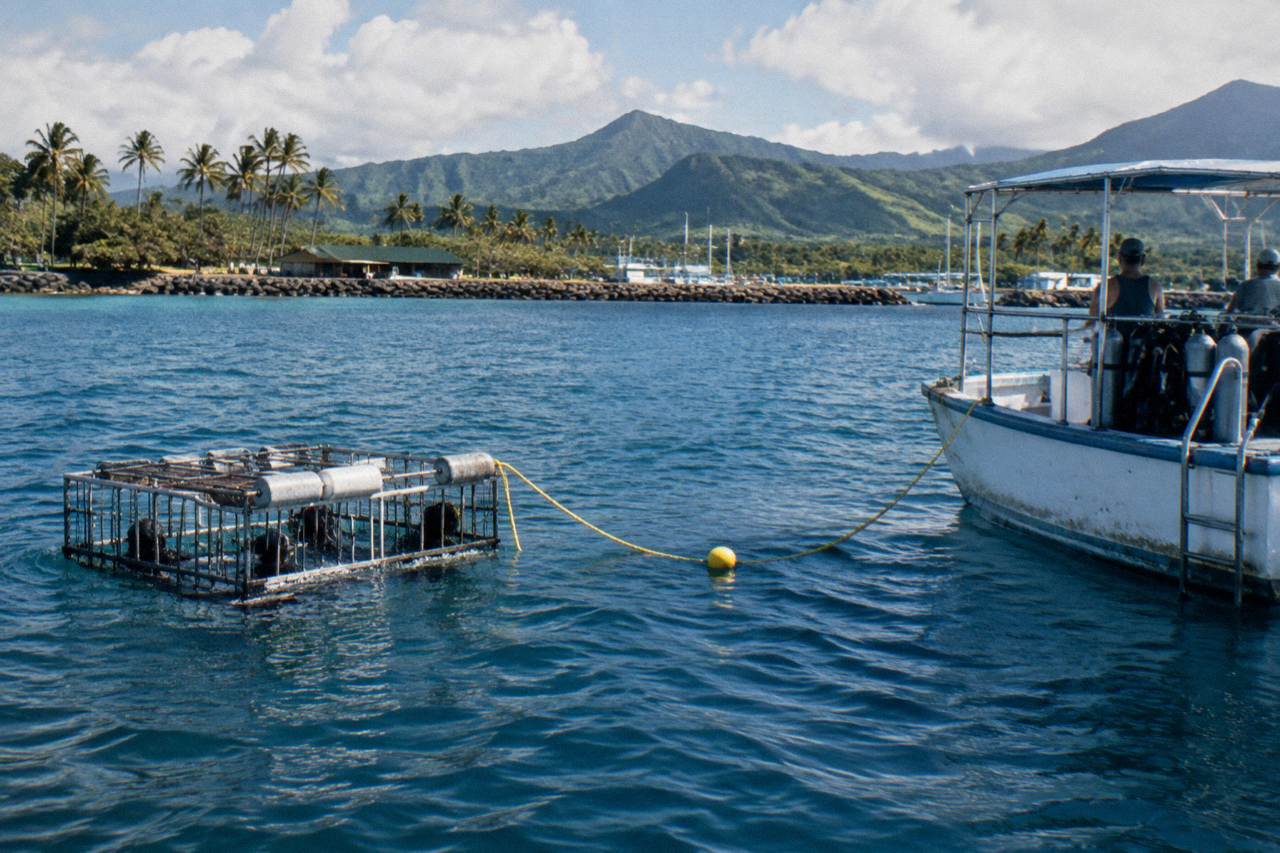
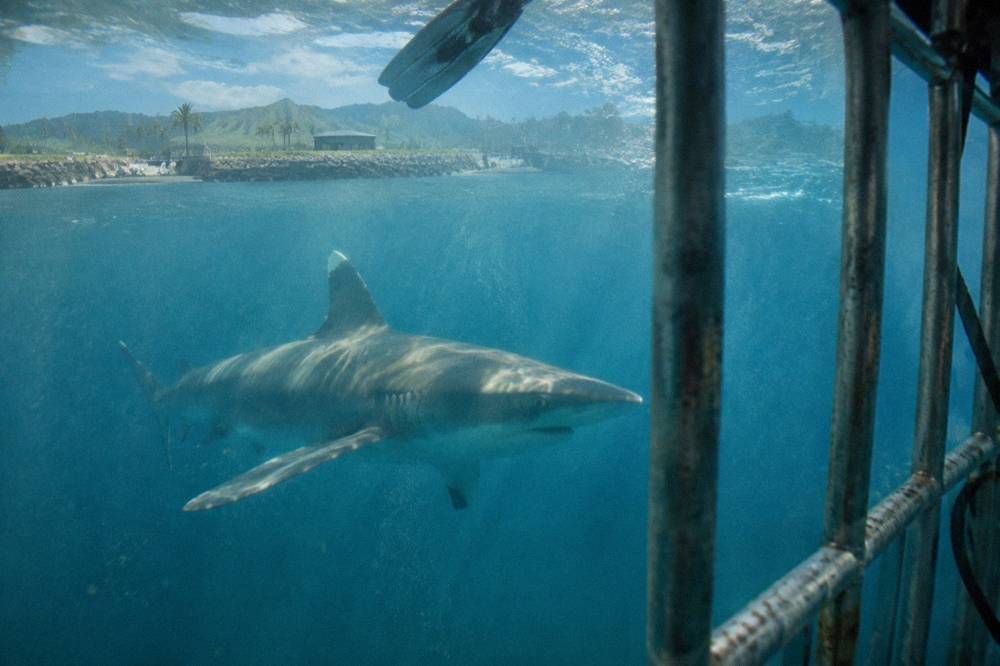
The cage itself is a rectangular steel frame with viewing gaps wide enough to see out and narrow enough to keep the sharks out. It hangs at the surface, so you float upright inside it with your face in the water, holding the bars, and the sharks come to you. You never descend, you never hold your breath long, and you can lift your head out of the water at any moment. For nervous swimmers, children meeting the site's age rules, and anyone who wants a photograph with a shark clearly framed in the foreground, the cage is the easier sell.
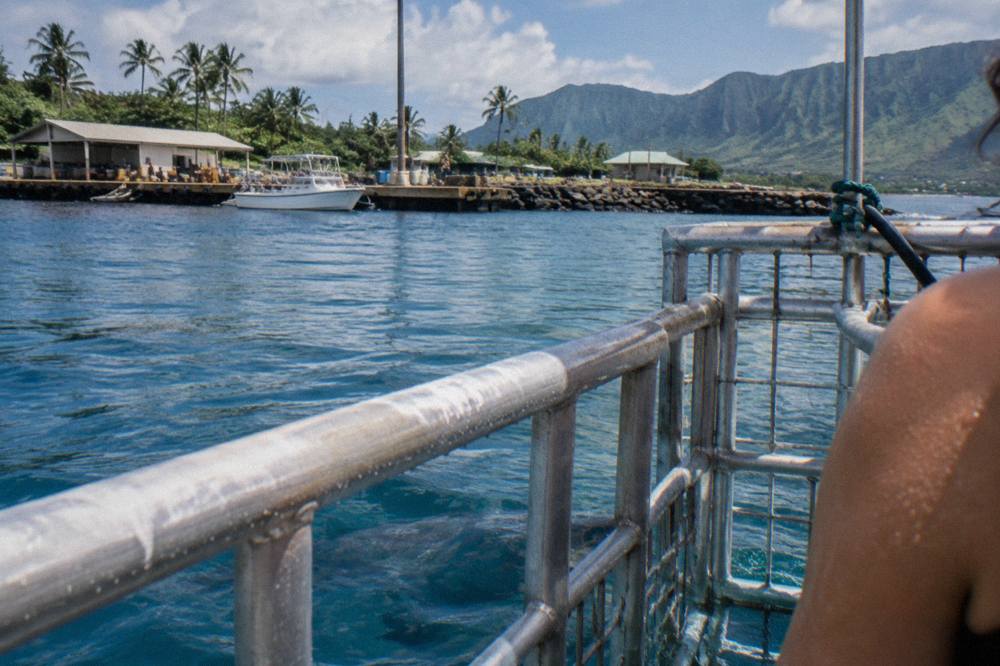
The cageless format drops the barrier entirely. You enter the water at the surface, usually in a small group behind a guide, and the sharks circle at their own choosing. Guides position swimmers together, keep the group tight, and manage the animals' approach angles. It is closer to freediving than to diving: you stay at the surface, in water hundreds of feet deep, over open pelagic blue. The roster's cageless operators include marine-scientist-led programs where the education is as much the point as the encounter.
One legal quirk shapes both formats more than most visitors realize. Hawaii law bans shark feeding in state marine waters, the zone from shore out to 3 nautical miles, under HRS §188-40.6. That is precisely why every commercial shark tour on this island runs its boat past the 3-mile line into federal waters before stopping. The site you swim at, and the aggregation of sharks that gathers there, exist because of that statutory boundary.
Which Oahu Shark Tour Format Should You Choose?
Choose the cage if you are a weak swimmer, prone to anxiety in open water, or traveling with kids; choose the cageless swim if you are a confident swimmer who wants the sharks on their own terms and does not need a barrier to enjoy the encounter. Roughly, the cage is the crowd-pleaser and the cageless swim is the connoisseur's pick, and the roster supports both with well-reviewed operators.
The flagship cage experience on the North Shore is North Shore Shark Adventures, which holds a 4.8 rating across 3,241 reviews and runs a roughly 1.5-hour trip. It is the volume leader for a reason: the steel cage is the format most first-time visitors picture when they book a shark tour, and the operator has the review pool to show for it. Its tour page has the full details of what the trip includes, and you can also Check availability for your dates.
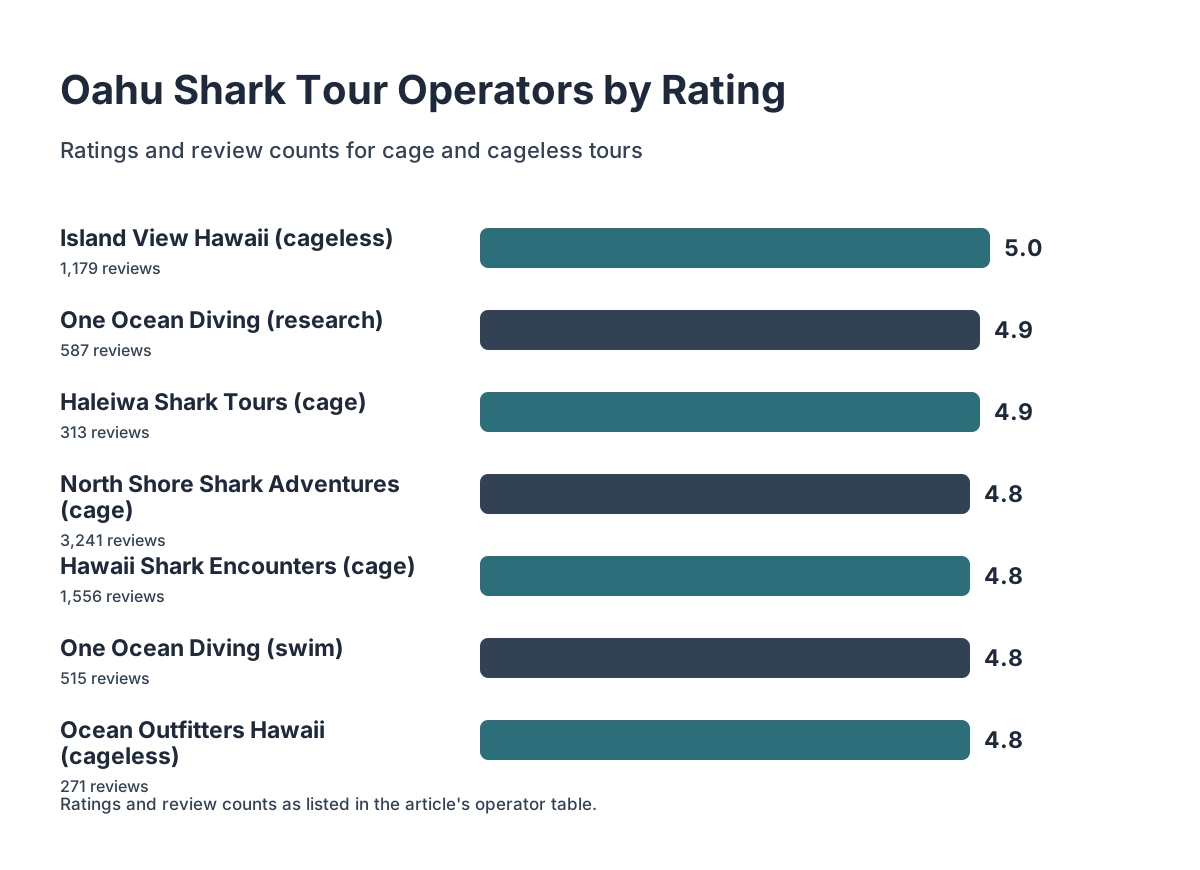
On the cageless side, Island View Hawaii runs a small-group cage-free swim that currently holds a 5.0 rating from 1,179 reviews, the strongest rating on the whole roster, and One Ocean Diving runs a research-focused swim at 4.9 from 587 reviews with a shark-sighting guarantee. Between those three you can cover both formats without ever leaving the Haleiwa departure scene.
| Operator | Format | Rating | Reviews | Standout feature |
|---|---|---|---|---|
| North Shore Shark Adventures | Steel cage | 4.8 | 3,241 | Flagship, largest review pool |
| Island View Hawaii | Cageless | 5.0 | 1,179 | Small-group cage-free swim |
| One Ocean Diving (research) | Cageless | 4.9 | 587 | Sharks guaranteed |
| One Ocean Diving (swim) | Cageless | 4.8 | 515 | Marine-scientist-guided swim |
| Hawaii Shark Encounters | Cage | 4.8 | 1,556 | Self-drive or rideshare |
| Haleiwa Shark Tours | Cage | 4.9 | 313 | Smaller groups, flexible schedule |
| Ocean Outfitters Hawaii | Cageless | 4.8 | 271 | Slip 19 departure |
The honest tiebreaker is your answer to one question: when a six-foot Galapagos shark swims straight at you, do you want steel between you and it, or do you want to see it turn away on its own? Neither answer is wrong. The cage divers get the same animals, the same water and the same three-mile boat ride; they simply get them with a handrail. The cageless swimmers get the unmediated version, and most of them describe it afterward as the more moving of the two, precisely because nothing happened. If you genuinely cannot answer the question, take the cage first; you can always go cageless on the next trip.
How Safe Is A Cageless Shark Dive Compared With A Cage Dive?
No fatalities on commercial North Shore shark tours appear anywhere in DLNR's incident records, and the documented bites tied to these tours are classified by the state as provoked incidents, meaning they followed deliberate interaction with the animals rather than random attacks. The cage has never been the thing separating the safe outcomes from the unlucky ones; the guide's protocol is.
That claim deserves its evidence spelled out. DLNR's Division of Aquatic Resources maintains a public shark incident list, and its entries tied to swimming-with-sharks tours off Haleiwa are recorded as provoked: bites on arms, hands or thighs that occurred during guided encounters, treated, and closed. The state's broader incident counts for Hawaii as a whole, the unprovoked bites on surfers and swimmers near shore, run at single digits per year across all islands, and Oahu has recorded no fatality in those broader records since 1994. None of the provoked tour incidents in the log ended in a death.
Why, then, do the bites happen at all, and why almost exclusively on the cageless side? Because the cageless format involves people in the water with the animals, and people do unpredictable things: reaching out, kicking away, drifting from the group. Operators manage this with strict group cohesion, guide positioning and briefings that forbid touching or chasing. The species involved matter too. Galapagos and sandbar sharks, the two you will almost certainly meet, are curious but non-territorial requiem sharks that investigate and glide past. They are not ambush predators testing prey, which is the behavioral pattern behind serious unprovoked bites elsewhere in the world.
If you want a deeper read on the risk picture, including how the provoked-versus-unprovoked distinction works and what the cage does and does not protect against, see is shark cage diving actually safe. The short guidance from that research: book a permitted operator, follow the briefing exactly, and the format choice becomes a preference rather than a risk decision.
One nuance worth naming: the cage is not a sealed box. Sharks can and do press their snouts against it, and the viewing gaps are sized to keep out a shark's head, not to create a wall of glass. Divers inside the cage are taught to keep hands and camera gear inside the frame. The cageless swimmers are taught to stay as a group and let the sharks approach. Both sets of rules exist because the animals are wild, and the operators who enforce them most strictly are the ones whose safety records hold up over years.
What Sharks Will You Actually See, Cage Or No Cage?
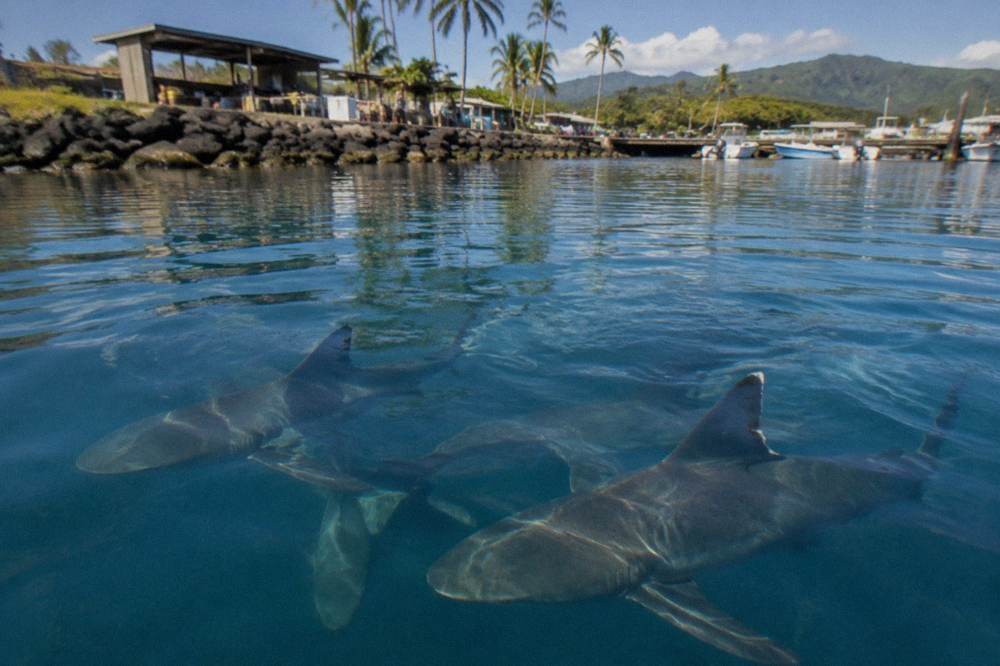
Both formats see the same animals at the same site: Galapagos sharks and sandbar sharks year-round, typically 5 to 15 feet long, with tiger sharks as an occasional and largely seasonal visitor. There are no great white sharks on these tours; great whites are rare winter visitors to Hawaiian waters at most, and no North Shore operator encounters them.
The species list comes from DLNR's own Hawaii shark species records, which confirm Galapagos, sandbar and tiger sharks in Hawaiian waters, with the Galapagos listed as Near Threatened and the sandbar as Vulnerable. The tour-side reporting is consistent: Galapagos and sandbar sharks show up reliably at the offshore aggregation site, often in groups, gliding past the cage or the swim line with what divers describe as calm, investigative behavior. Review accounts from the 2026 season describe multiple Galapagos sharks in the 8-to-12-foot range circling close enough to touch the cage, and doing exactly the same to the cageless groups.
Tiger sharks are the wildcard. Operator reporting puts them more often in the late summer and fall window, and a 2026 analysis in Frontiers in Marine Science tied peak tiger sightings off Oahu's north coast to October, when mature females arrive from the northwestern islands. Treat the month-level precision as an operator-and-study pattern rather than a guarantee, but the seasonal direction is real: an autumn cageless swim carries a meaningfully better chance of a tiger than a spring one. The full species picture, including what each animal behaves like in the water, is covered in what sharks you will see on the Oahu North Shore.
The format does not change the species, but it changes the viewing. Cage divers get face-to-face passes at very close range, framed by the bars, which is why the cage produces the most dramatic photographs. Cageless swimmers get the wider scene: the full silhouette of the animal against open blue, the group behavior, and occasionally a tiger passing below the group at depth. Neither view is better; they are different photographs of the same morning.
What Does Each Format Cost And Include?
Every operator on the North Shore roster currently prices its trips on the live listing rather than through a published flat rate, so compare formats on inclusions rather than on a headline number: the cage trips bundle the boat ride and gear, while the cageless swims bundle small groups, wetsuit tops and, on the research programs, a marine-scientist guide.
The table below is a planning comparison of what each format typically bundles. Treat prices as check-the-listing items, since the roster's operators adjust them seasonally.
| Format | Typical group size | Gear included | Common extras | Price basis |
|---|---|---|---|---|
| Steel cage dive | Larger groups, rotated through the cage in turns | Mask, snorkel, fins | No meal on the flagship trip; photo options | On the listing |
| Cageless small-group swim | Small groups, everyone in the water together | Mask, snorkel, fins, wetsuit top on some trips | Guide in the water; photo options | On the listing |
| Research-led cageless swim | Small groups | Full snorkel gear, wetsuit top | Marine-scientist guide, sighting guarantee | On the listing |
Two cost patterns are worth knowing before you compare. First, the cageless swims are not the premium product by default; the small-group research swims price similarly to the big cage boats, and what you are paying for in either case is the boat, the crew and the permit, not the barrier or its absence (see Paying for a Cage Dive). Second, transport matters. A rental car runs roughly $42 to $64 per day on Oahu before taxes and surcharges, the drive from Waikiki to Haleiwa takes about 45 minutes without traffic and closer to 75 in rush hour, and a one-way rideshare can run $130 to $160. Against that, a tour included, such as the research swim's, quietly saves a party of two a meaningful slice of the trip budget. The full logistics picture, including the new North Shore shuttle pilot, is in the guide to getting from Waikiki to Haleiwa.
Who Should Not Book A Cageless Shark Dive?
Do not book a cageless swim if you cannot swim confidently in deep water without touching anything, if you panic when a large animal is close, if you cannot float calmly at the surface for 30 minutes or more, or if you would reach out to touch a shark. The cage exists for exactly these guests, and there is no shame in it; the cageless format simply has no place to put those instincts safely.
The physical demands are real and under-advertised. You will be over water hundreds of feet deep, in the open ocean, holding position with a group for the better part of an hour. There is no pool edge, no bottom, and no ladder mid-swim. Seasickness compounds it: a boat ride out and back with a surface swim in the middle is the classic trigger pattern, and the seasickness guide for shark boat tours is worth reading before either format, not just the cageless one.
The behavioral demands matter even more. The provoked incidents in the state log share a pattern of close interaction, and the briefings on cageless trips are blunt about it: no touching, no reaching, no swimming at the animals, stay with the group. A guest who follows those rules is in a different risk category from one who does not, regardless of format. If you are booking for a teenager who listens, cageless is fine; if you are booking for one who does not, take the cage.
Age and family considerations point the same way. The cage trips accommodate younger guests within each operator's age rules, which vary by operator and are covered in detail in the kids' age requirements guide. Cageless swims generally expect stronger swimming and more self-control, so operators set the bar higher. When in doubt, email the operator with your child's age and swimming ability before booking; the permitted operators answer this question daily.
How Do You Decide? A Format Quiz That Works
Answer five questions honestly and the format picks itself: can you swim 200 yards without resting, are you comfortable in water too deep to stand in, do you want a photograph with the shark framed close, are you booking for children, and do you want a guide in the water teaching you about the animals? Three or more cage answers means the cage; three or more swim answers means the cageless dive.
| Question | Cage answer | Cageless answer |
|---|---|---|
| Can you swim confidently without holding anything? | Not really, or not for long | Yes, easily |
| How do you feel about water hundreds of feet deep? | Prefer something to hold | Comfortable at the surface |
| What matters most from the trip? | A close, framed shark photo | The unmediated encounter |
| Who is in your group? | Kids or nervous swimmers | Confident adult swimmers |
| What do you want from the guide? | Safe operation and logistics | Marine science and education |
The quiz is not gimmicky; it maps to how the operators themselves segment their guests. The cage boats load larger groups and rotate swimmers through the cage in turns, which suits families and mixed-confidence parties. The cageless programs cap their groups small and keep everyone in the water together, which suits people who came for the education as much as the adrenaline. If you land in the middle, two cageless programs bracket the choice nicely: One Ocean Diving's scientist-guided swim, 4.8 from 515 reviews, leans hard into the research and conservation side, while Island View Hawaii's small-group swim, 5.0 from 1,179 reviews, is the roster's most consistently praised cageless experience.
For the education-first visitor, the research swim is the deeper product. One Ocean Diving's research trip, 4.9 from 587 reviews, includes a shark-sighting guarantee, and its guides work from an active marine-research program, so the surface interval doubles as a lesson in what you just saw (see Most Active Shark Months). That is also the strongest argument for the cageless format as a whole: it converts a thrill purchase into something closer to a field trip, and many guests report the science is what they remember, not the fear.
One last practical note that applies to both formats: the season shapes the day more than the barrier does. Winter swells from November through April make the offshore run bumpier and cancel more departures, while May through September brings calmer seas, clearer water and steadier schedules, with September often the sweet spot. The full month-by-month picture is in the best time of year for shark diving on Oahu. Book the calm season, take your motion precautions, and either format delivers.
The Verdict: One Trip, Two Good Answers
Most first-time visitors should book the cage dive, most repeat visitors should book the cageless swim, and nobody should book either one expecting the barrier to be the safety story, because the state's own records show the safety story is the guide, the species and the protocol. Pick the format that matches your swimming, book a permitted operator, and the sharks take care of the rest.
Once the format question is settled, North Shore Shark Adventures is a permitted operator that runs the steel-cage dive, one of the two formats compared above.
That verdict is not fence-sitting; it reflects how the two products actually behave. The cage dive is the higher-volume product because it removes the swimming question entirely, and the flagship operator's review pool, 4.8 across 3,241 reviews, shows how well it serves that audience. The cageless swim is the deeper product because it puts you in the animals' own element with a scientist at your shoulder, and its review pools are smaller but stronger. Neither one is the tourist trap version of the other. They are two answers to the same question, asked from the same harbor, three miles out into the same blue water.
Whatever you choose, book through the operator's live listing rather than a sidewalk booth, confirm the departure harbor and the check-in time the day before, and read the cancellation terms, since most of the North Shore operators offer free cancellation windows that matter when winter swells scrap trips on short notice. The sharks off Haleiwa have been meeting boats there for decades. The only real decision you are making is whether you want to meet them through steel or through open water, and both answers have a long, well-documented record behind them. Shark Cage Diving Honolulu covers the rest of that record, operator by operator, across the guides on this site.
Common Questions About Cage Vs Cageless Shark Diving On Oahu
Is a cageless shark dive safe?
No fatalities on commercial North Shore shark tours appear in DLNR's records, and the documented bites tied to these tours are classified by the state as provoked incidents during guided encounters. The cageless format is run by permitted operators with strict group protocols, and the species involved, mainly Galapagos and sandbar sharks, are curious rather than aggressive.
Do you see the same sharks with and without the cage?
Yes. Both formats visit the same deep-water site roughly 3 miles off Haleiwa, where Galapagos and sandbar sharks aggregate year-round and tiger sharks appear occasionally, more often in late summer and fall. The barrier changes the viewing, not the animals.
Which is better for beginners, cage or cageless?
The cage. It requires no sustained swimming, gives you something to hold, and lets you lift your head out of the water at any time. Cageless swims expect confident swimming in deep water and the discipline to stay with the group without reaching toward the animals.
Is a cageless shark dive worth it compared with the cage?
For confident swimmers, most guests describe the cageless swim as the more memorable format, since the sharks approach on their own terms and a guide teaches you about the animals in the water. For nervous swimmers or families, the cage delivers the same site and species with far less demand.
Why do Oahu shark tours go so far offshore?
Hawaii law bans shark feeding in state marine waters, the zone extending 3 nautical miles from shore, under HRS §188-40.6. Commercial tours therefore run past that boundary into federal waters, where the sharks naturally aggregate at the deep-water site.
Can you switch from cage to cageless after trying one?
Yes, and many visitors do exactly that, often on consecutive trips. The operators run from the same harbor area on similar schedules, so a morning cage dive and a later cageless swim with a different operator are both realistic within one Oahu vacation.