Is Shark Cage Diving Safe On Oahu? The Cage, The Rules, And The Record
Shark cage diving off Oahu's North Shore has a longer documented safety record than most people expect, and Hawaii's own state agencies publish the numbers. Here is what the cage actually does, how the tours are regulated, and what the official incident log says about the risk.
Short answer
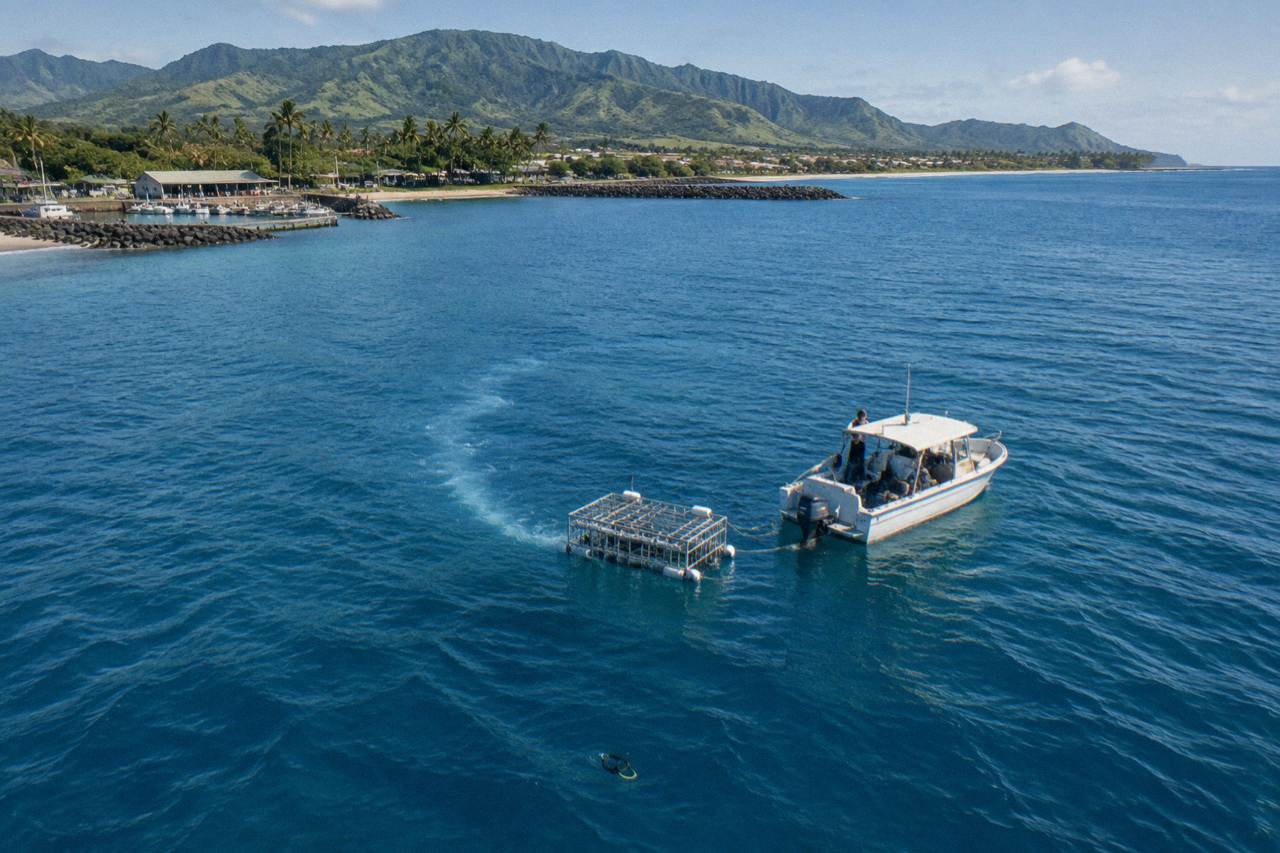
Yes, in the aggregate sense the record supports: DLNR's public shark incident log shows no fatalities on Oahu's commercial North Shore shark tours, and the documented tour-related bites off Haleiwa are classified as provoked incidents involving cageless swims, not cage dives. The cage, the boat protocols, and the 3-mile offshore operating zone all shape that record.
Yes, in the way the official record defines safety: DLNR's public shark incident log shows no fatalities on Oahu's commercial North Shore shark tours, and every documented tour-related bite off Haleiwa in the log is classified as a provoked incident tied to cageless swims rather than cage dives. The cage is a physical barrier, the boats operate under state commercial permits roughly three miles offshore in federal waters, and the species you will meet, mostly Galapagos and sandbar sharks, behave very differently from the animals most people picture when they hear "shark dive."
That is the short version. The longer version involves reading the actual rules, which Hawaii publishes, and separating what the cage does from what the crew does, because the two work together. It also involves being honest about the incidents that have occurred, all of them in the water outside a cage, and what that distinction means for how you choose a tour.
What Does The Cage Actually Protect You From?
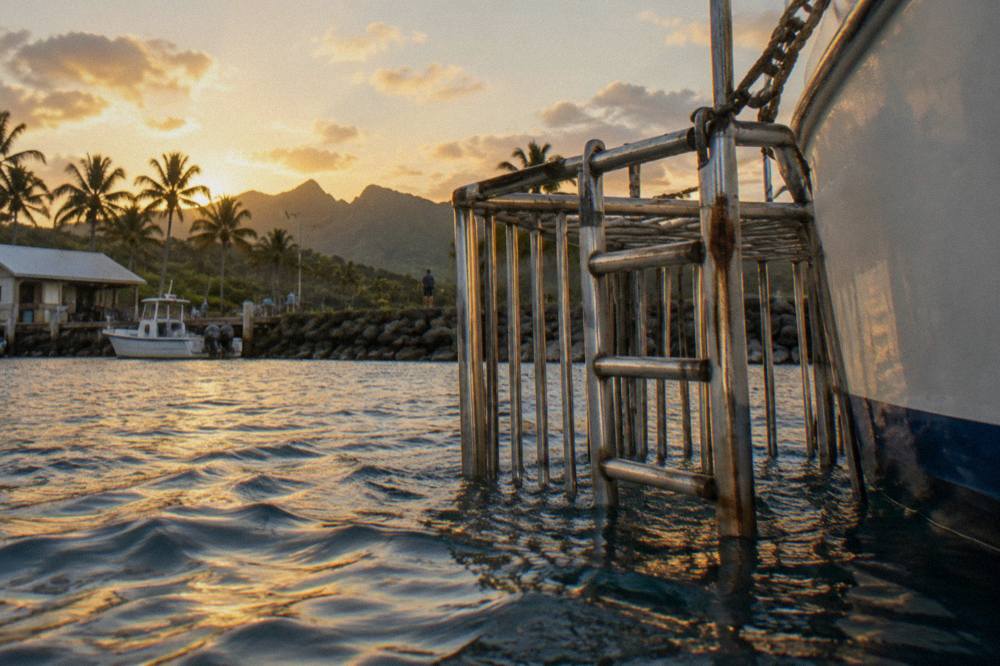
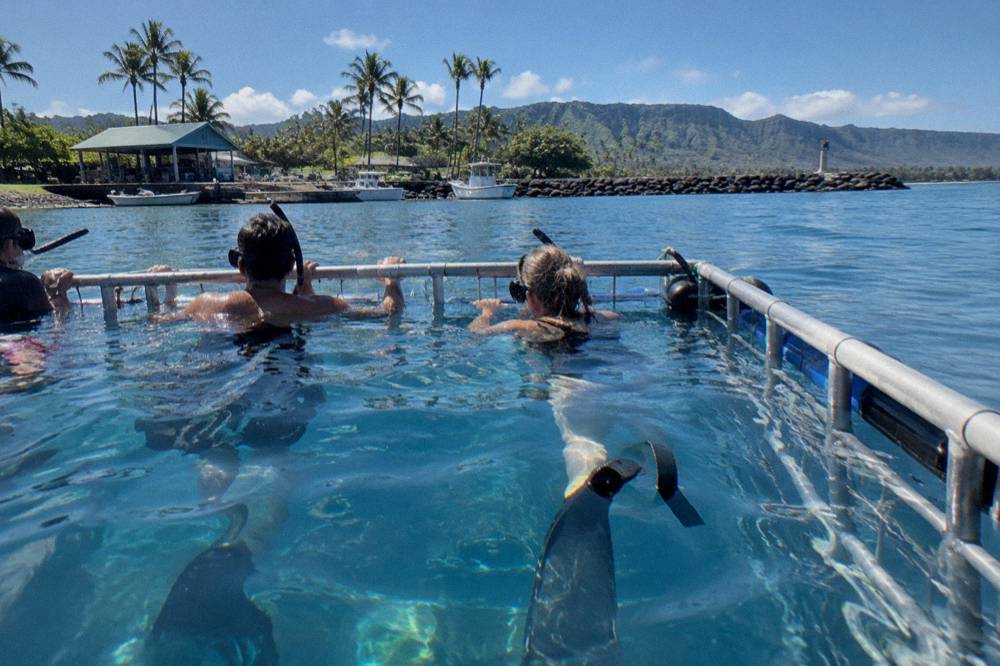
The cage protects you from contact with the sharks by putting an aluminum or steel barrier between your body and the animals, which approach out of curiosity rather than aggression, so the barrier is doing less fighting-off work than most first-timers imagine and more simple separation work. Galapagos and sandbar sharks off Haleiwa, typically in the 5 to 15 foot range, glide up to the cage, look at the people inside, and circle away. Reviews from the 2026 season describe sharks passing within inches of the bars, calm and inquisitive, without charging the structure.
That behavior is the reason the cage is a fence and not a fortress. These are not great white sharks; great whites are not part of Hawaii's resident shark population and are not what North Shore operators show divers. The tours visit a pelagic aggregation site in deep blue water where Galapagos and sandbar sharks naturally gather, roughly three miles offshore from Haleiwa Harbor, sometimes over water described as nearly 300 feet deep. The cage keeps snorkelers and sharks in the same frame of water without letting either party touch the other.
It also keeps people contained, which matters as much as keeping sharks out. A cage full of flapping fins and grabbing hands is its own hazard, and the crew's job includes managing the humans as much as the wildlife. If you are weighing the cage experience against the cageless swim, our comparison of cage versus cageless shark diving on Oahu breaks down the differences in exposure, supervision, and price in detail.
For most first-timers the cage is the steadier introduction, and the North Shore shark cage tour listing lays out departure logistics and what the crew handles so you can weigh it against the cageless swim.
The three tours above span the safety spectrum nicely: a steel-cage flagship, a cage dive with and a small-group cageless swim rated 5.0 across 1,179 reviews for readers who want the open-water version.
How Are These Tours Regulated In Hawaii?
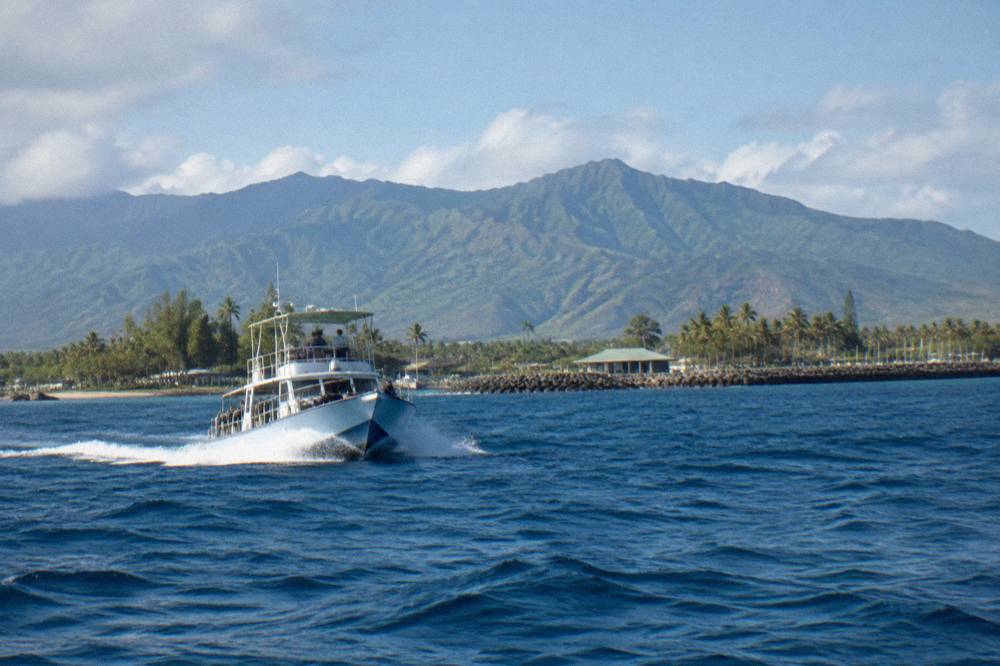
Commercial shark tours off Haleiwa operate under DLNR commercial use permits and run their boats roughly three nautical miles offshore into federal waters, because Hawaii law prohibits shark feeding in state marine waters, which extend from shore out to three nautical miles, and the tours' feeding-adjacent attraction methods are only lawful beyond that line. The statute is HRS §188-40.6, enacted in 2002, which makes it unlawful to conduct any activity related to feeding sharks in state waters, with narrow exceptions for non-commercial traditional Hawaiian cultural practices. The full text is published on the Hawaii State Legislature's official site.
The practical effect is a two-layer system. Inside three miles, state rules govern, and shark feeding is banned outright. Beyond three miles, in federal waters of the exclusive economic zone, the state feeding ban does not apply, and that is where the cages go in the water. The Western Pacific Regional Fishery Management Council publishes a plain-language summary of the state versus federal boundary as it applies to shark activity.
On top of the location rules, DLNR's Division of Boating and Ocean Recreation issues the commercial use permits that let these operators run paying passengers at all, and reports around 2025 put the number of shark-tour permits operating out of Haleiwa at roughly three (see Paying for a Cage Dive). Unauthorized commercial activity carries real consequences: a 2026 case involving unpermitted North Shore ocean operations drew $10,000 in administrative fines. A permitted operator is not just a legal operator, in other words, it is one that passed the state's vetting and carries the insurance and vessel requirements that come with the permit.
| Layer | Rule | What it means for your tour |
|---|---|---|
| State waters (0-3 nm) | HRS §188-40.6 bans shark feeding | Tours cannot chum or feed inside the line |
| Federal waters (3+ nm) | State feeding ban does not apply | This is where the cage goes in |
| Commercial permit | DLNR commercial use permit required | Roughly three shark-tour permits operate from Haleiwa |
| Vessel rules | Standard commercial passenger requirements | Insurance, licensing, USCG-style oversight |
What Does DLNR's Own Safety Record Show?
DLNR's official shark incident log, the same list the state uses to track bites statewide, shows no fatalities on Oahu's commercial North Shore shark tours, and the tour-related incidents it does document off Haleiwa are all classified as provoked, meaning they involved people intentionally interacting with sharks in the open water of cageless swims rather than passengers inside a cage. The log is public and updated regularly; you can read the full incidents list on DLNR's shark program pages yourself rather than taking any writer's word for it.
That aggregate claim is the honest one to make, and it is the level this site will report at. The individual incident records involve named people on specific dates, and this article deliberately does not recount them, both out of respect for the people involved and because single anecdotes make poor safety data. What the aggregate shows is a pattern: cage tours show up in the record as the place nothing happened, and the provoked classification attaches to the cageless side of the industry.
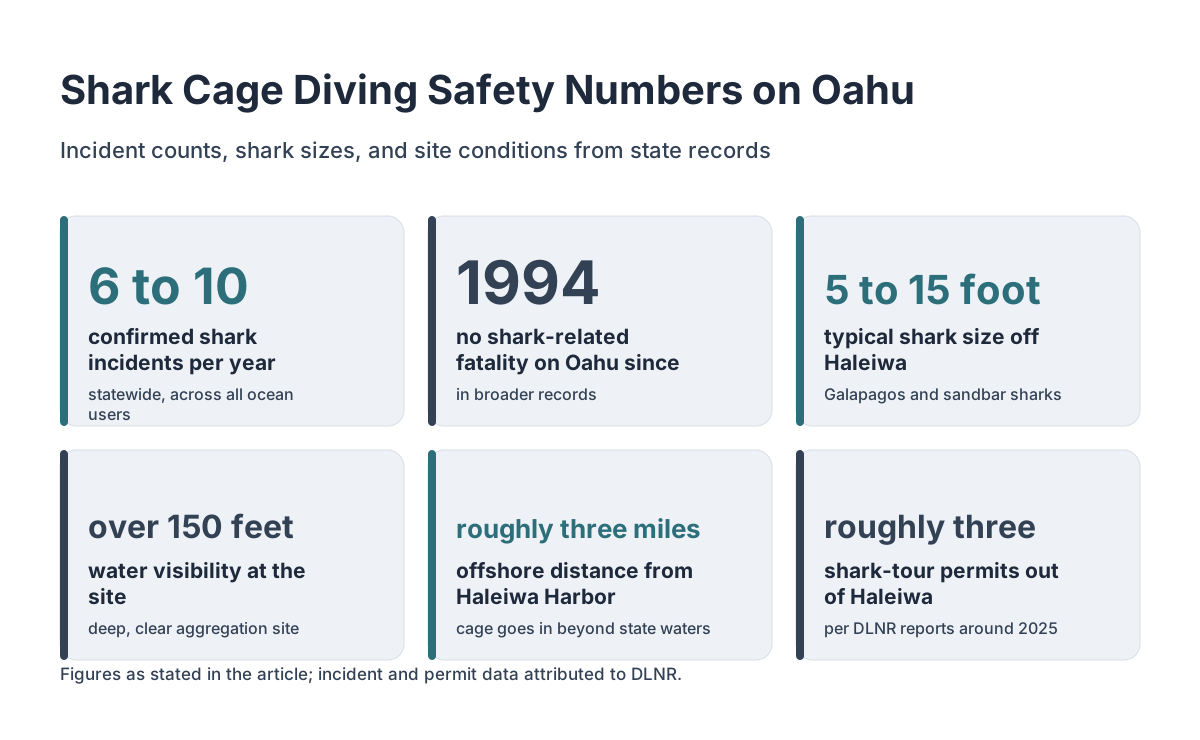
For context, Hawaii as a whole sees roughly 6 to 10 confirmed shark incidents per year statewide across all ocean users, surfers, swimmers, divers, and tour guests together. Oahu has recorded no shark-related fatality in broader records since 1994. Against that backdrop, a commercial activity with years of operation and no fatalities in the state's own log is doing something right.
If the record reassures you and you want the caged version, North Shore Shark Adventures, rated 4.8 across 3,241 reviews, is the flagship steel-cage dive out of Haleiwa, and the listing spells out its current schedule and cancellation terms.
What Safety Protocols Do The Boats And Crews Follow?
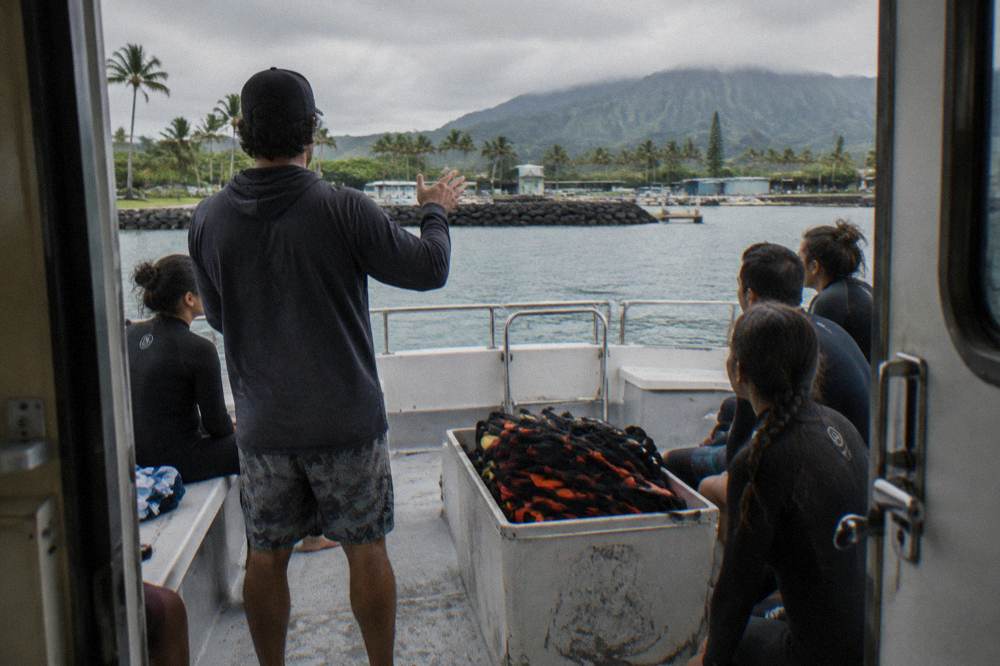
Every permitted tour runs a sequence of overlapping protocols, including a safety briefing before boarding, cage entry and exit procedures supervised by crew, snorkel gear fitted on the boat, and a captain watching sea state and shark behavior throughout, so no single safeguard is the one keeping you alive, the stack of them is. The cage itself is moored to or floated beside the vessel, entries happen one group at a time, and the crew controls how many people are in the water and for how long. Nothing about the operation depends on a guest doing the right thing unsupervised.
The species and site do a lot of quiet work too. The sharks at the aggregation site are habituated to boats and cages, they approach out of curiosity, and the water is deep and clear, often with visibility described as over 150 feet, which means the crew can see what is happening around the cage rather than guessing. Operators also lean on education: many briefings cover shark behavior, Hawaiian cultural significance, and conservation, which sounds like filler until you realize that a guest who understands what the sharks are doing panics less and behaves better in the cage.
If you have never done a trip like this, our walkthrough of what actually happens on a shark cage dive covers the full sequence from harbor check-in to the last cage rotation, and it is worth reading before you book anything.
| Protocol | What it looks like on the water | Failure it guards against |
|---|---|---|
| Pre-trip briefing | Behavior rules, hand signals, cage entry order | Guest confusion in the water |
| Supervised cage entry | Crew controls ladder timing, one group at a time | Overcrowding, entanglement |
| Captain on watch | Continuous read of sea state and shark behavior | Conditions turning while guests are in |
| Gear fitted on board | Mask, snorkel, flotation checked before entry | Leaking gear mid-rotation |
| Moored or tethered cage | Cage stays fixed relative to the boat | Drift toward propellers or lines |
Hawaii Shark Encounters, rated 4.8 across 1,556 reviews, runs its cage dives out of Haleiwa Boat Harbor.
Is The Cageless Swim Safe Too?
The cageless swim carries a genuinely different risk profile, not a higher version of the same one: DLNR's log classifies the documented tour-related Haleiwa bites as provoked incidents involving people in open water with sharks, which is why this site treats cage and cageless as separate products rather than one activity with two settings. In the cage, a barrier stands between you and the animal. Cageless, you are a swimmer among sharks, guided by crew, in a group, with the same species behaving the same curious way, but with nothing solid between you and a 10-foot Galapagos shark except judgment, theirs and the crew's.
Plenty of people take that trade knowingly. Island View Hawaii's cageless swim, rated 5.0 across 1,179 reviews, is one of the most consistently praised tours on the island, and One Ocean Diving's research-backed swims, rated 4.8 across 515 reviews and 4.9 across 587 reviews on its research variant, are led by marine scientists. Some operators publicly claim long incident-free stretches for their cageless programs. Those are operator claims, and this site reports them as such rather than as verified state data.
The honest framing is this: the provoked classification in DLNR's log tells you the state's own incident reviewers concluded the people involved were intentionally interacting with sharks when bitten. It does not tell you the cageless industry is reckless, and it does not tell you the cageless experience is dangerous the way a highway is dangerous. It tells you the exposure is real, the animals are wild, and the barrier is the difference. Our deeper look at whether cage-free shark diving in Oahu is safe takes the question apart in more detail.
What Are The Real Risks You Should Weigh?
The realistic risk list for a cage dive is led by ordinary boating and ocean risks, rough seas, seasickness, slips on a wet deck, and cold water, with shark contact effectively at the bottom of the list, which is the inverse of how most people rank them in their heads before their first trip. The North Shore's winter swell season, roughly November through April, makes the offshore run bumpier and raises cancellation rates, while the May to September window brings calmer seas, clearer water, and steadier schedules. Water temperatures stay swimmable year-round, roughly 75 to 76 degrees at the coolest in late winter and around 80 to 81 degrees in September.
The provoked-incident history matters here precisely because it is small and patterned. Six provoked tour-related bites off Haleiwa over roughly six years, per reporting on DLNR's classifications, all in the cageless context, is a record that argues for choosing the format that matches your risk tolerance rather than for avoiding the activity altogether. If open water among sharks is not something you want, take the cage. If it is, take a well-reviewed cageless operator and follow the crew.
| Risk | Cage dive | Cageless swim | Real-world likelihood |
|---|---|---|---|
| Shark contact | Barrier in place | No barrier | Low; documented tour bites are provoked, cageless-context |
| Rough seas, cancellation | Winter swells raise both | Winter swells raise both | Seasonal; check the operator's weather policy |
| Seasickness | Common on the run out | Same | Addressable with medication and timing |
| Panic in the water | Contained, supervised | Supervised, open | The most common real problem crews see |
If you are prone to motion sickness, read up on managing seasickness on a shark boat tour before you go; it is the single most common complaint that colors otherwise great reviews.
Who Should Not Go Shark Cage Diving?
Children below the operator's stated age minimum, anyone who cannot swim or is not comfortable snorkeling, people with serious neck or back conditions that rough boat rides can aggravate, and anyone whose anxiety spikes in open water should skip the cage dive or defer it, because the tour's safety stack assumes a guest who is calm enough to follow instructions while floating in the ocean. The cage requires you to hold position, keep your hands inside, and breathe through a snorkel while the boat and cage move with the swell. None of that is athletic, but all of it is harder if you arrive terrified.
Age and family questions have their own guide: our page on shark cage diving age requirements for kids covers the stated minimums and how operators handle younger riders who stay on the boat (see Kids and Age Rules). Pregnancy is worth raising directly with the operator before booking, since the offshore run can be bumpy even in summer, and operators answer these questions plainly when asked.
With those practicalities in mind, the North Shore Shark Adventures listing shows the operator's own rules on ages and health, and it is also where any remaining questions can be sent straight to the crew.
One Ocean Diving's research swim, rated 4.9 across 587 reviews with a shark-sighting guarantee and is the tour most often recommended for guests who want the educational framing, a marine-scientist guide, and a more structured open-water experience.
How Do You Pick A Safe Operator?
Pick a permitted operator with a large review pool, a clearly published meeting point at Haleiwa Boat Harbor, explicit weather and cancellation terms, and a cage or swim format you have honestly chosen, because every documented problem in Hawaii's record traces to the format and the operator choices, not to the sharks. A rating means more when it sits on top of thousands of reviews: 4.8 across 3,241 reviews for North Shore Shark Adventures is a body of evidence, while a 5.0 from three reviews is three people having a good day. Print the review count next to the rating in your head, always.
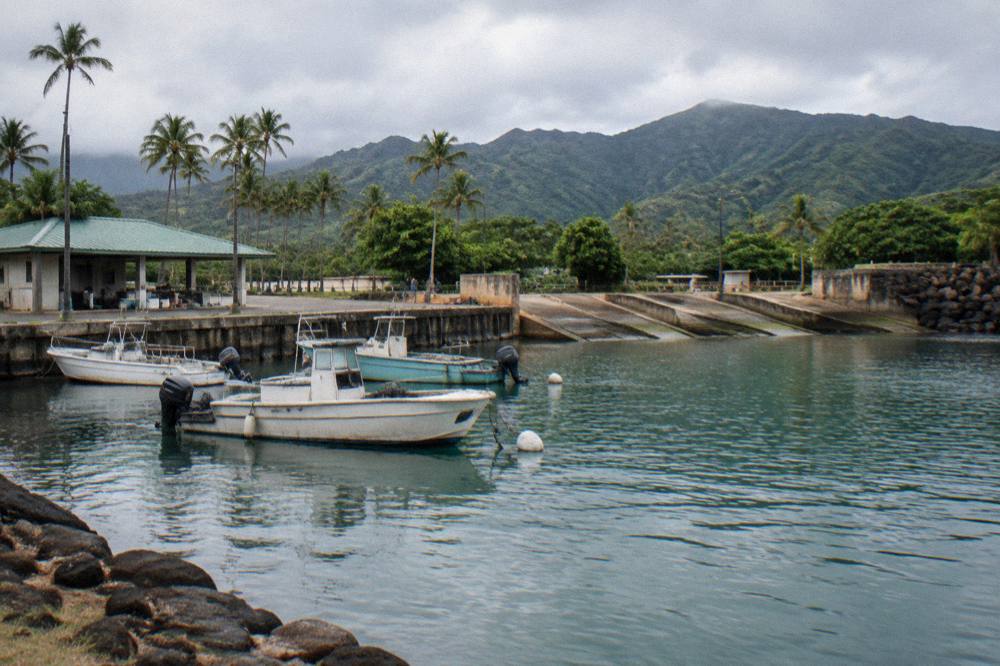
The harbor itself is a good authenticity check. Haleiwa Boat Harbor is a public DLNR facility with restrooms, ample free parking, and boat ramps, and any legitimate operator will give you a concrete meeting instruction there, not a vague "we'll text you the location." Our guide to Haleiwa Boat Harbor and the North Shore covers parking, facilities, and what to do before and after your trip.
| Checklist item | Why it matters | Where to verify |
|---|---|---|
| Review pool size | A rating needs a sample behind it | The operator's live listing |
| Meeting point at the harbor | Permitted operators use the public facility | Booking confirmation |
| Cancellation and weather terms | Winter swells cancel trips | Listing policy section |
| Format stated plainly | Cage and cageless are different products | Tour description |
| Crew supervision described | The stack of protocols is the safety | Reviews, briefing |
For a broader comparison of the operators running out of Haleiwa, including which tours include transport and which include gear, see our page on choosing a shark tour operator on Oahu.
If you want a starting point, Shark Cage Diving Honolulu keeps the current roster with ratings, review counts, and live availability for every tour on this page.
Common Questions About Shark Cage Diving Safety
Is shark cage diving safe on Oahu?
By the measure Hawaii's own state agency publishes, yes. DLNR's public shark incident log records no fatalities on Oahu's commercial North Shore shark tours, and the tour-related incidents it documents off Haleiwa are classified as provoked and involve cageless open-water swims rather than cage dives.
Has anyone ever been bitten on a shark cage tour in Hawaii?
DLNR's incident log does not document bites to passengers inside cages on the commercial North Shore tours. The documented tour-related bites off Haleiwa in the log are classified as provoked incidents involving people swimming with sharks outside a cage.
Are the sharks dangerous?
The species you will see are Galapagos and sandbar sharks, typically 5 to 15 feet, with occasional tiger sharks. They approach the cage out of curiosity and glide away. Great whites are not part of Hawaii's resident shark population and are not what these tours show divers.
Why do the boats go so far offshore?
Hawaii law, HRS §188-40.6, prohibits shark feeding in state marine waters, which extend three nautical miles from shore. Tours operate beyond that line in federal waters, roughly three miles off Haleiwa Harbor, where the state ban does not apply and the sharks naturally aggregate.
Is the cageless swim as safe as the cage?
It is a different risk profile, not the same one. The cageless swim puts you in open water among sharks with no barrier, guided by crew, and DLNR's provoked classifications for past tour incidents all involve that format. Choose it knowingly, with a well-reviewed operator.
What is the most common safety problem on these tours?
Ordinary boating issues: seasickness on the offshore run, rough winter swells that lead to cancellations, and slips on a wet deck. The shark-related risk sits well below these on the realistic list.