Shark Cage Diving Age Requirements In Hawaii: What Parents Need To Know
Shark cage diving off Haleiwa is one of Oahu's most memorable family activities, but age limits and swimming requirements decide whether your child can actually get in the water. Here is how the policies work across the island's tour roster.
Short answer
There is no single statewide minimum age for shark cage diving in Hawaii. Each operator sets its own policy, and most tours on Oahu's North Shore welcome children in roughly the 3 to 10 age range and up, provided an adult joins them in the cage. Exact ages and swimmer requirements are stated on each operator's live listing, so confirm before booking.
Shark cage diving is one of the few ocean activities in Hawaii where children can stand face to face with wild Galapagos and sandbar sharks in deep blue water, separated by nothing but a steel or aluminum bar. It sounds extreme, and parents reasonably want to know whether their kid is old enough, whether they need to swim well, and who is responsible for them in the water. The short version: age policies are set tour by tour, not by state law, and the details live on each operator's live listing rather than in any single regulation.
This guide walks through what the age rules actually mean, how swimmer ability is judged, which tours on the roster are built with families in mind, and what younger children can do instead if the cage is not yet an option. Every price and age figure here is described as it appears on the operator's listing, because those numbers move with the season.
For families ready to move from reading the rules to holding a spot, the current listing for the Hawaii shark cage tour lays out the operator's own age requirements next to the booking terms.
What Is The Minimum Age For Shark Cage Diving In Hawaii?
Hawaii has no statewide minimum age for shark cage diving, so the answer depends entirely on the operator you book. North Shore cage tours commonly accept children from around age three to ten upward, with a participating adult required in the cage for younger kids. The only reliable source for a specific tour's age floor is its live listing, which states the policy exactly as the operator enforces it.
The reason there is no legal age line is that the state regulates these tours as commercial ocean recreation, not as an age-restricted activity. The Hawaii Department of Land and Natural Resources issues commercial use permits for shark tour operators working out of Haleiwa, and reports around 2025 indicated roughly three commercial permits specifically for shark tours operating from the harbor. Those permits cover where and how the boats operate, not who is allowed in the cage. Age limits are a business decision each operator makes based on their vessel, their cage design, and their crew.
In practice, this works in families' favor. Because each operator sets its own rule, the Oahu roster spans a real range of policies rather than one restrictive number. Some tours are built as family experiences, with large cages that hold several guests and crew who are used to briefing nervous eight-year-olds. Others position themselves toward adults and set their floors accordingly. The practical advice is simple: decide which tour fits your child first, then read that tour's age policy on its listing before you book, rather than assuming a number you heard from another family applies everywhere.
One more nuance matters. An age policy usually has two halves, a minimum age to be aboard the boat and a minimum age to enter the cage, and the two are not always the same. A child who is too young for the cage can typically still ride out, watch from the deck, and see the sharks surface beside the boat, which for many kids is already the highlight of the day. Ask the operator directly which half of the policy applies to your child's age.
Do Children Need To Be Strong Swimmers To Enter The Cage?
Most Oahu cage tours do not require children to be strong swimmers, because the cage is surface-based and guests hold on rather than swim. Kids float in a mask and snorkel with the cage around them, and an adult is usually required in the water alongside younger participants. Ability requirements are set per operator, so read the listing.
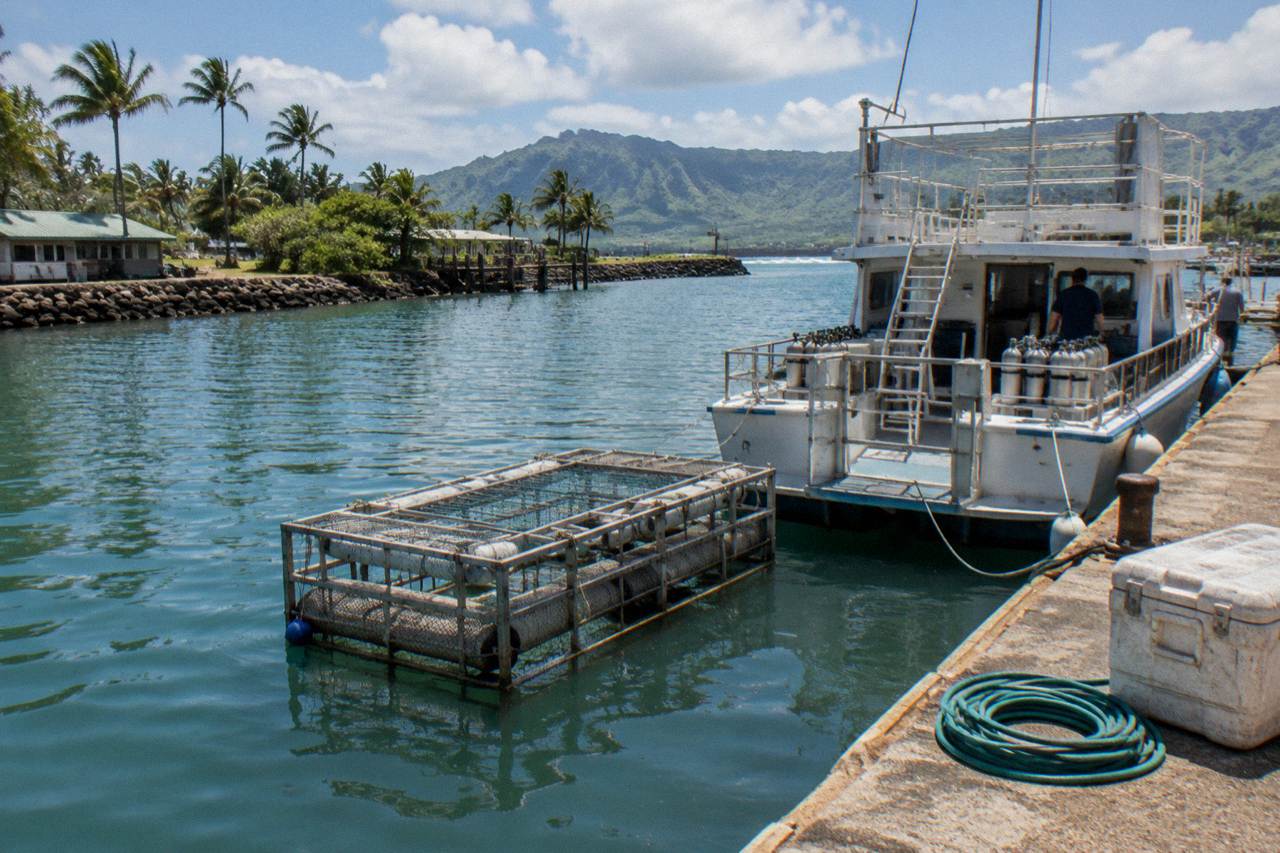
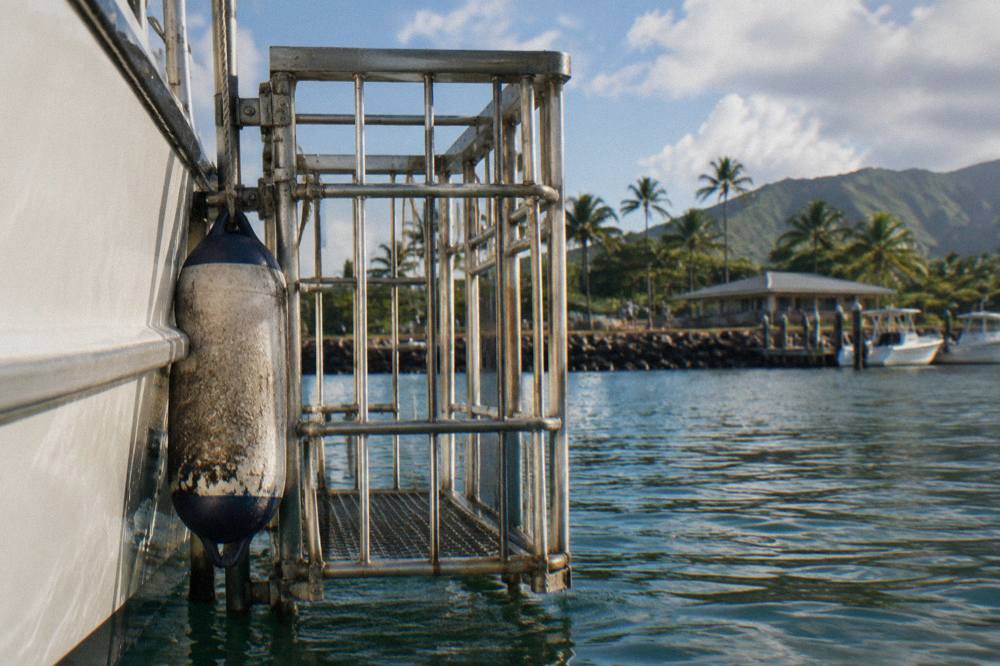
This surprises parents who picture a cage dropped deep underwater. The North Shore model is different: the cage floats at the surface, tethered to the boat, with the top rail above the waterline. Guests inside are snorkeling, not diving, and the structure does the work of holding position. A child who is comfortable floating in a life vest and breathing through a snorkel can generally take part. Tours run about three miles offshore from Haleiwa Harbor in federal waters, where Galapagos and sandbar sharks aggregate naturally around the deep blue banks, and the sharks approach the cage out of curiosity rather than aggression.
That said, "comfortable in water" is the honest bar, and it is worth assessing your own child against it rather than the tour's paperwork. A kid who panics when water hits their face in a swimming pool will not enjoy the experience even if the policy allows it. The best preparation is ordinary snorkel practice in the weeks before the trip, in a pool or at a calm beach, so the mask and snorkel feel boring by the day of the tour. Our guide on what to wear shark cage diving covers the gear side of that preparation.
For parents comparing options, the three tours above represent the main formats on the island: a North Shore steel-cage dive with the deepest review pool, a smaller steel-cage operator, and a small-group cage-free swim for confident older kids. Each states its own age and swimmer policy on its live listing, and each is worth checking against your child rather than against each other.
Which Oahu Shark Tours Take Kids, And How Do Their Policies Differ?
The Oahu roster splits into two families of tours, and each treats children differently. North Shore cage dives are the classic family choice, and cage-free swims carry the highest ability bar. No operator publishes a shared age table, so the listing is the source of truth for each.
The comparison below is a planning map, not a substitute for the listings. Age and ability entries describe how each tour family is typically positioned; the exact figure for a specific tour is on its live listing, and operators do update their policies between seasons.
| Tour family | Example tours on this site | Typical fit for kids | What to confirm on the listing |
|---|---|---|---|
| North Shore cage dives | North Shore Shark Adventures (4.8 from 3,241 reviews) | The classic family pick; surface cage, crew used to kids | Minimum age, adult-in-cage rule |
| Other North Shore cage tours | Hawaii Shark Encounters (4.8 from 1,556 reviews), Haleiwa Shark Tours (4.9 from 313 reviews) | Smaller review pools than the flagship | Age floor, group size |
| Cage-free shark swims | Island View Hawaii (5.0 from 1,179 reviews), One Ocean Diving swims | Confident swimmers, usually older kids and teens | Swimmer ability bar, minimum age, group size |
The flagship cage experience on the island is the North Shore steel-cage dive, which holds a 4.8 rating across 3241 reviews and free cancellation, a combination that makes it a natural full-day family outing. Hawaii Shark Encounters, this site's featured family pick, holds a 4.8 rating from 1,556 reviews and meets at Haleiwa Boat Harbor., which matters more than most gear details when you are coordinating a child's schedule on vacation. You can read the full policy details on the Hawaii Shark Encounters tour page.
A question worth asking any operator before booking: who goes in the cage with my child? Policies differ on whether a parent must accompany minors inside the cage or whether a crew member supervises. For most families this is the single most reassuring detail, and operators answer it readily over message before you pay anything.
What Can Younger Kids Do Instead Of The Cage?
Children below a tour's cage age can usually still ride the boat as spectators, watching sharks surface beside the vessel from the deck. On land, Haleiwa offers beach park time, and the North Shore itself is a workable day trip with free parking and restrooms at the harbor. Deck-rider policies and fees are stated on each listing.
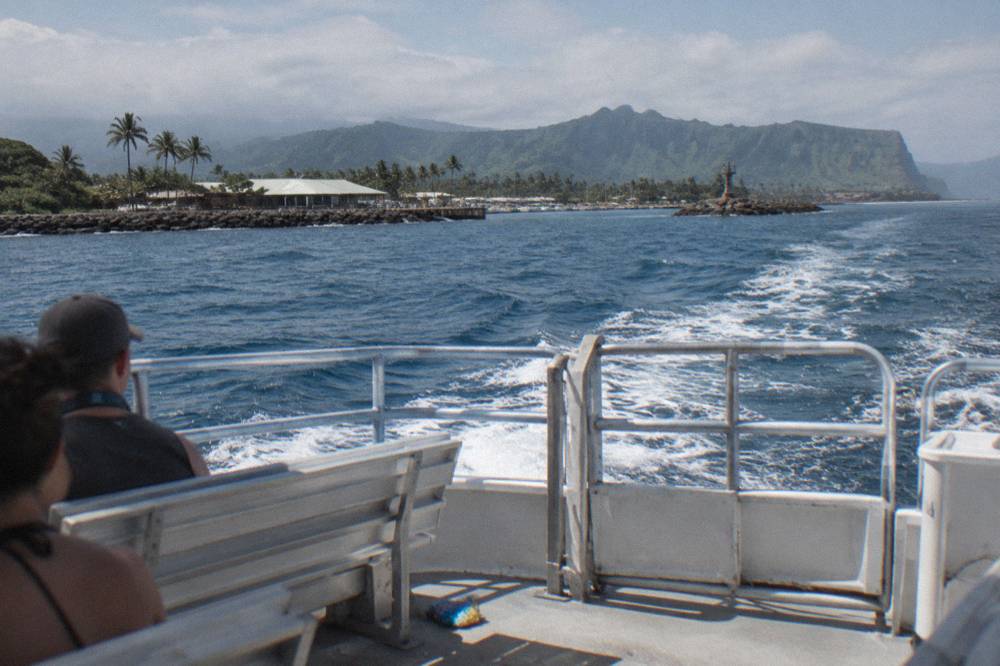
The boat ride is genuinely a good experience on its own. The run from Haleiwa Harbor out to the offshore grounds takes in the North Shore coastline, and once the boat stops, the same Galapagos and sandbar sharks that circle the cage surface alongside the hull. Sharks in the 5 to 15 foot range are reported on these tours, and they frequently glide within inches of the cage in full view of the deck. Many operators price deck riding differently from cage entry, and some treat it as a free or low-cost add-on for an accompanying sibling; the listing states the current arrangement. Other pages covering the same trip are gathered on Shark Cage Diving Honolulu.
Haleiwa Shark Tours is one to check for this scenario, since it runs a 4.9-rated operation that meets at Haleiwa Boat Harbor, so families arrange their own way out there and part is spectating. Confirm on the listing whether a spectator child counts toward boat capacity and what the age split is between riding and entering the water.
To make the decision concrete, here is how the options typically line up by a child's age and water comfort. Treat it as a starting frame, then verify the specific tour's policy on its live listing, since the boundaries move between operators and seasons.
| Child's situation | Most workable option | Why it fits |
|---|---|---|
| Under the cage age, or nervous in water | Deck spectator on a cage tour | Sees sharks surface beside the boat, no water entry required |
| Meets the cage age, comfortable floating | Cage dive with an adult alongside | Surface cage does the holding; snorkeling only |
| Confident swimmer, roughly teen and up | Cage-free swim with crew in the water | Open-water format with small groups and direct supervision |
| Whole family waiting for an age milestone | Harbor and beach park morning in Haleiwa | Free parking, restrooms, showers, and a playground beside the harbor |
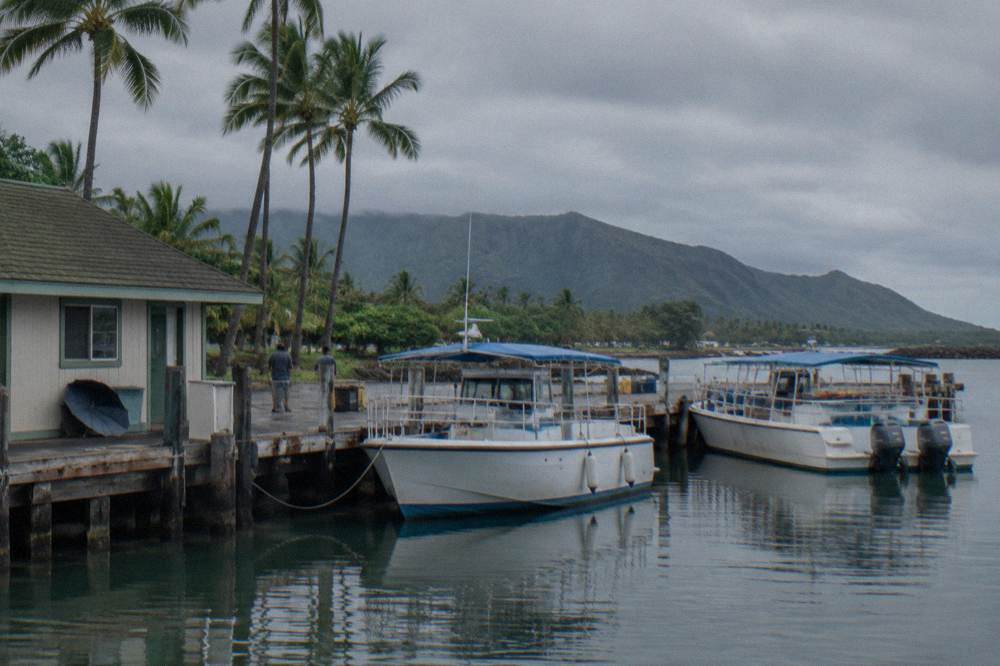
If the whole family is waiting for a child to age into the cage, the harbor itself makes the morning easy. Haleiwa Boat Harbor offers ample free parking and public restrooms, and adjacent Haleiwa Beach Park adds showers, picnic areas, and a playground, so a non-diving parent with a toddler has a real morning plan rather than a wait in a parking lot. Our Haleiwa boat harbor guide covers the harbor layout in detail, and the free things to do on the North Shore guide extends the day beyond the tour.
Is Cage-Free Shark Swimming An Option For Teenagers?
Yes, for confident teenage swimmers. Cage-free tours drop the bars entirely and place guests in the open water beside the boat with sharks nearby, guided by crew in the water. The ability bar is meaningfully higher than a cage dive, and operators screen for it. Island View Hawaii's swim holds a 5.0 rating from 1,179 reviews.
This is the format that most often divides families. A cage-free swim is not dangerous in the way the phrase suggests, and the safety record supports that: DLNR's official shark incident log, which tracks all Hawaii incidents, shows no fatalities on Oahu North Shore commercial shark tours in its records, and documented bites tied to these tours are classified as provoked incidents rather than unprovoked attacks (see Cage-Free Safety). But the psychological difference between watching a shark through a bar and watching it pass in front of your face with nothing between you is real, and a teenager should want it, not just tolerate it.
Island View Hawaii runs the flagship cageless experience on the island, a small-group swim with a perfect 5.0 rating across 1,179 reviews. For a teen who snorkels confidently and has outgrown the cage, it is the natural step up, and the small group format means more direct attention from crew. The listing states the current minimum age and any swimmer screening questions asked at check-in.
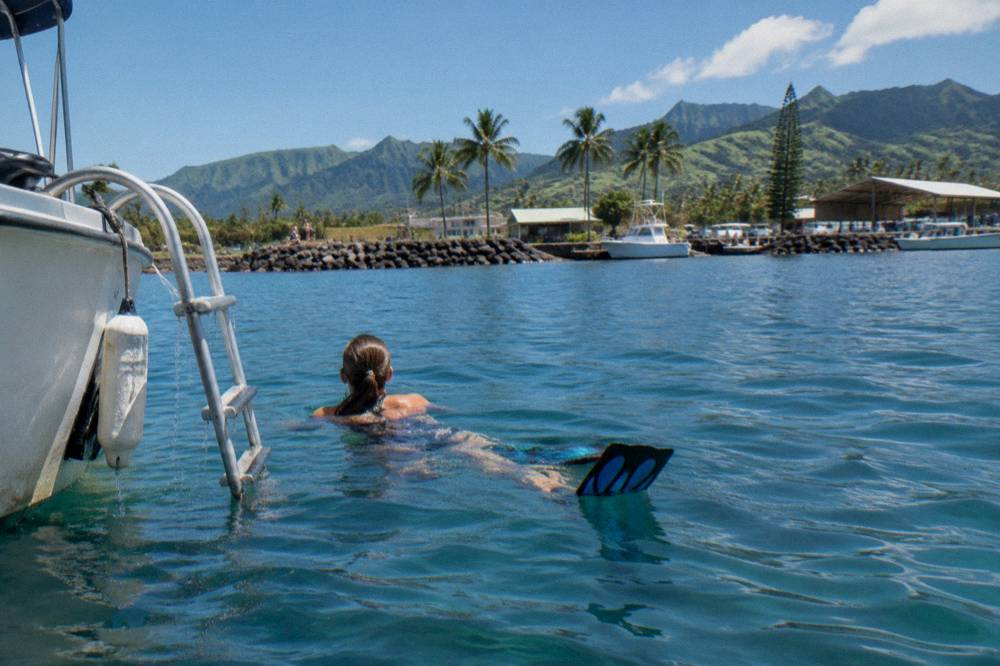
Two honest cautions for parents weighing this. First, the species you will see are the same Galapagos and sandbar sharks as the cage tours, with occasional tiger sharks more likely in late summer and fall; there are no great white sharks on these tours, and any marketing that implies otherwise should be read carefully. Second, the marine-scientist-guided options in this family, like the One Ocean Diving swims, lean educational, which suits some teenagers perfectly and others not at all. Our cage versus cageless comparison breaks the two formats down side by side.
What Should Parents Ask Before Booking A Family Shark Tour?
Ask five questions: the exact minimum age, whether an adult must accompany the child in the cage, the swimmer ability bar, the cancellation window, and the adult-to-child ratio in the water. Operators answer all five over message before booking, and the answers matter more than any review score.
The cancellation question deserves its own emphasis. North Shore tours cancel for weather more often than most Hawaii activities, because winter swells from November through April make the offshore run rough and operators scrub trips for safety. Summer, May through September, is the calmer and more reliable window, with the Waimea Bay buoy recording sea surface temperatures around 80 degrees in late September and the coolest months still holding around 75 to 76 degrees. A family booking with a free-cancellation window keeps a weather scrub from eating the one morning you allocated.
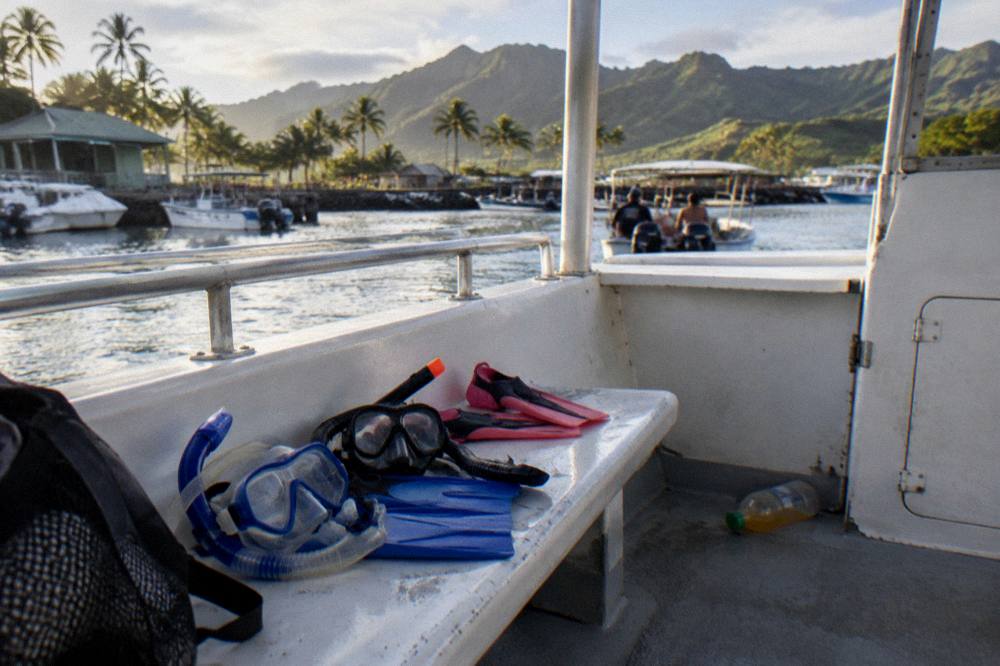
The flagship North Shore Shark Adventures dive is the one most families end up comparing everything against: a 4.8 rating across 3,241 reviews and a steel cage, the largest review pool on the roster for parents who want a proven operator. Check the listing for the current age policy before counting on it.
On supervision, the state legal backdrop is worth knowing even though it never mentions children. Hawaii law prohibits shark feeding in state marine waters, which is the entire reason tours operate outside the three-nautical-mile line, and the same statute's definition of commercial activity covers charters, tours, and transport. None of it constrains ages. The practical supervision framework is the operator's own: crew in the water, an adult per child in the cage where required, and a briefing that covers hand position and mask clearing before anyone gets wet.
How Do You Plan The Day Around A Child's Schedule?
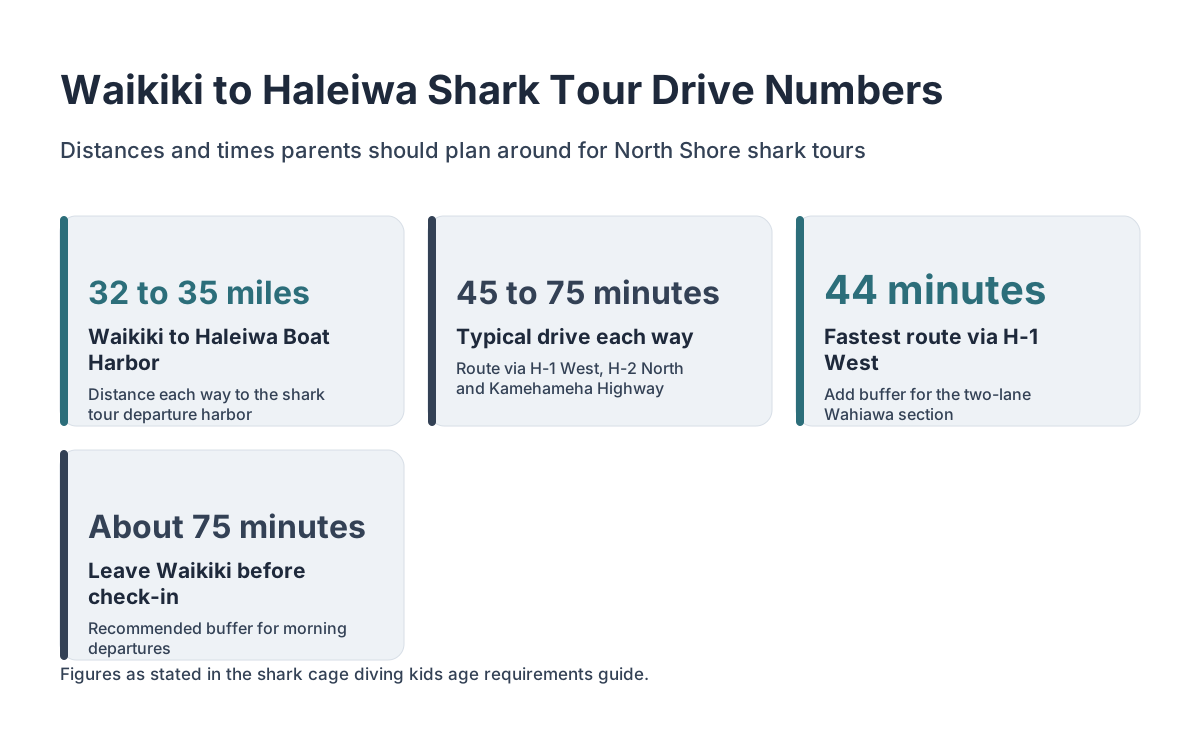
Plan the drive first. Haleiwa Boat Harbor sits roughly 32 to 35 miles from Waikiki, typically 45 to 75 minutes each way, and morning departures are the norm. Either book a tour or leave Waikiki well before rush hour, and build in harbor parking time. The harbor has free parking and restrooms.
The drive is the part of the day families most often underestimate. The route runs from Waikiki via H-1 West to H-2 North, then Kamehameha Highway through Wahiawa toward Haleiwa, and the two-lane sections slow noticeably at rush hours and on big-surf days. A morning tour with a check-in time in the early hours means leaving Waikiki in the dark. Our Waikiki to Haleiwa guide compares the transport options.
The timeline below shows how a typical morning stacks up for a family, using the drive figures from the route data, on the assumption of a self-drive morning with a standard early check-in.
| Stage | Typical timing | Notes for parents |
|---|---|---|
| Leave Waikiki | About 75 minutes before check-in | Fastest route is roughly 44 minutes via H-1 West; add buffer for the two-lane Wahiawa section |
| Arrive at Haleiwa Boat Harbor | Check-in window | Free parking and public restrooms at the harbor |
| Boat run to the offshore grounds | Roughly 3 miles out | Kids prone to seasickness should take medication ahead of the ride |
| Time on the water | Tour duration as listed | Deck spectators watch sharks surface beside the hull |
| Return and drive back | Off-peak, 45 to 55 minutes | Avoid the 3:30 to 6 PM rush heading south |
Budget the full round trip, not just the tour duration, since every tour on this roster is self-drive, bus or rideshare. A shuttle option also exists as a 2026 state pilot connecting Waikiki to the North Shore for a low roundtrip fare with cultural narration onboard, though it is aimed at visitors spending time in Haleiwa town rather than at tour check-in times, and its schedule may not match a dawn harbor arrival.
Two scheduling realities finish the picture. First, book the tour for the front of your trip, not the last day, so a weather cancellation can be rebooked rather than lost. Second, feed the child before the boat. Seasickness on a rolling offshore run is the most common reason a kid's shark day ends early, and it is almost entirely preventable; our seasickness guide for shark boat tours covers the medication timing and the harbor-side habits that work.
With those scheduling details handled, the next step is picking a departure day, and the tour listing shows the morning slots that leave room for the rebooking cushion described above.
That covers the whole decision: the age policy on the listing, the swimmer bar, the adult-in-cage rule, the format that fits your child, and the logistics that get you to the dock on time. The final choice between tours comes down to review pool and cage versus cageless, and the three picks below span that decision cleanly.
Common Questions About Shark Cage Diving For Kids
What is the minimum age for shark cage diving in Hawaii?
There is no statewide minimum. Each operator sets its own age policy, and North Shore cage tours commonly accept children from roughly age three to ten upward, often with an adult required in the cage for younger participants. The exact age floor for a specific tour is stated on its live listing.
Do kids need to know how to swim for a shark cage dive?
Strong swimming is not usually required, because the cage floats at the surface and guests hold on rather than swim. A child who is comfortable floating in a mask and snorkel can generally take part. Comfort in water matters more than technique, and operators state their own ability requirements on the listing.
Can a child ride the boat without going in the cage?
Usually yes. Many operators allow spectators on the boat who watch the sharks surface from the deck, sometimes at a reduced rate. Policies on spectator ages and fees vary by tour, so confirm the arrangement on the live listing before booking.
Is shark cage diving safe for children?
DLNR's official incident log shows no fatalities on Oahu North Shore commercial shark tours in its records, and documented bites tied to these tours are classified as provoked incidents. Children in the cage are supervised by crew and, where required, a participating adult. The species seen, Galapagos and sandbar sharks, approach curiously rather than aggressively.
Which sharks will my child actually see?
Galapagos sharks and sandbar sharks, typically 5 to 15 feet long, are the consistent visitors on North Shore tours, with occasional tiger sharks more likely from late summer into fall. Great white sharks are not part of these tours. Our Oahu North Shore shark species guide covers the full cast.
What happens if the tour is cancelled for weather?
North Shore tours cancel more often in winter, November through April, when large swells make the offshore run rough. Operators rebook or refund cancelled trips, and booking with a free-cancellation window protects your morning. Schedule the tour early in your trip so a scrub can be rebooked rather than lost.