What To Wear Shark Cage Diving: A North Shore Packing Checklist
Swimsuit, towel, reef-safe sunscreen and a light layer for the boat ride cover almost everything. The operator supplies the mask, the cage and usually the wetsuit, so the clothing decisions that actually matter are the ones you make before you board and after you climb out.
Short answer
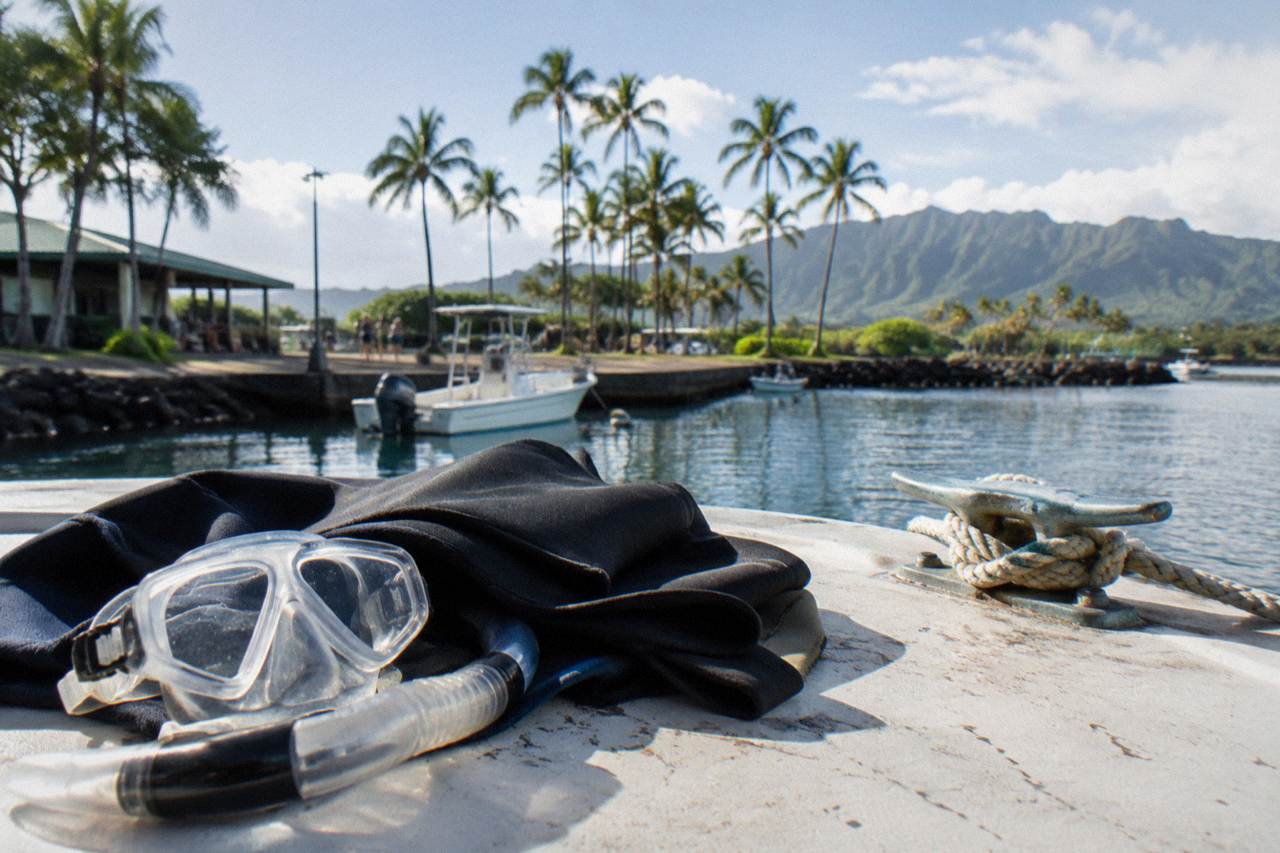
Wear a swimsuit under your clothes, bring a towel, dry change of clothes, reef-safe sunscreen, sunglasses and a light windbreaker for the ride. Operators provide mask, fins and, on most North Shore trips, a wetsuit at no extra charge. Skip jewelry, loose hats and anything you would hate to lose in the ocean. Prices for each tour are on the live listing.
What Should You Wear Shark Cage Diving?
The short answer is a swimsuit, worn under whatever you would wear on a breezy boat ride: board shorts or a rash guard, a light jacket, and sandals or slip-ons you can kick off on the dock. The operator supplies the mask, the cage, and on most North Shore trips a wetsuit. Everything else in your bag exists for the twenty minutes before you get in and the hour after you get out.
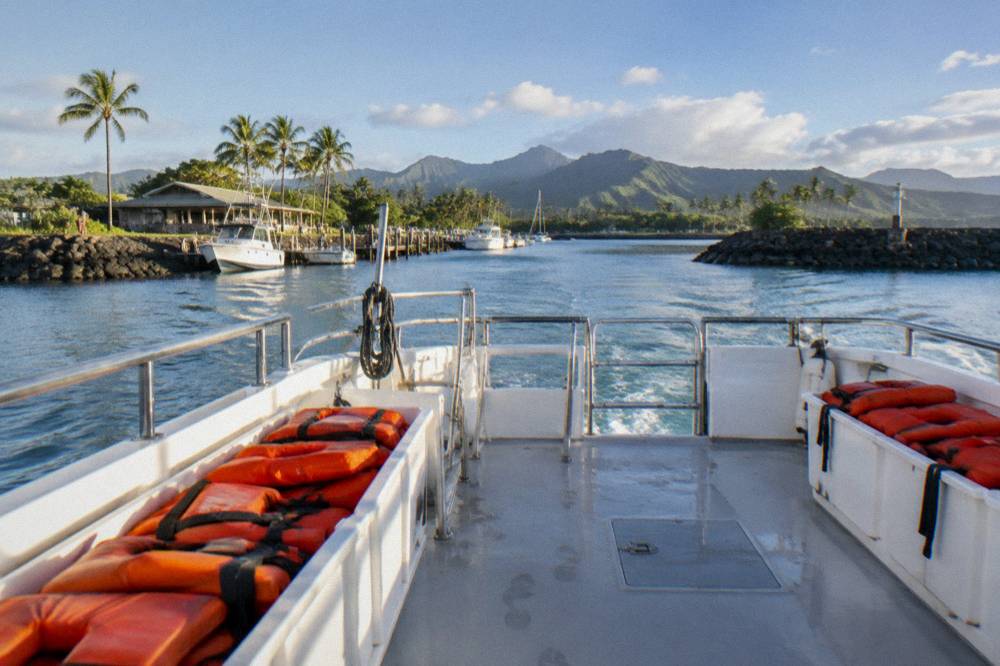
That hour-after part is the one travelers consistently underestimate. The boat runs roughly three miles off Haleiwa Harbor into open Pacific water, and even in summer the ride back is windy enough that wet skin gets cold fast. A towel and a dry shirt are not optional comfort items here, they are the difference between enjoying the drive back through Haleiwa town and shivering through it.
The good news is that the list is genuinely short. This is a snorkel-in-a-cage trip, not a scuba certification, so there is no weight belt, no regulator, no dive computer and no certification card. If you can swim and you can breathe through a snorkel, you already have the hard skills. The rest is clothing choices.
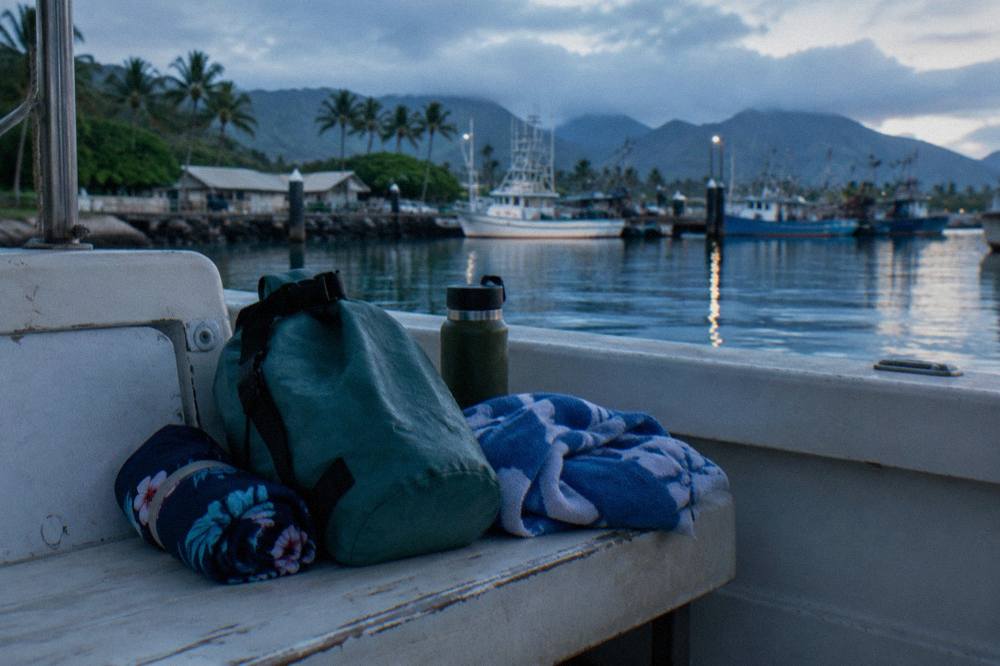
Here is the full checklist, split into what goes on your body and what goes in your bag:
| Item | Why it matters | Notes |
|---|---|---|
| Swimsuit | Your base layer in the cage | Wear it under your clothes to skip the dock changing routine |
| Towel | You will be soaked on the ride back | One per person, the bigger the better |
| Dry change of clothes | The drive back through Haleiwa | Shorts and a hoodie cover most mornings |
| Light windbreaker | Wind chill on the return run | Even 80-degree days feel cold when you are wet |
| Reef-safe sunscreen | Sun exposure on open water | Apply before boarding, reapply after the swim |
| Sunglasses | Glare off the water is constant | A retainer strap saves cheap pairs |
| Hat with a strap | Shade for the boat ride | Unstrapped hats fly overboard regularly |
| Water bottle | Hydration matters more than people expect | Some operators provide drinks, check the listing |
One note on the harbor itself: Haleiwa Boat Harbor has public restrooms, free parking and showers nearby, so there is a real place to change and rinse off after the trip, according to the harbor's own facility information. You do not need to plan the trip around a changing-towel-in-the-parking-lot scenario.
Do You Need A Wetsuit, Or Does The Operator Provide One?
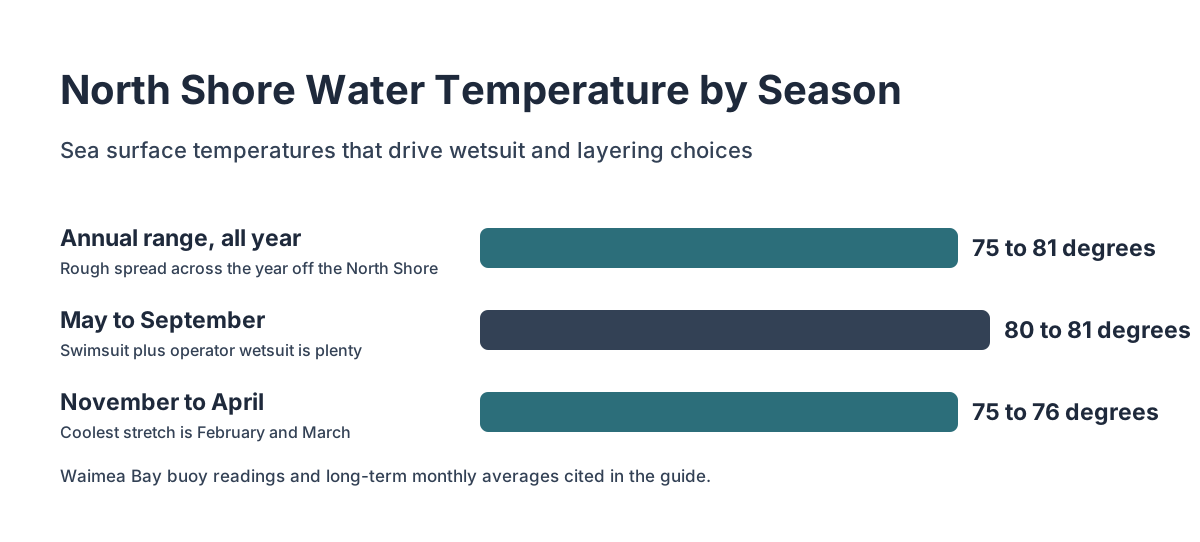
On almost every Haleiwa shark tour, the wetsuit is provided and included in the ticket price, so you do not need to own, rent or pack one. Water temperatures off the North Shore run roughly 75 to 81 degrees Fahrenheit across the year, which is swimmable without a suit but noticeably more comfortable with one, especially from November through April. Check the specific tour's listing to confirm, because inclusions vary by operator.
The temperature range comes from real buoy data: the Waimea Bay buoy, the primary North Shore reference station, recorded sea surface temperatures around 80 to 81 degrees in late September 2026, and long-term monthly averages put the coolest stretch in February and March at roughly 75 to 76 degrees. That is a modest spread by Pacific coast standards, but it is enough that a wetsuit in January feels like a kindness and in August feels like an option.
Operators differ in what they hand you on the dock. The flagship North Shore cage dive runs a steel-cage setup; its full inclusion list is on the North Shore Shark Adventures tour page, where the current price is shown on the live listing. If you want to compare inclusions across the roster before committing, Check availability to see dates and what is bundled with each option.
The trio above spans the range of formats: the flagship steel-cage dive, a smaller-group cage trip, and a small-group cage-free swim for readers who want the open-water version. For this article's question, the relevant difference is gear: cage trips supply masks and suits as standard kit, while the cage-free programs lean toward wetsuit tops and lighter exposure protection because swimmers stay on the surface. The details for each are on the operator's live listing.
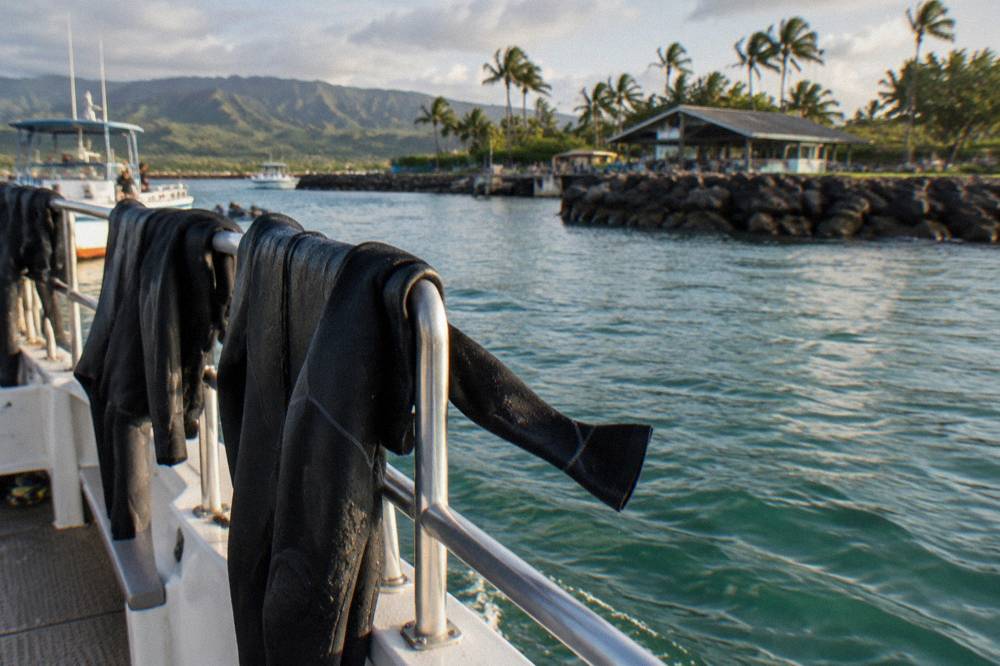
A practical sizing tip: operator wetsuits are loaners in a rotation, so if you are between sizes or sensitive about fit, wearing your own rash guard or swim shirt underneath solves most of the friction. A thin layer under a loose loaner suit also makes the suit easier to peel off on the swim step, which is the least graceful moment of any trip.
What Should You Wear On The Boat Ride Out And Back?
Wear your swimsuit under a warm, wind-resistant outer layer, because the boat ride is windier and colder than the swim, not the other way around. Board shorts or leggings, a hoodie or windbreaker, and sandals you can remove on the dock cover it. The run out takes roughly fifteen to twenty minutes across open water, and the return leg with wet hair and wet skin is when people regret skipping the jacket.
The wind chill math is simple. Boat speed plus trade winds means the effective temperature on the return run can feel ten to fifteen degrees cooler than the air temperature on the dock, and you are wet through. A windbreaker over a dry shirt is the single highest-value clothing item on this entire list, ahead of anything you actually wear in the water.
If rough seas are a concern for you, the clothing answer overlaps with the motion-sickness answer, and that gets its own full treatment in the seasickness guide for shark boat tours. The short version as it relates to clothing: nothing tight at the waist, nothing heavy in your stomach before boarding, and a motion-sickness tablet taken before departure rather than after the first swell.
The Hawaii Shark Encounters option in that box is a 2-hour cage dive that meets at Haleiwa Boat Harbor, so plan your own ride. It is rated 4.8 across 1,556 reviews, which matters for clothing logistics in one specific way: if you are taking a rideshare or bus, you can pack a small day bag for the boat and leave the rest of your luggage plan behind. Its price is on the live listing, and free cancellation means you can hold a date while you finalize your kit.
For readers comparing the drive itself, the Waikiki to Haleiwa guide breaks down the roughly 45 to 75 minute run from Waikiki, which shapes what you wear too: if you leave your hotel at dawn in a rental car, the hoodie you wear for the drive is the same hoodie you will want on the return boat leg.
What Footwear, Eyewear And Extras Belong In Your Bag?
Footwear should be sandals or slip-ons you can remove barefoot on the dock, because you will board without shoes. For eyewear, bring polarized sunglasses with a strap and, if you wear prescription glasses, consider a contact-lens day or a prescription mask, since the operator's masks are standard flat lenses. The extras worth packing are a dry bag for your phone, motion-sickness tablets if you are prone, and cash or a card for Haleiwa town afterward.
The phone question deserves its own sentence. Nearly every operator sells photo packages or lets you shoot from the boat, but a phone in a pocket on a wet swim step is a phone with a short future. A sealed dry bag, or a phone left in the car for the swim and retrieved at the dock, is the reliable pattern. For camera strategy in the cage itself, the GoPro and photo tips guide covers mounts, settings and what actually survives salt water.
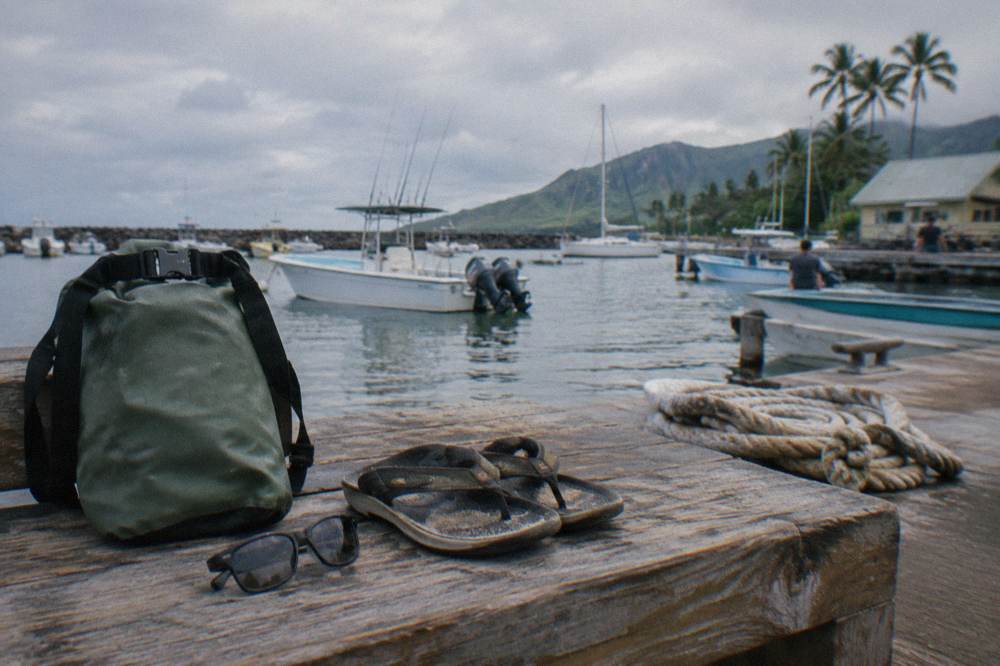
Here is how the small items sort out:
| Item | Bring it? | Reasoning |
|---|---|---|
| Polarized sunglasses with strap | Yes | Cuts surface glare; the strap keeps them on the boat |
| Prescription mask | If you use one | Operator masks are non-prescription; contacts are the workaround |
| Dry bag | Yes | Keeps phone, keys and a dry shirt out of the spray |
| Motion-sickness tablets | If prone | Take before boarding, not after the first swell |
| GoPro or waterproof camera | Yes, with a floaty | Cage shooting is covered in the photo tips guide |
| Cash or card | Yes | Haleiwa town food trucks and shops after the trip |
| Jewelry, watches, rings | No | Cold water shrinks fingers and drops things into the ocean |
| Cotton hoodie for the swim | No | Cotton stays cold and heavy; save it for the dock |
The jewelry line is not superstition. Cold water constricts fingers, and rings that fit fine on the dock slide loose after twenty minutes in the water. Operators report a steady trickle of lost rings, sunglasses and unstrapped hats over the side every season. Anything you would be sad to sink, leave in the car at the harbor lot, where parking is free. Everything else covered here is indexed on Shark Cage Diving Honolulu.
What Should You NOT Wear Or Bring On A Shark Tour?
Leave behind jewelry, unstrapped hats, cotton clothing for the water, drones unless the operator permits them, and any sunscreen that is not reef-safe, since Hawaii law restricts the sale of non-mineral sunscreens and open-water operators take it seriously. Also skip anything you cannot afford to lose: the ocean off Haleiwa is hundreds of feet deep at the dive site, and nothing dropped overboard is coming back.
The sunscreen point is a legal one, not a preference. Hawaii restricted the sale of sunscreens containing oxybenzone and octinoxate, so the products on store shelves on Oahu are mineral formulas by default, but sunscreen bought on the mainland may not be. Check the active ingredients label for zinc oxide or titanium dioxide before you pack it.
The cage-free programs have one extra clothing consideration. On the cage-free side of the roster, Go Adventure Hawaii includes a wetsuit top with its trips, rated 4.8 across 153 reviews, which is the lightest exposure protection on the roster and reflects the fact that cage-free swimmers stay on the surface where the sun matters more than the cold. Its price and dates are on the live listing.
The contrast with the steel-cage trips is instructive for packing: cage divers are partially submerged and shaded by the cage and boat, so a full suit and a windbreaker matter. Cage-free swimmers are face-down in full sun for the whole session, so a wetsuit top, reef-safe sunscreen on the back of the neck, and a hat for the boat are the priorities. The full comparison of the two formats is in the cage versus cage-free comparison.
One more category of "do not bring": expectations of great whites. The species you will actually meet off Haleiwa are Galapagos and sandbar sharks, with occasional tiger sharks, per the state's official species information, which is a Hawaii-specific roster. Great whites are not part of the commercial encounter, so a hooded dive hood bought for California-style cold-water diving is wasted luggage here.
How Does The Season Change What You Wear?
From May through September, when water temperatures sit near 80 degrees, a swimsuit plus the operator's wetsuit is plenty, and your packing focus shifts to sun protection. From November through April, when water drops toward the mid-70s and winter swells roughen the ride, add a full wetsuit, a real jacket, a beanie for the boat and a firmer plan for staying warm after the swim. October and April are transition months where you should pack for both.
The seasonal pattern is driven by North Pacific swells rather than air temperature. Winter, roughly November through April with peaks in December and January, brings large northwest swells that make the offshore run bumpier and raise cancellation rates, which is a scheduling issue more than a clothing one, but it also means more spray on the boat and a colder ride. Summer, May through September, brings lighter trade winds and calmer water. The full timing picture, including which months balance calm seas against crowds, is in the best time of year guide.
| Season | Water temperature | What to wear in the water | What to add on the boat |
|---|---|---|---|
| May to September | Around 80 to 81 degrees | Swimsuit, operator wetsuit optional | Sunscreen, hat, sunglasses, light layer |
| October | Transition, variable between the summer and winter marks | Swimsuit plus wetsuit top | Windbreaker, towel within reach |
| November to April | Roughly 75 to 76 degrees at the coolest | Full operator wetsuit | Jacket, beanie, dry change of clothes, warm drink |
That last point shapes clothing in an indirect way that first-page Google results miss: because the dive site sits in deep pelagic water beyond the state boundary, there is no shallow, protected, nearshore version of this trip. You are committed to the open-ocean boat ride in whatever you wear, so the boat layers are not optional add-ons, they are half the packing decision.
What Should Kids Wear On A Shark Cage Dive?
Kids need the same core kit as adults, a swimsuit, towel, windbreaker and reef-safe sunscreen, with two additions: a wetsuit in a size that actually fits, which you should confirm with the operator when booking since loaner suits in small sizes run out first, and a warmer change of clothes, because children get cold faster than adults in the same water. Age minimums vary by operator, so confirm the requirement before you shop for anything.
The tour page for North Shore Shark Adventures states the age minimum alongside the wetsuit policy, so you can settle both questions before adding anything to your cart.
The age and supervision requirements, operator by operator, are laid out in the kids age requirements guide, and they matter for clothing because a child who is on the boat but not in the cage still needs the full boat kit: jacket, hat, sunglasses and something warm for the return leg (see Kids and Age Rules). Family groups should pack as if everyone is swimming, because the swim step is wet and spray reaches the seating areas regardless.
For families deciding between formats, the cage-free swim option on the roster runs small groups with a 5.0 rating across 1,179 reviews, and its surface-swim format means kids who are confident swimmers see the same animals the cage divers do. Gear-wise it is the lightest kit on the roster, a wetsuit top and a mask, with the price on the live listing.
Whatever the format, the after-swim routine is the same for small passengers: towel first, dry shirt second, snack third. Haleiwa town is a five-minute walk from the harbor, and the shave ice shops there are the traditional post-dive reward, so a dry layer for the walk into town earns its place in the bag.
Common Questions About What To Wear Shark Cage Diving
Do I need to bring my own wetsuit for shark cage diving?
No. Operators on the North Shore roster provide wetsuits as part of the trip, included in the ticket price. Bring your own only if you are between sizes or prefer a known fit; a thin rash guard under a loaner suit solves most fit issues.
Can I wear glasses or contacts in the shark cage?
Operator masks are standard non-prescription snorkel masks, so contacts are the simplest solution. Glasses cannot be worn under a mask. If you cannot wear contacts, ask the operator in advance whether a prescription mask is available.
What kind of sunscreen should I bring?
A reef-safe mineral sunscreen with zinc oxide or titanium dioxide as the active ingredient. Hawaii restricts non-mineral formulas, and open-water operators expect mineral sunscreen. Apply it before boarding and reapply after the swim, since a single application rarely survives a full session in the water.
Should I wear shoes on the boat?
No, you board barefoot, so wear sandals or slip-ons you can kick off on the dock. There is no walking on reef or rocks involved, the transfer is from dock to boat deck, so water shoes are unnecessary.
What should I wear in winter versus summer?
In summer, roughly May through September, a swimsuit plus the operator's wetsuit is plenty, with the emphasis on sun protection. In winter, November through April, take the full wetsuit, add a real jacket and a beanie for the boat ride, and pack a warmer change of clothes, because the return leg is cold and wet.
Is there anywhere to change and rinse off at the harbor?
Yes. Haleiwa Boat Harbor has public restrooms and free parking, and Haleiwa Beach Park nearby has showers. You can change and rinse after the trip without improvising, though a towel from home is still on you.
The kit list for this trip is short on purpose: the operator carries the technical gear, the ocean sets the temperature, and your only real job is the layering. Pack the windbreaker, check the wetsuit line on your tour's live listing, and leave the rings in the car. More on what the experience itself involves, step by step from dock briefing to cage time, is in the what happens on a shark cage dive guide, and the current options across cage and cage-free formats are below.