Is Cage-Free Shark Diving In Oahu Safe?
An honest look at the real risk of cageless shark swims off Oahu's North Shore: what the aggregate safety record shows, which species you actually swim with, and who should stay in the cage.
 By Shark Cage Diving Honolulu Editorial Desk, Honolulu shark cage diving charter research and booking desk
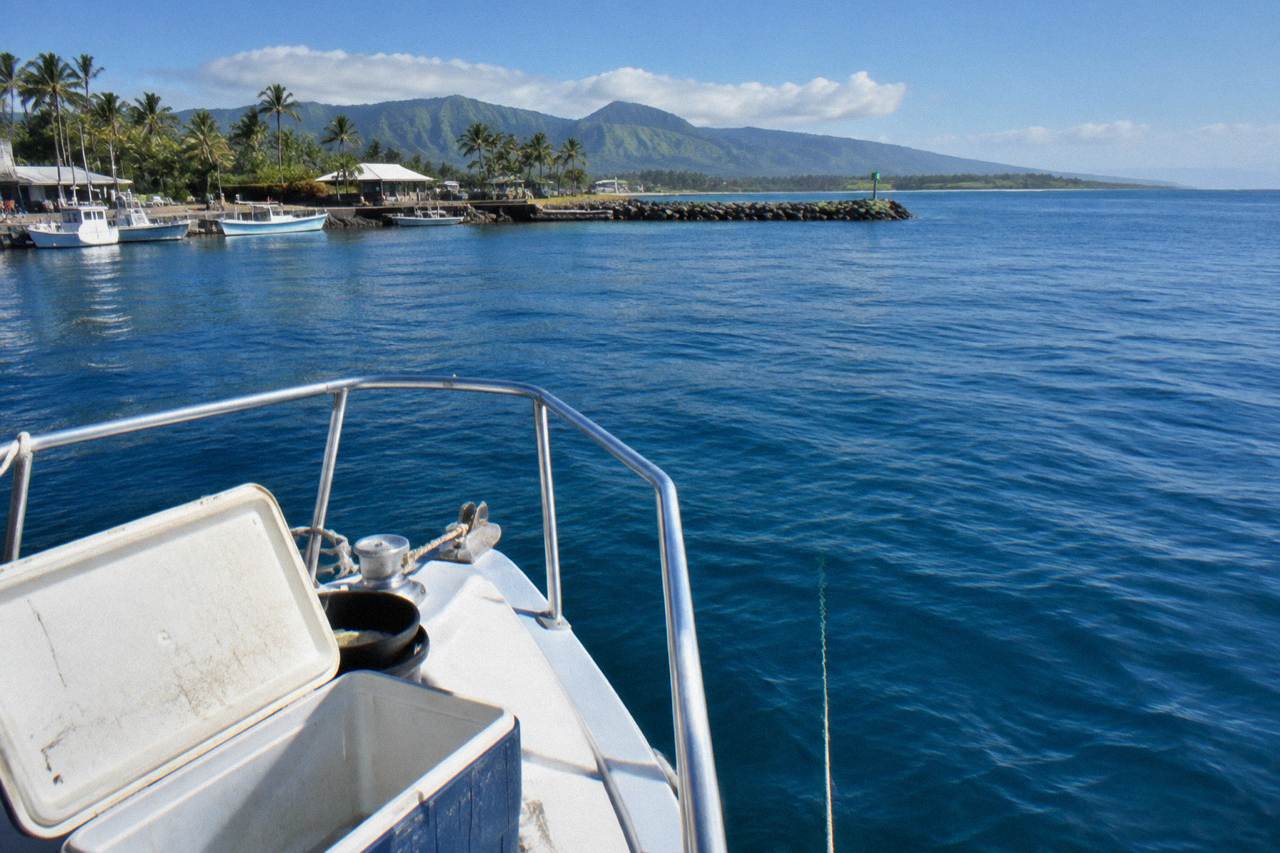
Is Cage-Free Shark Diving In Oahu Safe?
Yes, in the aggregate sense the record supports: cage-free shark swims off Oahu's North Shore are a regulated, permitted commercial activity with no fatalities found in DLNR's records for commercial North Shore shark tours, and every documented tour-related bite is classified as provoked rather than unprovoked. The format does carry different exposure than a cage dive, though, because nothing stands between you and the animal except water, training, and the operator's protocol.
That distinction matters more than most visitors realize, down to what you wear. A cage is a physical barrier; a cageless swim is a managed encounter. The two are not the same product with one wall removed, they are different risk profiles built on the same reef of regulation, and the honest way to compare them is to look at what actually happens on these trips rather than at what either side of the debate insists.
The basics first. Every commercial shark operation out of Haleiwa runs roughly three nautical miles offshore, past the boundary of Hawaii state marine waters and into federal waters, because Hawaii law has prohibited shark feeding in state waters since 2002. Out there the boats stop over deep pelagic blue water, often around 600 feet deep, where Galapagos and sandbar sharks naturally aggregate. A caged trip lowers a steel or aluminum cage into that water and you climb in. A cageless trip puts you on a surface line or in a free-swimming group beside the boat, with the sharks circling in open water.
Why the operators can do this legally, and why the state does not shut it down, is worth one paragraph. The feeding ban in HRS §188-40.6 applies to state marine waters, defined as zero to three nautical miles from shore. Commercial tours hold DLNR commercial use permits and run outside that line, where the state ban does not reach. The Division of Boating and Ocean Recreation issues those permits, and reports from around 2025 indicated roughly three commercial permits specifically for shark tours operating out of Haleiwa. This is a permitted, inspected, insured industry, not a gray-market operation.
With the legality explained, what remains is the experience itself, and the cage-free shark tour offers a representative look at what a permitted outing includes.
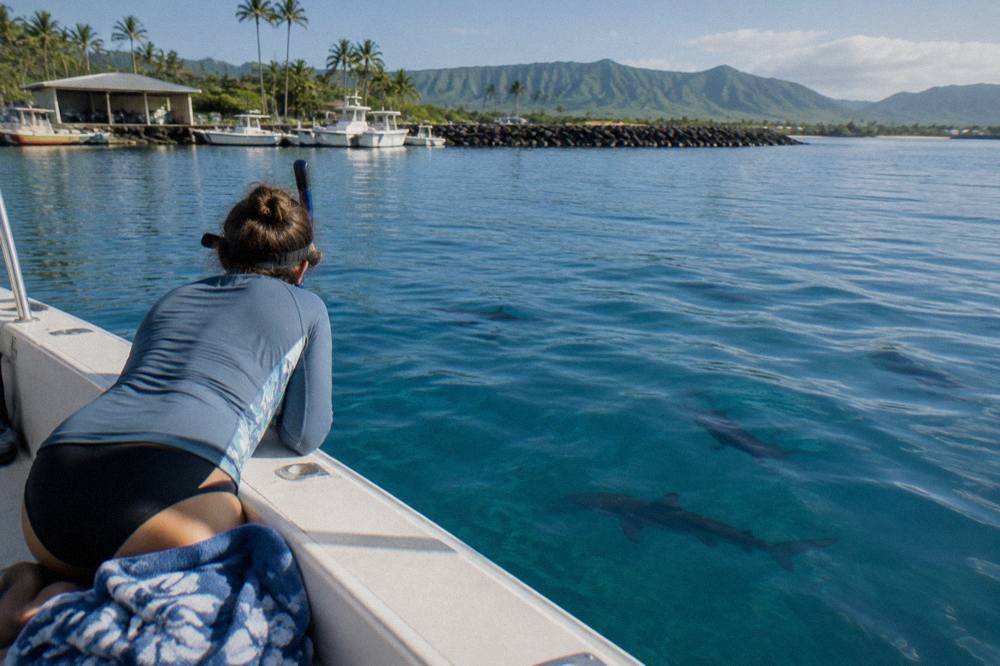
If you are weighing the cageless option, these are the three swims most worth comparing first.
How A Cageless Swim Actually Works
A cage-free trip typically runs like this: the boat motors about three miles off Haleiwa, stops over deep water, and guests enter the ocean in small groups, either holding a floating line beside the boat or swimming freely under a guide's direction while Galapagos and sandbar sharks circle at close range. There is no barrier, no cage, and no bait held next to your body, the encounter relies on sharks that already aggregate at the site.
The experience is smaller and quieter than most people picture. Operators cap group sizes, brief everyone on the boat before anyone gets wet, and keep a guide in the water with the swimmers at all times. You stay at the surface or just under it, where you can see the animals approaching from a distance, rather than diving down among them. Visibility at these offshore sites is often excellent, frequently described as 150 feet or more in calm conditions, which is precisely why the format works: you and the crew can see the sharks, and the sharks can see you.
Island View Hawaii is the flagship of this category, a small-group cageless swim rated 5.0 across 1,179 reviews, and its format is representative of the genre. Guests float on the surface in a loose group, guides position themselves between swimmers and the animals, and the sharks, usually Galapagos in the 8-to-12-foot range, glide past at distances measured in feet. The price and current departure times are on the operator's live listing rather than in any fixed figure worth printing here.
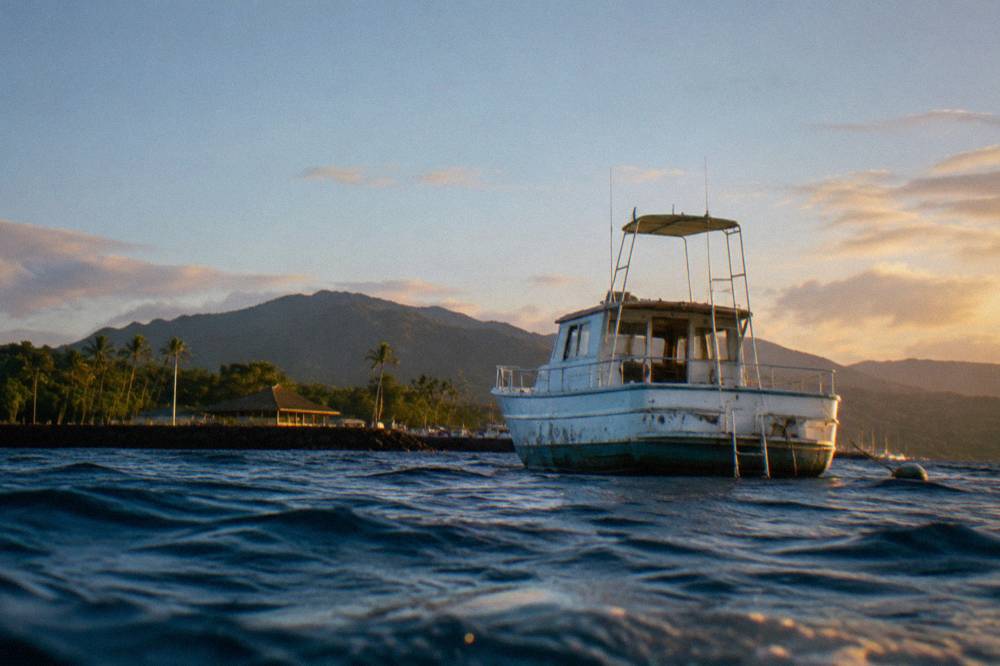
The contrast with a caged dive is mostly psychological at the water level and logistical at the boat level. In the cage you are enclosed, you can submerge fully, and the sharks come to the structure. Cageless, you are a guest in their midwater territory, and the whole protocol is built around behaving like a calm, predictable guest. That is why operator choice matters more in this category than in the caged one. For a fuller format-by-format comparison, see the guide on cage versus cageless shark diving on Oahu.
What The Safety Record Actually Shows
The aggregate record is more reassuring than the premise of the question suggests: DLNR's public shark incident log shows no fatalities on Oahu North Shore commercial shark tours, and every documented tour-related bite off Haleiwa is classified as provoked, meaning the encounters involved people actively in the water with attracted sharks rather than random predatory attacks. Cageless trips have also produced provoked bites, so the format is not incident-free, and honesty requires saying so plainly.
The word provoked carries a specific meaning in the incident-tracking world, and it is the single most important term in this whole debate. Provoked incidents are those where the human was engaged in an activity that drew or held the shark's attention, which includes swimming with sharks at an aggregation site. Unprovoked incidents are the ones people actually fear, a shark deciding to bite a person minding their own business. DLNR's official incidents list, maintained through September 2026, documents a series of provoked bites tied to swimming-with-sharks tours about three miles off Haleiwa, involving lacerations and puncture wounds to arms and hands. News reporting in 2025 counted roughly six provoked attacks over about six years.
That is a real record, not a zero, and any article telling you cageless swimming is perfectly safe is selling you something. But context changes how you read it. Statewide, Hawaii sees roughly six to ten confirmed shark incidents per year against millions of ocean entries, and Oahu has recorded no shark fatality in broader records since 1994. The tour bites cluster in a narrow category: people floating at the surface at a site where sharks expect food-adjacent activity, in clear water, sometimes with hands extended. The bites were lacerations, not fatalities, and the classification as provoked is the state's own, not the industry's.
| Risk factor | Caged dive | Cage-free swim |
|---|---|---|
| Physical barrier | Steel or aluminum cage | None, surface line only |
| Typical sharks | Galapagos, sandbar, occasional tiger | Same species, same site |
| Documented bites on tours | Provoked incidents recorded | Provoked incidents recorded |
| Fatalities in DLNR records | None found for North Shore tours | None found for North Shore tours |
| Exposure variable | Shark contact with cage | Swimmer behavior and guide control |
| Best suited to | First-timers, families, nervous swimmers | Confident snorkelers, wildlife-focused guests |
The honest takeaway from the table is not that one column is safe and the other dangerous. It is that the cage removes a class of low-probability contact while the cageless format manages it instead through protocol, group size, and guide judgment. Both formats share the same fatality-free aggregate record for North Shore commercial tours, and both carry the same nonzero provoked-bite history.
If the cageless format still appeals after reading that record, the flagship swim is worth a look before you decide anything else.
Which Sharks You Are Actually Swimming With
The animals on these trips are Galapagos sharks and sandbar sharks, typically five to twelve feet, with tiger sharks appearing occasionally and more often in late summer and fall, and no great white sharks are involved in any Hawaii tour, they are rare winter visitors to Hawaiian waters and not part of the commercial encounter at all. The species mix is the core reason cageless swimming off Oahu is a different proposition from the famous white-shark cage dives of South Africa or California.
Galapagos and sandbar sharks are midsize requiem sharks, and their behavior around swimmers is consistently described as curious rather than aggressive. Reviews from mid-2026 describe groups of seven to twenty Galapagos sharks gliding calmly past surface swimmers, often within inches, without charging or striking. A recent baited-remote-video study around Oahu, published in Marine Ecology Progress Series, documented twelve elasmobranch species across 283 deployments and found the assemblage numerically dominated by sandbar sharks, with both sandbar and Galapagos sharks increasing in abundance with depth, which lines up neatly with why the tours work at deep offshore sites.
Tiger sharks are the wildcard. A 2026 analysis in Frontiers in Marine Science tied peak tiger sightings at North Shore ecotourism sites to October, when mature females arrive from the Northwestern Hawaiian Islands, and noted that October also sees higher bite incidents statewide. Operators and divers report the same seasonality from the water side. Some cageless programs are guided by marine scientists or marine biologists, and One Ocean Diving's research-focused trips, rated 4.9 across 587 reviews with sharks guaranteed and are built explicitly around that educational framing.
Who Should Skip The Cageless Format
Skip cage-free swimming if you are not a confident snorkeler, if crowds of large animals in open water would push you into panic, or if you are booking for children or hesitant family members, and choose the caged dive instead, which delivers the same sharks, the same site, and the same view with a barrier between you and the animal. The cageless format rewards calm and punishes flailing, and the single biggest predictor of a good trip is honest self-assessment on the dock.
The behavior rules are not arbitrary. Keep your hands in or near your body rather than extending them toward animals, stay horizontal and calm at the surface, keep the group tight, and follow the guide's positioning without negotiation. Most provoked bites in the record involve hands and arms, the body parts people instinctively reach out with. A confident snorkeler who follows protocol is a low-risk participant in this activity. A nervous swimmer who freezes or splashes is the participant the protocol exists to manage.
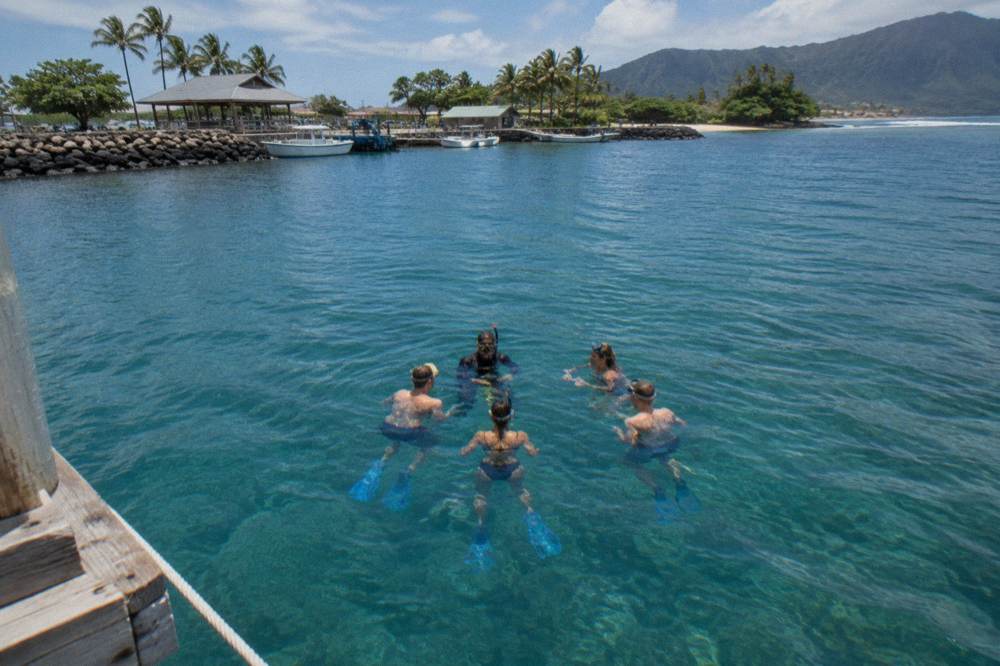
Season and operator choice also shift the experience. Summer, May through September, brings calmer seas, lighter winds, and the clearest water, while winter swells from November through April make the offshore run bumpier and raise cancellation rates. September is often called the sweet spot for calm conditions with thinner crowds. If your dates are fixed and your confidence is not, the guide on whether shark cage diving is safe covers the enclosed format in detail, and the best time of year for shark diving on Oahu walks through the seasonal trade-offs month by month.
Among the cageless operators, One Ocean Diving's swim trips, rated 4.8 across 515 reviews with a marine-scientist guide in the water, are the strongest fit for travelers who want the research context to lead the experience.
Go Adventure Hawaii, rated 4.8 across 153 reviews with a wetsuit top included, is a lower-key alternative in the same category for swimmers who want a smaller production. Whatever you book, read the operator's own safety briefing before you board, because each crew runs its own entry protocol and group size, and those details are on the live listing.
The Verdict For A Nervous Would-Be Swimmer
For a confident snorkeler who follows the guide, the cage-free swim off Oahu is a low-probability-risk activity with a fatality-free aggregate record and a known, documented history of provoked bites, so the decision is really about your comfort in open water rather than about hidden danger. The sharks are real, the water is deep, the animals come within feet, and thousands of guests do this every year without incident, but the format asks more of you than the cage does.
The practical sorting is simple. If the phrase open water with sharks makes your stomach drop, book the cage, you will still see the same animals at the same range and enjoy it far more. If the phrase makes your heart beat faster in the good way, the cageless swim is one of the most memorable wildlife experiences available on Oahu, and the roster of permitted operators gives you a real choice between the small-group flagship, the research-led trips, and the budget-friendlier alternatives. This site, Shark Cage Diving Honolulu, exists precisely to help you make that call with the actual record in front of you rather than a sales pitch.
When your heart answers the good way, the natural next step is to open the cageless Oahu shark swim listing and check its details against what you want from the day.
If cage-free sounds like too much but you still want the full story on what the enclosed version feels like, the guide on what happens on a shark cage dive walks through that format step by step.
Common Questions About Cage-Free Shark Diving In Oahu
Is Cage-Free Shark Diving in Oahu Safe?
At the aggregate level the record supports it: no fatalities on Oahu North Shore commercial shark tours appear in DLNR's records, and all documented tour-related bites are classified as provoked. The cageless format does carry more exposure than a caged dive because no barrier stands between you and the shark, so it is a managed risk rather than a zero risk.
Have there been shark bites on cage-free tours off Haleiwa?
Yes. DLNR's incident log documents a series of provoked bites on swimming-with-sharks tours roughly three miles off Haleiwa, involving lacerations and puncture wounds, and 2025 news reporting counted about six provoked attacks over roughly six years. None were fatal, and all were classified as provoked, not unprovoked predatory attacks.
What sharks do you swim with on a cage-free Oahu tour?
Galapagos sharks and sandbar sharks, typically five to twelve feet long, with occasional tiger sharks more often seen from late summer into fall. Great white sharks are not part of Hawaii's resident population and are never part of these commercial encounters.
Is cage-free diving more dangerous than a cage dive?
The cage removes a class of low-probability contact; the cageless format manages it through protocol, small groups, and guide control. Both formats share the same fatality-free aggregate record for North Shore commercial tours, but the cageless trip asks more of your swimming confidence and ability to stay calm.
Who should not do a cage-free shark swim?
Anyone who is not a confident snorkeler, who panics in open water, or who would flail or reach toward large animals. Hesitant swimmers and families with young children are better served by the caged dive, which shows the same sharks at the same site from behind a barrier.
Do cage-free tours feed the sharks?
Shark feeding is banned in Hawaii state marine waters under HRS §188-40.6, which is why tours operate about three nautical miles offshore in federal waters. The sharks at these sites aggregate naturally around deep pelagic habitat, and the tours rely on that existing presence rather than on chumming next to swimmers.