How Risky Is Shark Cage Diving In Hawaii?
An honest look at the real risks of shark cage diving off Oahu, based on DLNR's official incident records, Hawaii law, and how the tours actually operate.
 By Shark Cage Diving Honolulu Editorial Desk, Honolulu shark cage diving charter research and booking desk
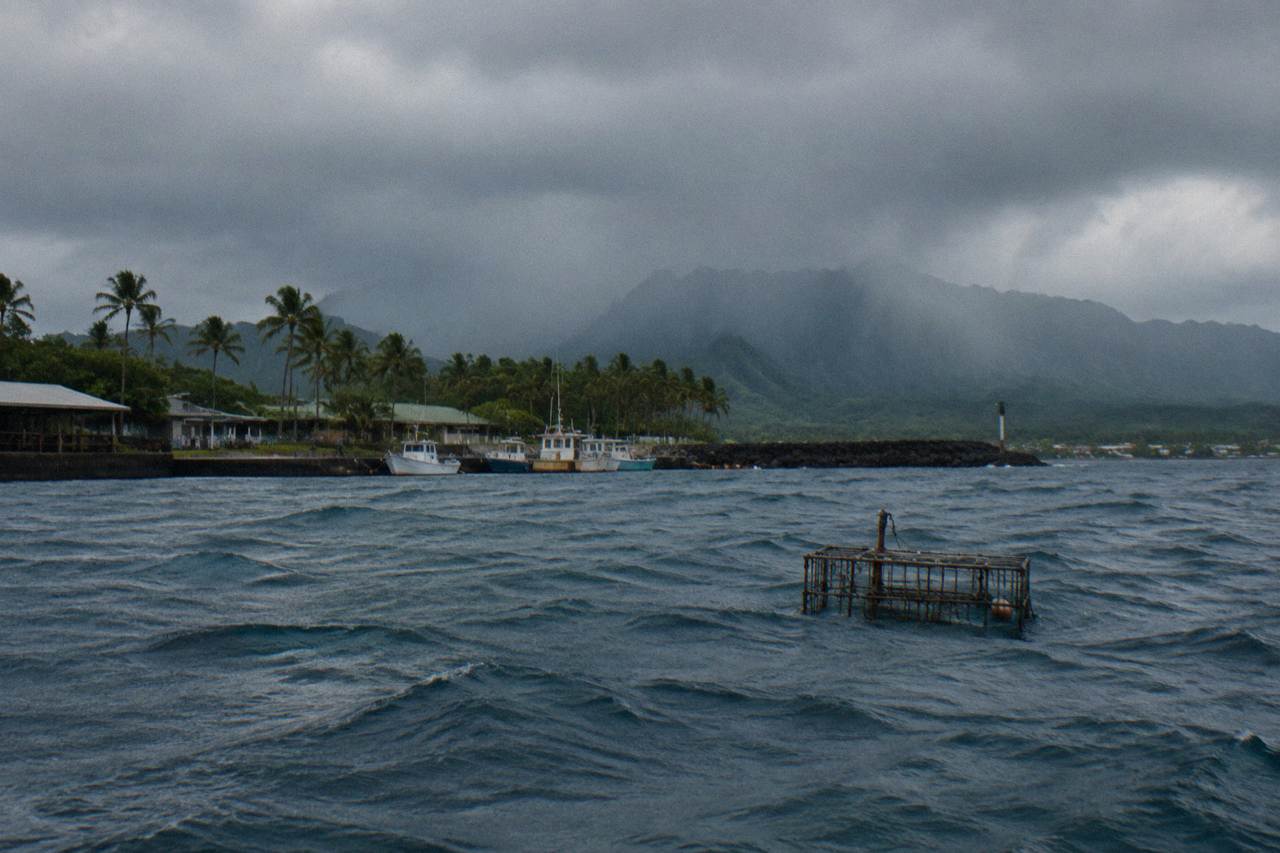
How Risky Is Shark Cage Diving In Hawaii?
Based on the state's own records, shark cage diving off Oahu's North Shore is a low-risk commercial activity: DLNR's public incident log shows no fatalities on permitted North Shore shark tours. The sharks are Galapagos and sandbar sharks, curious but not predatory toward people, and the cage itself is a steel barrier. See shark diving in Kona costs. The most common real complaint is seasickness, not injury.
That is the short answer, and it is worth being precise about where it comes from. Hawaii's Division of Aquatic Resources keeps a public log of every confirmed shark incident in state waters, distinguishing provoked from unprovoked cases. That log, which the state has maintained through its September 2026 update, is the closest thing to an authoritative safety record for these tours, and it does not contain a single fatality on a commercial North Shore shark cage operation. When people ask how risky the activity is, that is the number that matters most: zero recorded deaths across the entire permitted industry.
With that record in mind, it becomes easier to weigh whether a cage dive off the North Shore belongs on the itinerary at all.
The fear, of course, is not really about statistics. It comes from the image: a person in a mask, treading water in a steel cage, while ten-foot sharks glide past close enough to touch. That image is accurate. What it leaves out is the behavior of the animals. Galapagos and sandbar sharks, the two species these tours see almost every day, approach cages slowly and curiously, the way a reef fish approaches a new object. They do not charge the bars. Reviews from the 2026 season describe groups of seven to twenty Galapagos sharks circling calmly, sometimes inches from the cage, with no aggression at all.
There is also a legal structure behind the calm, which most visitors never hear about. Hawaii banned shark feeding in state marine waters in 2002, and that ban is why every commercial tour runs its boat roughly three miles offshore, past the state boundary into federal waters. The operators are not working around the law; they are working within a permitting system run by DLNR, which has issued only about three commercial shark-tour permits out of Haleiwa. A permitted, inspected, small-operator industry with a clean fatality record is a different proposition from what most people imagine.
If you are weighing the options, these three tours cover the main ways to do it:
The first is the classic steel-cage dive. The second is a cageless swim, which carries a different risk profile we will get to later. The third is a research-focused trip with a shark-sighting guarantee. All three depart from the same harbor and see the same sharks; the difference is how much metal stands between you and them.
What Does The Official Safety Record Actually Show?
DLNR's public incident log, maintained through its September 2026 update, records no fatalities on commercial shark cage tours operating off Oahu's North Shore. The log does document a small number of bites on "swimming with sharks" tours over the years, all classified as provoked, all involving cageless swims rather than the steel-cage dives. For the cage experience specifically, the state's record shows no serious injuries at all.
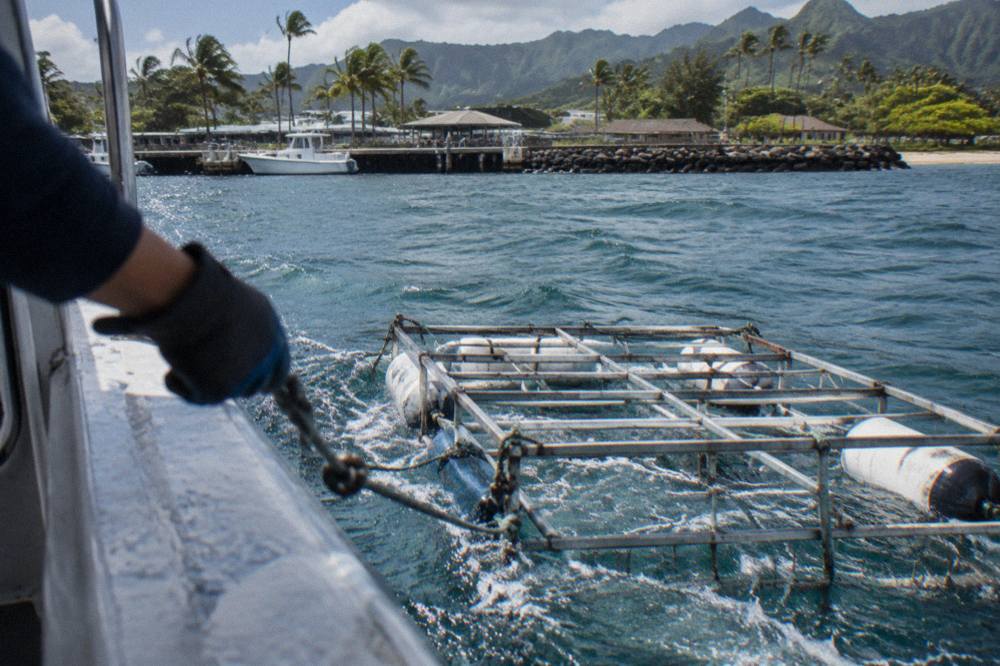
It helps to read the record the way the state writes it. DLNR tracks confirmed incidents statewide, separating provoked cases (where the person was interacting with the animal, handling it, or in the water at a baited site) from unprovoked ones (a swimmer or surfer bitten in ordinary ocean use). The tour-related entries in the log fall entirely in the provoked category, and they cluster around cageless swim operations, not the steel-cage dives that most visitors book. The log is published on the DLNR site and can be read directly at the state's official incident list.
Here is the honest framing in one table:
| Risk factor | What the record shows | Practical read |
|---|---|---|
| Fatalities on permitted North Shore shark tours | None found in DLNR's records | The headline risk simply has not materialized |
| Serious injuries on steel-cage dives | None in DLNR's public log | The cage does the job it is built to do |
| Bites on cageless swim tours | A small number, all classified as provoked | Cageless is measurably different from caged |
| Unprovoked bites near Oahu beaches | A handful per year statewide, mostly surfers and swimmers | Tour sites are not where Hawaii's bites happen |
Two caveats keep this honest. First, "provoked" is DLNR's classification, not the operators'; it reflects that the person was in the water at an active shark site, which is inherent to the product. Second, a clean record is not a guarantee. These are wild animals in open ocean, and no operator can promise zero incidents forever. What the record supports is a risk level comparable to, and arguably lower than, many ordinary ocean activities in Hawaii.
Why Do The Tours Run Three Miles Offshore?
Hawaii law prohibits shark feeding in state marine waters, the zone from the shoreline out to three nautical miles, so commercial shark tours must operate beyond that line in federal waters where the state ban does not apply. This is why every Haleiwa shark boat makes a roughly three-mile run before stopping. The rule dates to 2002 and is the single biggest shaping force on how the industry operates.
The statute is HRS §188-40.6, which makes it unlawful to conduct any activity related to feeding sharks in state marine waters, with narrow exceptions for non-commercial Hawaiian cultural practices. The official text of the feeding ban is published by the Hawaii State Legislature, and the state/federal boundary that makes the tours legal is standard coastal law: state waters run 0 to 3 nautical miles out, and the federal exclusive economic zone runs from 3 to 200. The Western Pacific Regional Fishery Management Council's summary of state versus federal shark rules lays out the same boundary.
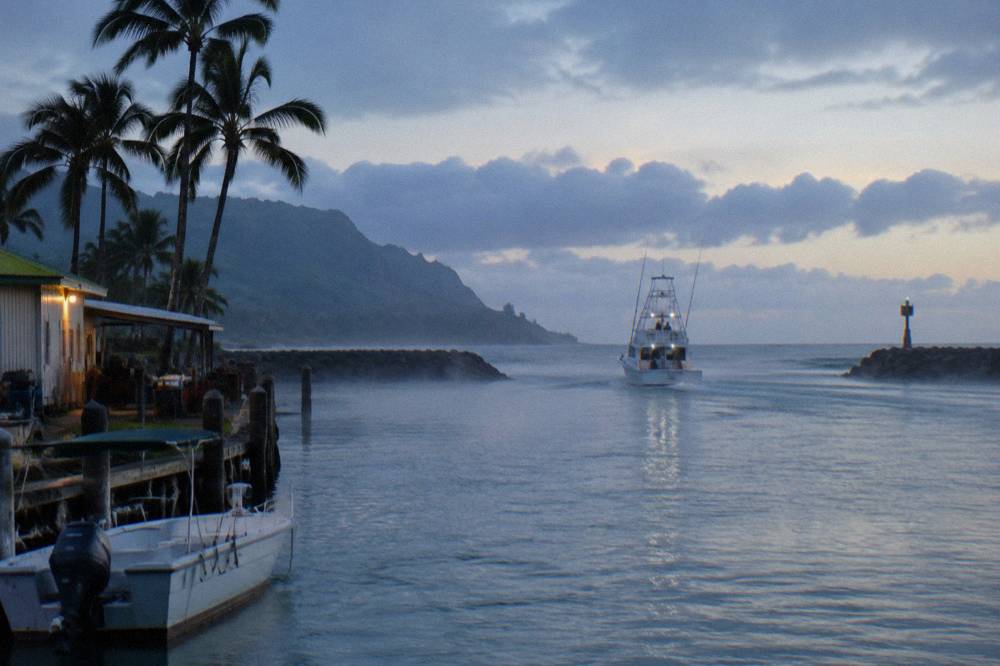
For a visitor thinking about risk, the offshore detail matters in two ways. First, it means the dive site is deep, open, pelagic water, often described by operators as roughly three to four miles out over water hundreds of feet deep, not a reef or a beach. The sharks there are oceanic animals aggregated around a known site, not coastal animals wandering past swimmers (see Oceanic Whitetips). Second, it means the industry is small and permitted: about three commercial shark-tour permits exist for Haleiwa harbor, and DLNR has shown it will fine unpermitted commercial operators, with a 2026 case bringing $10,000 in administrative fines for unauthorized North Shore operations. You are dealing with a handful of licensed, inspected boats, not a free-for-all.
The species question follows from the location. The animals that aggregate at these offshore sites are Galapagos sharks and sandbar sharks, with tiger sharks showing up seasonally, more often in late summer and fall. If your mental image is a great white, it is the wrong image for Hawaii: great whites are not part of Hawaii's resident shark population and are rare winter visitors at most. Our guide to what sharks you will see on the North Shore covers the species list in detail.
One operator worth knowing in this context is One Ocean Diving, whose swim program is led by marine scientists and emphasizes reading shark behavior before anything else. Its swim tour holds a 4.8 rating across 515 reviews on the live listing.
How Much Protection Does The Cage Actually Give?
The cage is a rigid steel structure that floats at the surface, with you inside it and the bars between you and the sharks. Sharks approach it curiously but do not attack it, and DLNR's record shows no serious injuries on caged dives. It is not a sealed capsule: you are in the water, holding the bars, close enough to see the animals clearly. The protection is real but it is a barrier, not a force field.
Understanding what the cage is, and is not, dissolves most of the fear. You enter the water from the boat's platform and hold on inside the frame, upper body submerged, face in the water through a mask. The sharks swim around and sometimes inches past the bars. Nothing about the setup prevents you from seeing, hearing, or feeling the ocean around you; it prevents contact. In years of operation across the Haleiwa fleet, the documented pattern is sharks investigating the cage calmly, not testing it. Other pages covering the same trip are gathered on Shark Cage Diving Honolulu.
The behavior has a biological explanation. Galapagos and sandbar sharks are mid-sized requiem sharks, typically in the five-to-fifteen-foot range on these tours, and their approach behavior toward cages and swimmers is investigative, not predatory. That contrasts sharply with the predatory strike behavior great whites show at pinniped colonies in South Africa or California, which is a completely different ecological context. Hawaii's tours are not a smaller version of those trips; they are a different kind of trip with different animals.
The flagship caged experience is North Shore Shark Adventures, which runs the steel-cage dive out of Haleiwa with no food or drinks included in the price. It carries a 4.8 rating across 3,241 reviews on the live listing, the largest review pool of any shark tour on the island, and you can check dates and current price on the North Shore Shark Adventures tour page.
What Are The Realistic Risks If The Sharks Are Not The Problem?
The most common genuine complaints on Haleiwa shark tours are seasickness, sun exposure, and cold water, not sharks. The boat run crosses open ocean, the dive site sits over deep water where swells move, and you spend the surface interval wet and exposed. Winter trips face higher cancellation and rougher conditions than summer trips. None of this is dangerous in the way the word "shark" implies, but it is what actually affects most guests.
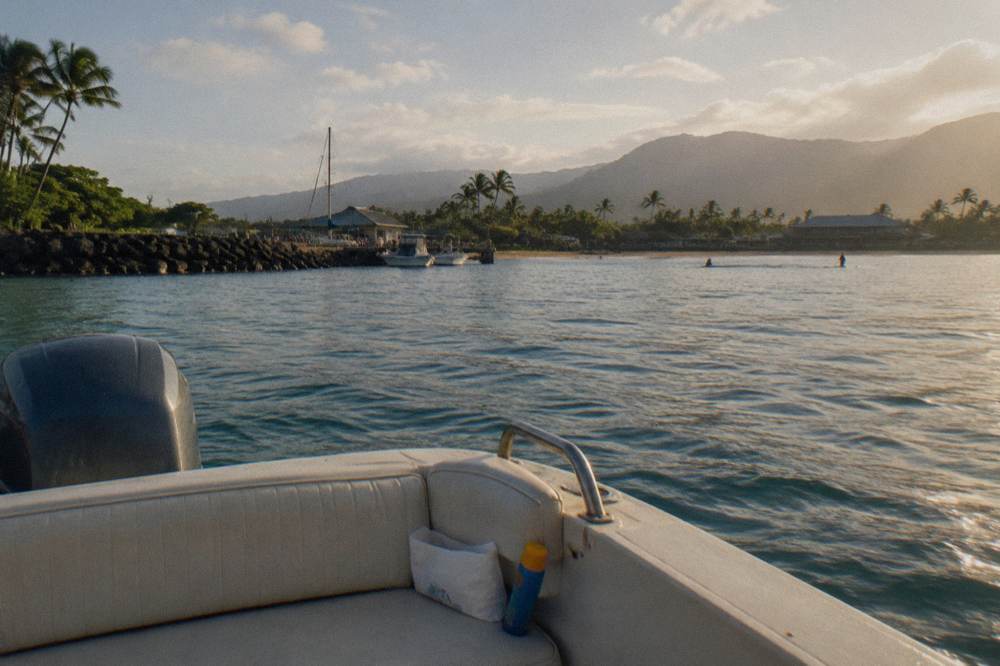
Ask a tour crew what ruins the most trips and the answer is motion sickness, not wildlife. The run out from Haleiwa takes you across water that can roll, and hanging on a boat in swells for an hour is enough to turn a significant share of passengers green. Our guide to handling seasickness on a shark boat tour goes into prevention in detail, but the short version is: take medication the night before and again the morning of, eat something plain, and stay on the lower deck watching the horizon during the run out.
The season matters more than most visitors realize. North Pacific swells push big surf at the North Shore from roughly November through April, and rougher seas mean bumpier rides and higher cancellation rates. Summer, May through September, brings lighter winds, calmer water, and clearer visibility; late-September buoy readings at Waimea Bay put the surface water around 80.6°F, near the warm end of the year. If your tolerance for rolling boats is low, booking inside the calm season is the single best risk-reduction step available, and our guide to the best time of year for shark diving on Oahu breaks down the tradeoffs month by month.
A reasonable question at this point is whether the cageless version changes the math. It does, modestly. DLNR's provoked-bite entries involve cageless swims, which is exactly what you would expect: in the water without bars, at an active shark site, the person is part of the environment rather than separated from it. The cageless operators argue, credibly, that their safety protocols and small group sizes keep the risk very low, and the flagship cageless swim on the roster holds a 5.0 rating across 1,179 reviews on the live listing. But if minimizing risk is your priority, the caged dive is the lower-variance choice, and that distinction is worth reading in full in our cage versus cageless comparison.
Who Should Skip A Shark Cage Dive?
People with heart conditions, severe mobility limits, uncontrolled seasickness, or an inability to swim should not book a shark cage dive, and most operators will say so on their listings. Children have operator-specific age minimums. Pregnancy is a common exclusion. The activity is physically easy for a healthy adult, but it is still open ocean, and the honest risk assessment includes your own body, not just the sharks.
The physical demands are modest but real. You descend a ladder or steps into the cage, hold the bars, and keep your face in the water for stretches at a time. Nobody expects athletic fitness, and flotation is part of the setup, but a person who cannot climb a short ladder back onto a boat should not book. Operators list their restrictions plainly, and age minimums for kids vary by company, which our guide to shark cage diving age requirements covers in detail.
Since every operator sets its own age minimums and physical restrictions, the North Shore Shark Adventures tour listing is the natural next stop for checking how your group fits.
The psychological side deserves a sentence too. Some guests freeze at the moment a shark's eye is a foot from theirs, even behind bars. That is not dangerous, but it is real, and it is the reason the better crews brief you on breathing and hand placement before you get in. If claustrophobia or open-water anxiety is part of your life, the honest move is to start with a boat-ride-only option or a glass-bottom style trip and see how the site feels before committing to the water.
For everyone else, the risk equation lands where this article started. A permitted, inspected, small industry; a state incident log with no tour fatalities; sharks whose documented behavior around cages is curiosity; and the ordinary discomforts of a boat trip. Haleiwa Shark Tours, one of the permitted operators, runs a 4.9-rated trip across 313 reviews, meeting at Haleiwa Boat Harbor, where guests arrive by their own car, rideshare, or bus.
Common Questions About Shark Cage Diving Risk In Hawaii
How Risky Is Shark Cage Diving in Hawaii?
Based on DLNR's public incident log, the risk is low: no fatalities have been recorded on permitted North Shore shark tours, and no serious injuries appear in the record for steel-cage dives. The documented tour-related bites involve cageless swims and are classified as provoked. For most guests the realistic problems are seasickness and sun, not sharks.
Has anyone ever died on a shark cage tour in Hawaii?
No fatalities on commercial North Shore shark tours have been found in DLNR's records. The state's official incident list, maintained through September 2026, documents a small number of provoked bites on cageless swim tours, none fatal.
Are the sharks dangerous to people in the cage?
The species involved, Galapagos and sandbar sharks, approach cages curiously rather than aggressively, and DLNR's log shows no serious injuries on caged dives. Tiger sharks appear seasonally and are larger, but the same calm approach behavior is the documented norm at these sites.
Is cageless shark swimming riskier than the cage?
Yes, modestly. DLNR's provoked-bite entries all involve cageless swims, where the person is in the open water at an active shark site. Operators keep the risk low with small groups and behavior-focused protocols, but the cage is the lower-variance option.
Do the tours chum the water next to the cage?
Tours operate about three miles offshore in federal waters, because Hawaii law bans shark feeding in state waters within three nautical miles of shore. The sharks aggregate at these offshore sites naturally, drawn to the area over years of boat activity, and the tours work within DLNR's permitting system.
What is the most common injury or problem on these tours?
Seasickness, by a wide margin. The boat crosses open ocean to reach the site, and swells roll even on calm days. Sun exposure and cold water account for most other complaints. Taking motion-sickness medication the night before is the standard advice from crews.