How Much Does It Cost To Go Shark Diving In Kona?
An honest look at what a Kona shark dive costs, why no verified Kona price is printed here, and how Oahu's North Shore tours compare on rating, format, and total day budget.
 By Shark Cage Diving Honolulu Editorial Desk, Honolulu shark cage diving charter research and booking desk
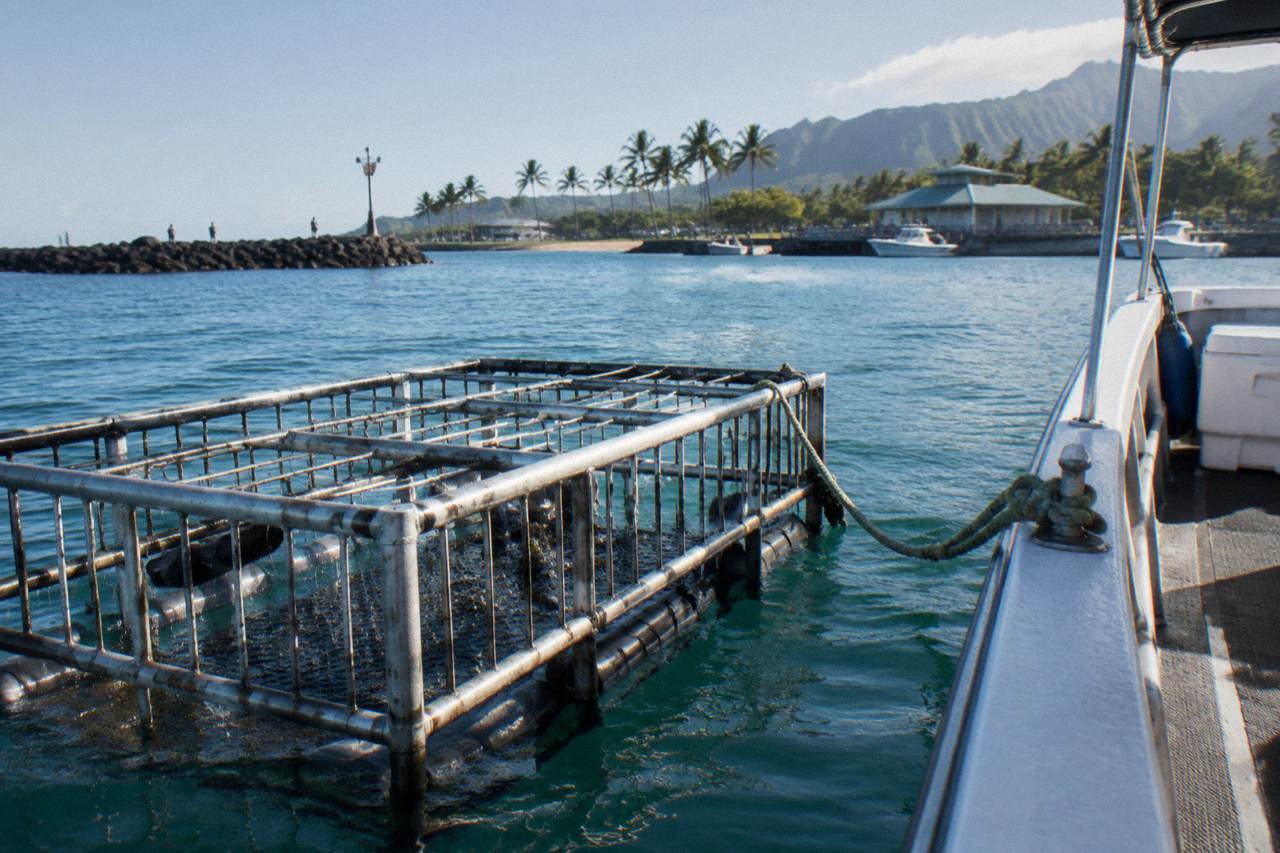
How Much Does It Cost To Go Shark Diving In Kona?
No verified Kona price appears in this site's research records, so the honest answer is a range built from what is documented. Comparable Oahu North Shore cage and cage-free shark trips carry their live prices on the operator's listing, and a realistic all-in day adds transport, a rental car or shuttle, and food. Planning a mid-range shark-diving day usually lands somewhere between roughly $150 and $300 per person before souvenirs or extras.
To see where a mid-range day actually falls for your dates, check the live prices on the operator's listing before you build the rest of your budget around it.
That answer will disappoint anyone hunting a single firm number, and it should. A price printed without a source is a guess wearing a dollar sign, and Kona's operators adjust rates seasonally, by boat, and by format. What this site can do honestly is show you every cost component that goes into the day, tell you exactly where the verified numbers sit for the Oahu alternatives, and let you build the budget yourself.
Kona, on the Big Island's leeward coast, is a different market from Oahu's North Shore. Its dive scene leans on deep volcanic drop-offs close to shore, and its shark products sit alongside the manta-ray night dives the region is famous for. The shark species are broadly the same pelagic Galapagos and sandbar sharks that circle the cages off Haleiwa, with tiger sharks as a seasonal bonus rather than a promise. The DLNR's official Hawaii shark species list confirms all three as resident Hawaiian waters species, so you are not paying for a rarer animal by flying to Kona.
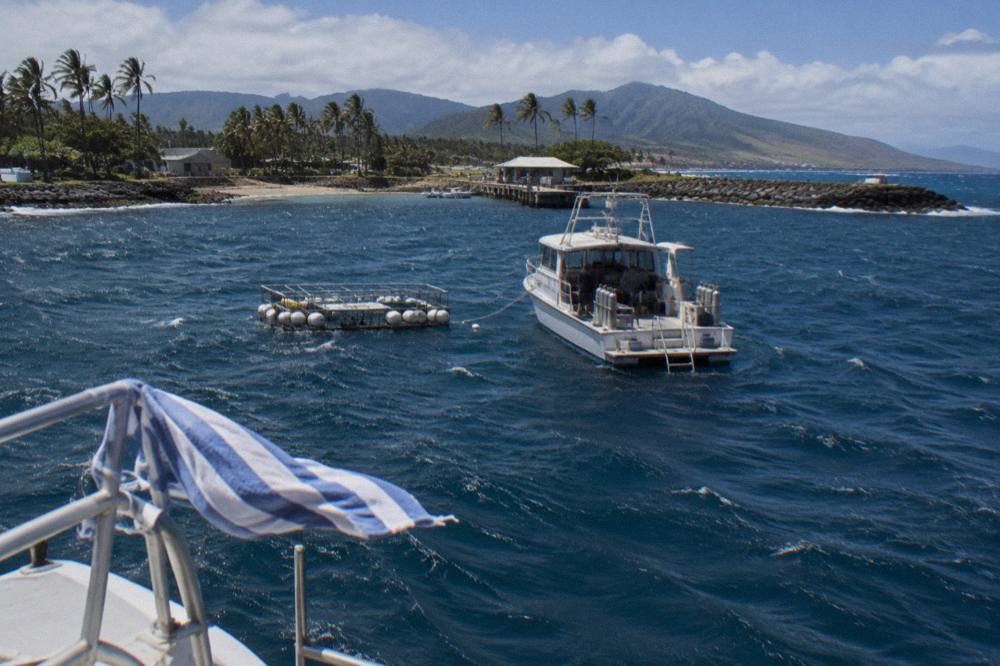
The practical comparison matters because most visitors to this site are already sleeping on Oahu. If that is you, the cheapest shark dive of your trip is almost certainly the one that starts at Haleiwa Boat Harbor, about 32 to 35 miles and 45 to 75 minutes from Waikiki depending on traffic, not the one that starts with a $40-plus inter-island flight each way. The full cost math, including how a Hawaii shark dive is typically priced, is covered in the site's guide to shark cage diving prices in Hawaii, which walks through the same components for the Oahu roster.
If you want to weigh the three best-documented options side by side before reading further, these are the trips this site tracks against any Kona quote you collect:
What Actually Shapes The Price Of A Shark Dive?
Four things drive the number on any Hawaiian shark tour: how far offshore the boat runs and what that fuel and crew time cost, whether you buy a cage or a cage-free format, the group size and the credentials of the guides, and what the ticket bundles, meaning gear, food, and hotel transport. A trip three miles out in deep pelagic water simply costs more to operate than a nearshore snorkel, and the price reflects it.
Distance is the biggest hidden line item. Hawaii banned shark feeding in state marine waters in 2002 under HRS §188-40.6, and the law's definition of commercial activity explicitly includes tours, charters, and transportation. That is why every licensed operator, on either island, runs out past the three-nautical-mile line into federal waters where the state ban does not reach. For Oahu's North Shore boats that means a roughly three-mile run from Haleiwa to sites in deep blue water, often near 300 feet deep, where Galapagos and sandbar sharks naturally aggregate around old crab-boat grounds. Fuel, a bigger vessel, and a longer crew day all flow into the ticket.
Format is the second driver. A steel-cage trip carries the cage itself, its maintenance, and a heavier boat to tow it, while a cage-free swim trades that hardware for a smaller group and a guide in the water with you. Neither is a budget version of the other. They are genuinely different products, and the site's comparison of cage and cage-free shark diving on Oahu breaks down the experience differences; here it is enough to say both formats price in the same general band, with inclusions doing the separating.
Inclusions are where listings trick buyers. Two tickets can sit $50 apart while the pricier one quietly includes mask, fins and a wetsuit top, gear you would otherwise rent separately. The Oahu roster illustrates the spread: the flagship cage trip includes only snorkel gear, while one cage-free operator adds a wetsuit top, a real cost difference once you price out a rental (see Choosing an Operator).
Here is how the surrounding day budgets out, using the planning ranges this site has verified for the Oahu run. Treat every figure as a planning range, not a promise, and confirm the live number before you book anything:
| Cost component | Typical planning range | What changes it |
|---|---|---|
| Economy or compact rental car | About $42 to $60 per day | Airport counters carry more fees than Waikiki counters |
| Midsize rental car | About $64 per day base | Taxes and a state surcharge add several dollars daily |
| Gas on Oahu | Around $5.52 per gallon | A Waikiki to Haleiwa roundtrip burns roughly a quarter tank |
| Rideshare, one way | Often $130 to $160 | Return trips from the North Shore can surge or be scarce |
| Commercial shuttle, roundtrip | About $67 to $85 per person | Includes free time in Haleiwa |
| Huakaʻi community shuttle | $5 roundtrip | Pilot service; return requires a local purchase receipt |
Add those lines to whatever ticket price you are quoted in Kona, plus the inter-island flights, and the two islands stop looking like close competitors. The Big Island trip only wins the price war if you were already going to the Big Island anyway.
How Do Oahu's Documented Tours Compare On Price?
Every operator in this site's roster keeps its live price on the listing rather than publishing a firm number here, but the ratings and review pools are fully documented. The flagship steel-cage trip holds 4.8 across 3,241 reviews, the small-group cage-free swim holds 5.0 across 1,179 reviews, and the marine-scientist-guided option holds 4.8 across 515. Those are the honest figures; the prices sit where prices sit.
Why not print the prices? Because a price copied onto a page and left to age is worse than no price at all. Operators adjust rates with the season, and this site refreshes its figures monthly behind the scenes rather than stamping a stale number into an article. When you see a tour card here, the button leads to the operator's live listing, which is the only place a current price is real.
What the roster does let us compare honestly is the shape of each product, which is usually what decides whether a ticket felt worth it:
| Oahu tour | Format | Rating and reviews | Notable inclusions |
|---|---|---|---|
| North Shore Shark Adventures | Steel-cage dive | 4.8 from 3,241 reviews | Largest review pool |
| Hawaii Shark Encounters | Cage dive | 4.8 from 1,556 reviews | Self-drive or rideshare |
| Haleiwa Shark Tours | Cage dive | 4.9 from 313 reviews | Smaller groups, flexible schedule |
| Island View Hawaii | Cage-free small-group swim | 5.0 from 1,179 reviews | Small group format |
| One Ocean Diving swim | Cage-free snorkel | 4.8 from 515 reviews | Marine-scientist guides |
| One Ocean Diving research | Cage-free swim | 4.9 from 587 reviews | Sharks guaranteed |
| Go Adventure Hawaii | Cage-free swim | 4.8 from 153 reviews | Wetsuit top included |
| Ocean Outfitters Hawaii | Cage-free swim | 4.8 from 271 reviews | Departs from Slip 19 |
Read the review counts alongside the ratings, always. A 4.9 from 313 reviews is a strong product with a modest pool; a 4.8 from 3,241 is a strong product with an enormous one. Neither number tells you the price, but both tell you something the price cannot, which is whether the people who paid it would pay it again.
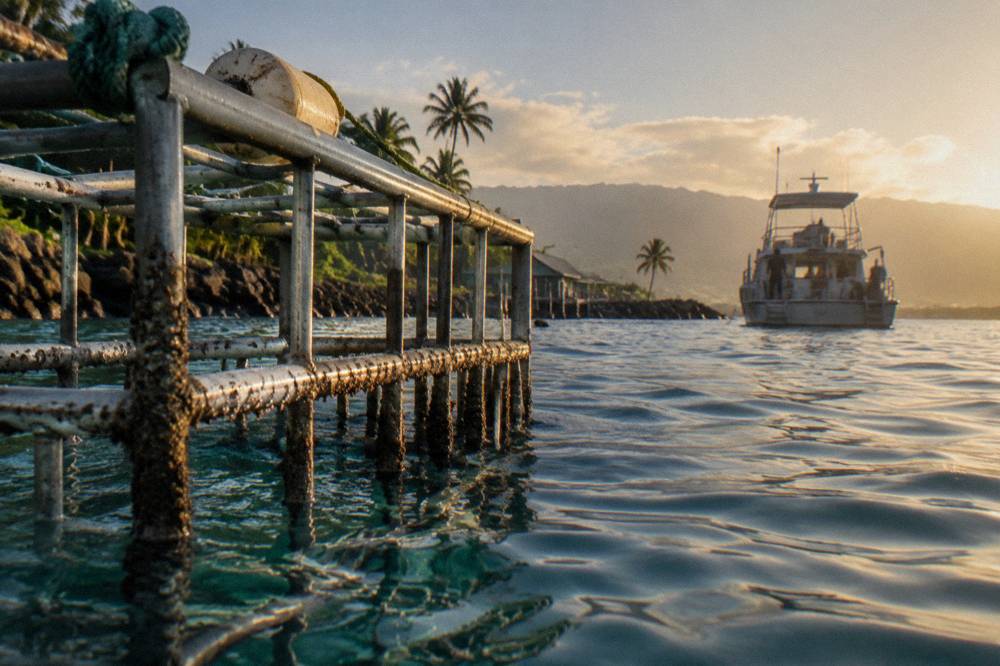
The flagship cage trip deserves a direct mention because it is the one this site points Kona shoppers toward first. North Shore Shark Adventures holds 4.8 across 3,241 reviews, the largest documented pool on the island. It runs out of Haleiwa Boat Harbor, a public facility with free parking, restrooms, and boat ramps, details worth knowing before you drive up.
Before committing to any single trip, it is worth checking that the date you want is actually running. Boats fill on holiday weekends and calm summer mornings, and free cancellation terms vary by listing, so a quick availability check costs nothing and locks nothing in.
What Do You Get For The Money, Cage Versus Cage-Free?
A cage ticket buys a physical barrier between you and the sharks, usually with gear and often a meal bundled in; a cage-free ticket buys open-water snorkeling beside Galapagos and sandbar sharks with a smaller group and a guide in the water. Neither format is the discount version of the other. They are different products at overlapping price points, and the right one depends on your nerves, not your wallet.
The cage experience is the classic image: a floating steel or aluminum cage beside the boat, you inside with a mask, sharks gliding past inches from the bars. Reviews describe groups of Galapagos sharks, sometimes seven to twenty individuals, approaching curiously without charging the structure, often close enough to touch if you were foolish enough to try. The animals run roughly 5 to 15 feet, with the Galapagos commonly reported in the 8 to 12 foot range. It is the format most first-timers picture, and the one most families choose.
The cage-free format is smaller and quieter. Six or so snorkelers, a guide in the water, and no barrier at all, floating on the surface while the same species circle below. The flagship cage-free operator on this roster, Island View Hawaii, holds a perfect 5.0 across 1,179 reviews, which is a remarkable number at that pool size, and it is the pick for anyone whose question is less "how much" and more "how close."
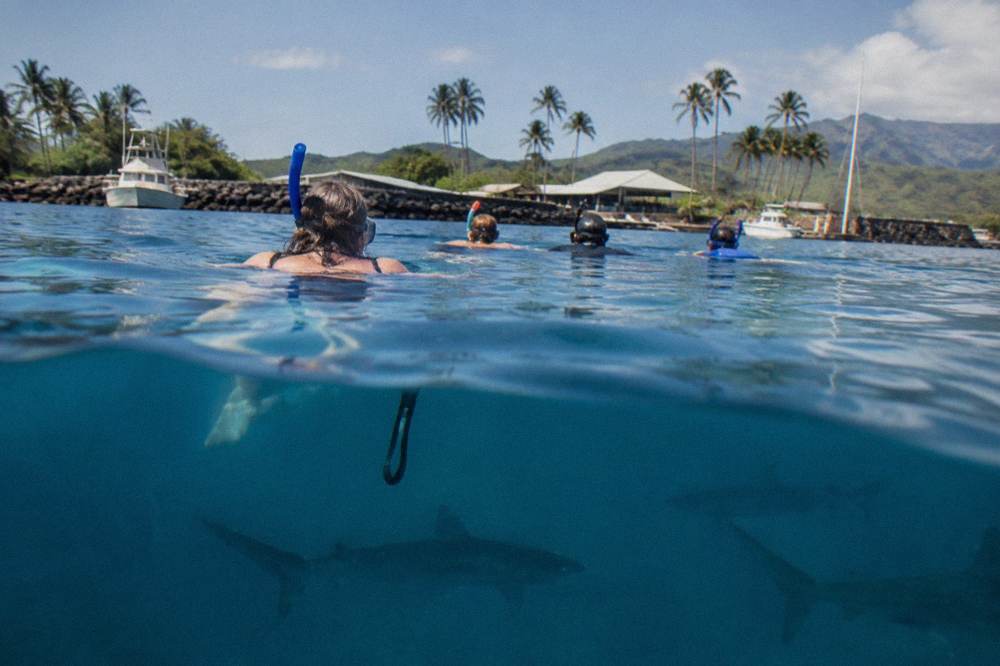
One Ocean Diving splits the difference with science credentials: its standard swim holds 4.8 from 515 reviews with marine-scientist guides in the water, and its research-focused version holds 4.9 from 587 reviews with a shark guarantee. A guarantee is worth pausing on, because no honest operator guarantees weather or animal behavior in general, so read the listing's exact terms before treating it as a promise.
The safety picture, for what it matters to the wallet conversation, is documented at the aggregate level: DLNR's public incident log shows no fatalities for commercial North Shore shark tours in its records. The same regulations govern Kona's operators, since the feeding ban and the three-mile boundary are statewide law, not an Oahu rule.
Is Kona Worth It If You Are Already Staying On Oahu?
For most visitors already sleeping on Oahu, no. The North Shore out of Haleiwa offers the same shark species, the same deep pelagic blue water, a documented safety record, and eight permitted tour products, all without an inter-island flight. Kona earns its place only if your itinerary already includes the Big Island, or if the specific experience you want is Kona's manta-ray night dive, which Oahu does not match.
The inter-island math is blunt. A roundtrip flight from Honolulu to Kona, a rental car on the Big Island, and a dive ticket will total several times what the same shark species cost you from Waikiki. If sharks are the goal and Oahu is your base, the Shark Cage Diving Honolulu roster exists precisely to make that drive north the whole trip. The harbor at Haleiwa is about 45 minutes from Waikiki without traffic, closer to an hour and ten in typical midday conditions, and rush hours or big-surf days stretch it further.
Timing shapes the experience as much as the island does. Summer, May through September, brings calmer seas, lighter winds, and the clearest water on the North Shore, with September sometimes called the sweet spot for calm conditions and thinner crowds. Winter swells from November through April can bump up the run and raise cancellation rates for small-boat operations on either island. The site's season-by-season breakdown for Oahu shark diving covers this in detail, and the same North Pacific swell logic applies to Kona's leeward coast with slightly gentler force.
If your heart is set on comparing islands rather than choosing one, the site's longer piece on which Hawaiian island suits shark diving best weighs Oahu against the Big Island and Maui across species, operators, and access (see Shark Diving in Maui). The short version for the price question: Oahu has the deepest documented review pool, the most permitted operators, and the shortest commute from the state's main hotel corridor.
For most travelers, that combination of access, operators, and reviews points toward Oahu, and a North Shore shark cage excursion is a sensible place to begin comparing the specifics.
One last budget note that applies to both islands. Book the tour before you book anything else for that day, then plan the drive around it. Early-morning departures beat both the rush-hour bottlenecks on the two-lane Kamehameha Highway sections and the afternoon wind that picks up offshore. The cheapest shark dive is the one you do not have to reschedule.
Before the final questions, here again are the three documented tours this site would put against any Kona quote:
Common Questions About Shark Diving In Kona
How Much Does It Cost to Go Shark Diving in Kona?
No verified Kona price appears in this site's research records, so treat any single number you read online with suspicion. Build the budget from components: a ticket priced on the operator's live listing, plus flights if you are coming from another island, plus ground transport. A comparable Oahu North Shore day, including a rental car or shuttle, realistically lands between roughly $150 and $300 per person.
Is shark diving cheaper on Oahu than in Kona?
Usually yes, if you are already staying on Oahu, because you skip the inter-island flights. The Oahu tickets themselves price on the live listing just as Kona's do, but the surrounding day costs less: a 45 to 75 minute drive instead of a flight, and a $5 community shuttle pilot or a $67 to $85 commercial roundtrip instead of a Big Island rental car.
Do shark dive prices include gear and transport?
It varies by operator, so read the inclusions line on the listing before comparing prices. On the Oahu roster, one operator includes a wetsuit top, and every tour meets at Haleiwa Boat Harbor, so you make the drive from Waikiki. Gear like masks and fins is typically provided; things like towels and motion-sickness remedies usually are not.
Can you do a shark cage dive on the Big Island?
Yes, Kona operators run shark encounters on the Big Island's leeward coast. The species are broadly the same Galapagos and sandbar sharks you meet off Oahu, with tiger sharks as a seasonal possibility. The same state law applies on both islands: no shark feeding inside three nautical miles, so licensed tours run offshore into federal waters.
What is the cheapest way to add a shark dive to an Oahu trip?
Book a North Shore tour out of Haleiwa, drive yourself or split a shuttle, and go in the May to September window when cancellations are rareest and the water is clearest. Parking at Haleiwa Boat Harbor is free, so a rental car day shared between two people is often the lowest total cost once the ticket, fuel, and food are added up.