Which Hawaiian Island Is Best For Shark Diving?
An honest comparison of shark diving across the Hawaiian Islands, and why Oahu's North Shore has the deepest roster of commercial cage and cage-free tours.
 By Shark Cage Diving Honolulu Editorial Desk, Honolulu shark cage diving charter research and booking desk
Which Hawaiian Island Is Best For Shark Diving?
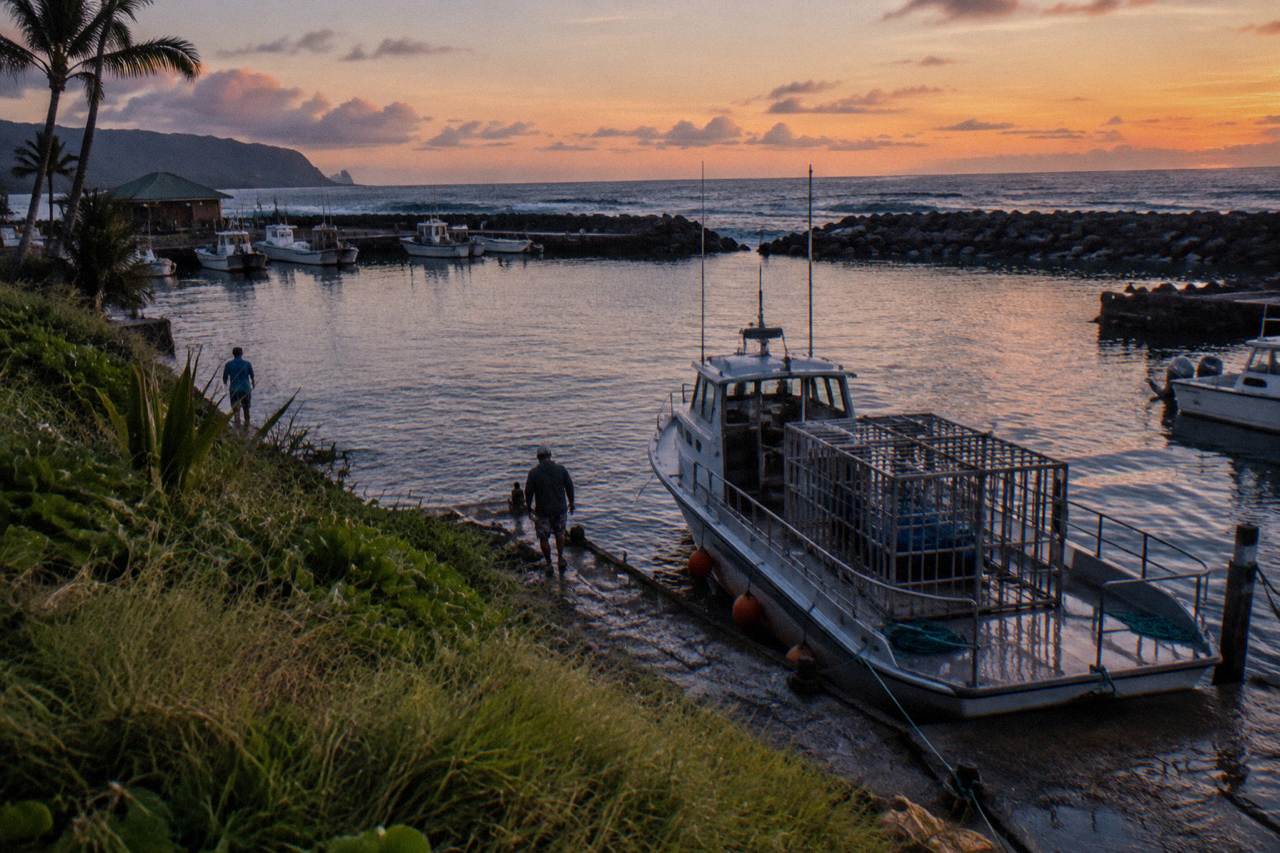
Oahu is the best Hawaiian island for shark diving, and it is not a close call. The North Shore out of Haleiwa Boat Harbor holds the state's densest cluster of commercial shark tours, including steel-cage dives, cage-free swims and research-led pelagic trips, all running roughly three miles offshore into federal waters. Maui has no commercial shark cage tours, the Big Island's famous dives are with manta rays, and Kauai and Molokai have essentially none.
The reason is partly historical and partly regulatory. Hawaii banned shark feeding in state marine waters in 2002 under HRS §188-40.6, which pushes commercial operators past the three-nautical-mile boundary line into federal waters where the state ban does not apply. Running a boat that far offshore, on a regular schedule, with the permits and insurance to carry paying passengers, is a real business commitment. Haleiwa is where that commitment concentrated: the state's Division of Boating and Ocean Recreation has reported roughly three commercial permits specifically for shark tours operating out of the harbor.
That concentration matters for a visitor. On Oahu you can compare operators on format, price and style, and pick between a hard steel cage, a cage-free snorkel, or a trip led by marine scientists. Anywhere else in the state, your realistic options thin out fast or disappear entirely. If you want to see how those formats differ before deciding, the cage versus cage-free comparison for Oahu breaks down who each style suits.
For a benchmark in the steel-cage style, the North Shore shark cage tour departing from Haleiwa Harbor shows what a standard trip looks like from briefing to boat ride.
It also matters for the quality of the experience itself. Operators working the same stretch of water, on the same aggregation sites, compete on crew professionalism, boat comfort and educational content, not just on price. Reviews from mid-2026 describe groups of seven to twenty Galapagos sharks gliding calmly around cages and swimmers, sometimes passing within inches of the bars, and that consistency is a product of operators who have worked these exact sites for years. A single-operator island cannot build that track record, because there is no competitive pressure and no accumulated institutional knowledge shared across a harbor community.
Why The North Shore Corner Of Oahu Wins On Operator Density
Haleiwa Boat Harbor on Oahu's North Shore is the only place in Hawaii where multiple competing shark tour operators run daily departures, which means real choice on format, timing and price. Roughly three commercial shark-tour permits are tied to the harbor, and the roster spans steel-cage dives and cage-free swims. No other harbor in the state comes close to that depth.
Density is the thing travelers underestimate. When one operator holds a monopoly on an experience, you take the schedule, the price and the format they offer. When several compete, you get morning and midday departures, transport options from Waikiki, and genuinely different products: North Shore Shark Adventures runs the flagship steel-cage dive rated 4.8 across 3,241 reviews, while Island View Hawaii runs a small-group cage-free swim rated 5.0 across 1,179 reviews, and One Ocean Diving runs marine-scientist-guided pelagic trips. Those are not the same product wearing different logos.
The distinction runs deeper than marketing. A steel cage is a welded barrier you stand inside while sharks circle at arm's length; a cage-free swim puts you in open water with the same animals and nothing between you; a research trip adds scientific framing, data collection and often a guarantee on sightings. Travelers routinely book one of these expecting another, and the reviews that read as disappointments usually trace back to that mismatch rather than to anything the operator did wrong. Choosing the right format first, then the operator, is the single decision that shapes the whole booking, and Oahu is the only island where that decision exists at all.
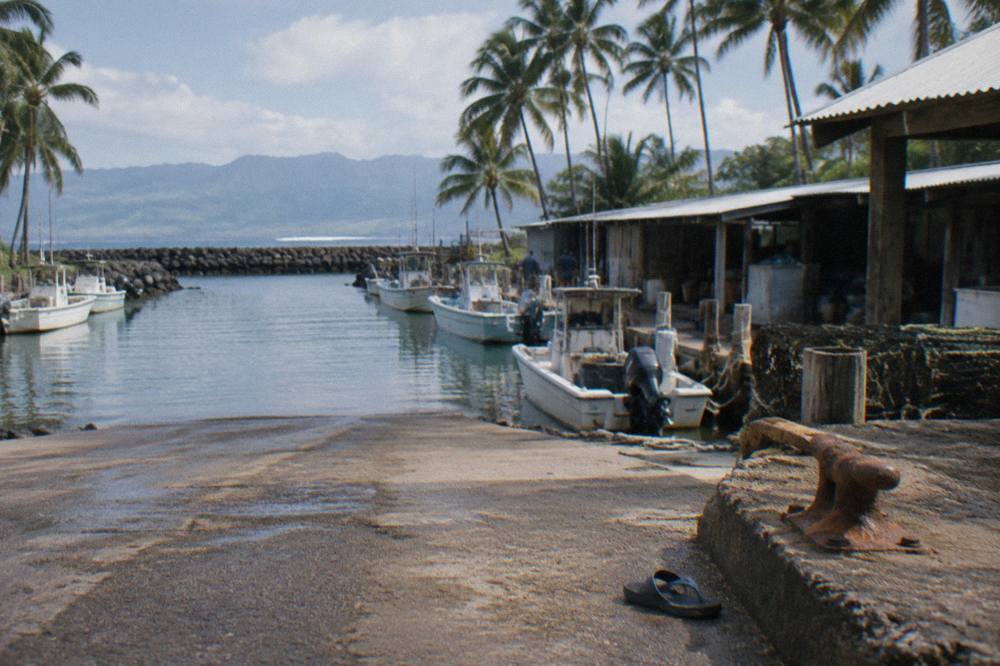
Access compounds the advantage. The harbor sits about 32 miles from Waikiki, typically a 45-to-75-minute drive depending on traffic. The harbor itself has free parking, public restrooms and loading docks, and Haleiwa town's shops and food trucks are minutes away for after the trip. A community shuttle pilot that launched in June 2026 even ran $5 round trips from Waikiki to the Haleiwa area during its trial window, a sign of how routine this corridor has become for visitors. The practical details are covered in the Haleiwa boat harbor guide.
Timing the drive matters more than most visitors expect. The route runs from H-1 West to H-2 North and then up Kamehameha Highway, and the two-lane section near Wahiawa slows badly during morning and afternoon rush hours, on big-surf days and on summer weekends. Early departures are the norm for shark tours anyway, since morning conditions are usually the calmest, which works in your favor: a 7 AM harbor check-in means you are on the road before the worst of the traffic builds. If you would rather not drive at dawn yourself, the Waikiki to Haleiwa guide covers the bus and rideshare alternatives.
What Sharks You Actually See Off Each Island
The species roster, not just the tour count, favors Oahu. North Shore tours consistently report Galapagos sharks and sandbar sharks as the resident cast, typically in the five-to-fifteen-foot range, with tiger sharks showing up seasonally, mostly late summer into fall. DLNR's official species list confirms all three as Hawaiian residents, but Oahu's pelagic tour sites are where operators reliably put you in the water with them.
A peer-reviewed baited-video study around Oahu documented 12 elasmobranch species, with sandbar sharks numerically dominant and both sandbar and Galapagos sharks more abundant at greater depth, which lines up with where the tours work: deep open blue water, often described as 150-plus feet of visibility over hundreds of feet of depth. A 2026 analysis in Frontiers in Marine Science also found tiger shark sightings at Oahu's north-coast ecotourism sites peak sharply in October, tied to the movement of mature females. That is a real, seasonal bonus the other islands cannot schedule around.
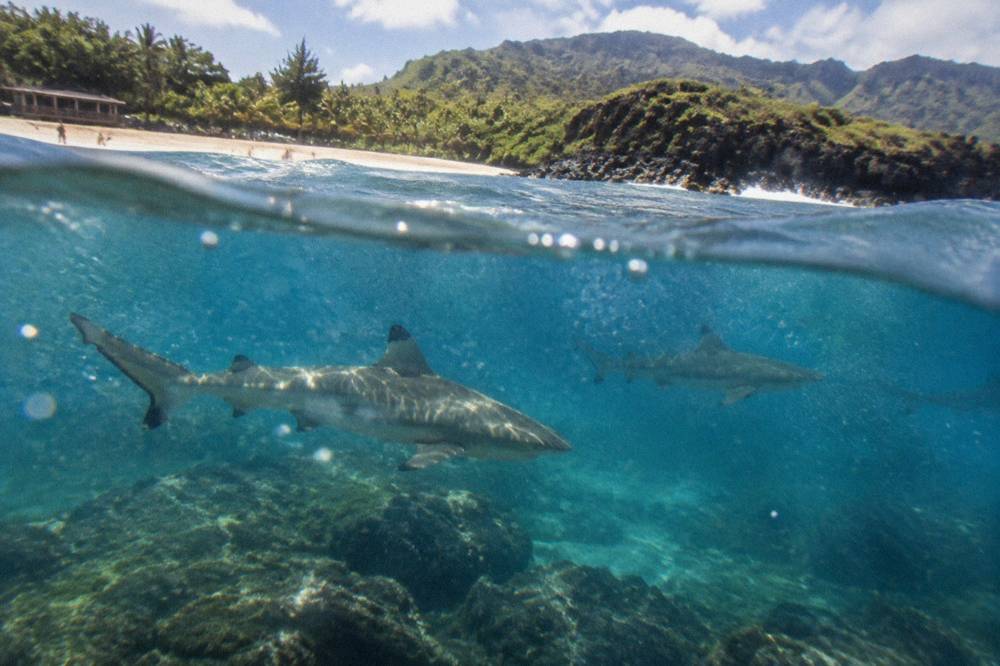
One correction worth making plainly: these are not great white sharks. Great whites are rare winter visitors to Hawaiian waters at best and are not part of any commercial North Shore encounter. The state's species list is the reference, and the guide to which sharks you will see on the North Shore covers the realistic cast in detail.
The species question is also where the other islands' weakness becomes concrete. Sharks live in every Hawaiian nearshore water, which is why the question of how likely you are to see a shark in Hawaii has a different answer than most visitors assume. But reliably encountering them, in numbers, on a schedule, requires the pelagic aggregation sites that only Oahu's permitted operators work. Seeing a reef shark from a kayak off Kauai is not the same product as floating in a cage while a dozen Galapagos sharks circle in open ocean.
Maui, Big Island, Kauai And Molokai: What Is Actually On Offer
Maui has no commercial shark cage diving tours, despite being the island most associated with shark headlines. The Big Island's world-famous dives are with manta rays, not sharks, though Kona has a small cage-dive scene. Kauai and Molokai have no established commercial shark tour industry at all. If shark diving is the point of the trip, none of these islands is the right answer.
The Maui gap surprises people. It is the island with the most storied shark-incident history in the state, but incident history and commercial tour infrastructure are unrelated, and no operator has built the offshore pelagic operation there that Haleiwa has. If you were hoping to combine a Maui stay with a cage dive, the honest answer is in whether you can shark cage dive in Maui, and the short version is that your realistic move is an interisland hop or a drive to Oahu's North Shore.
The Big Island is the strongest runner-up. Kona's manta ray night dives are legitimately world-class, but mantas are filter feeders, not sharks, and they are a different experience entirely. Kona does have some shark-adjacent options, and the costs involved are covered in what it costs to go shark diving in Kona. Kauai's and Molokai's waters hold sharks, as all Hawaiian waters do, but neither island has the permitted, regularly scheduled commercial tours that make a trip bookable.
| Island | Commercial shark tours | What you can realistically book |
|---|---|---|
| Oahu | Multiple operators, daily departures from Haleiwa | Steel-cage dives, cage-free swims, research-led pelagic trips |
| Big Island | Limited, Kona-focused | A small cage-dive scene alongside famous manta ray dives |
| Maui | None established | No bookable shark cage tours |
| Kauai | None established | No regular commercial shark tours |
| Molokai | None established | No commercial shark tour industry |
When To Plan The Trip For The Best Conditions
May through September is the most reliable window for shark diving on Oahu's North Shore, with calmer seas, lighter winds and clearer water, and September often singled out as a sweet spot with thinner crowds. October is the month for tiger shark odds. Winter, November through April, brings big North Pacific swells that can make the offshore run bumpy or cancel departures outright.
The North Shore's winter surf is famous for a reason: the same swells that fill Waimea Bay and Pipeline with 15-to-50-foot faces also hammer small-boat operations offshore. Tour operators run year-round, but winter bookings carry real cancellation risk, and the ride out is rougher when trips do go. Summer flips the script, with steadier schedules and the deep-blue visibility the area is known for. The trade-off is a seasonal one: tiger shark encounters are most likely in the October window, so a fall trip trades a little weather certainty for a shot at the state's most impressive coastal predator. The month-by-month detail is in the best time of year for shark diving on Oahu.
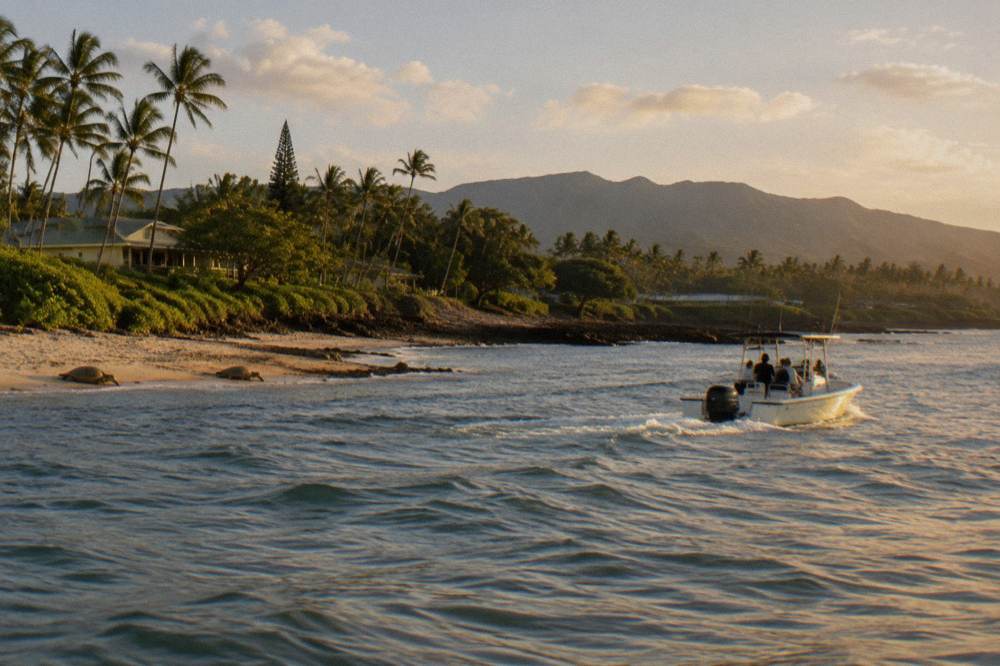
Water temperature is a minor consideration rather than a barrier. Buoy data off Waimea Bay has recorded sea surface temperatures around 80 degrees in late September, with the long-term averages peaking near 80 to 81 in September and dipping to roughly 75 to 76 in February and March. That is a wetsuit-optional range year-round, and the what to wear guide handles the details.
One planning note specific to the shoulder seasons: April and October are transitional months, variable rather than bad. A spring trip can land on glassy days or on the season's first real swell, and the same is true in reverse in fall. The operators watch the buoy data and make the call trip by trip, which is one more argument for booking with an operator whose cancellation and rebooking terms are clear before you pay. The seasickness guide for shark boat tours is worth a read if rough-water days are a concern for anyone in your group.
How To Choose Between The Oahu Operators
Pick by format, not by island, since Oahu has already won that question. Travelers who want a physical barrier between themselves and the sharks should book a steel-cage dive. Confident swimmers who want the animals on their own terms should look at cage-free swims. Travelers who want the science alongside the adrenaline should choose a research-led trip. Ratings across the roster run from 4.8 to 5.0, so the decision is about style, not quality.
The cage family is anchored by North Shore Shark Adventures, the 4.8-rated, 3,241-review flagship, with Hawaii Shark Encounters meeting at Haleiwa Boat Harbor at 4.8 across 1,556 reviews and Haleiwa Shark Tours running smaller groups at 4.9 across 313 reviews. Prices sit on the live listings rather than in any fixed printed number, so check the operator's listing for the current rate before comparing.
Haleiwa Shark Tours suits travelers who want a quieter, smaller-scale version of the cage experience, though a rental car or rideshare to Haleiwa Boat Harbor is still part of the plan.
The cage-free family is where Oahu's roster gets genuinely distinctive. Island View Hawaii's small-group cageless swim carries a 5.0 rating across 1,179 reviews, One Ocean Diving's marine-scientist-guided trips run at 4.8 across 515 reviews, and its research-focused sister trip, which guarantees sharks and includes sits at 4.9 across 587 reviews. One Ocean Diving's standard swim is the entry point for travelers who want the educational framing without the research itinerary.
Go Adventure Hawaii adds a budget-conscious cage-free option at 4.8 across 153 reviews with a wetsuit top included, and Ocean Outfitters Hawaii departs from Slip 19 at the harbor, rated 4.8 across 271 reviews. Neither is a wrong choice; they simply occupy different points on the price and intimacy curve, and the smaller review pools mean fewer data points rather than worse experiences. The full operator-by-operator breakdown, including who suits which traveler, is in the guide to choosing a shark tour operator on Oahu.
Safety questions are fair ones, and the honest framing is this: DLNR's public incident log shows no fatalities for commercial North Shore shark tours in its records, and every documented tour-related bite in the log is classified as provoked. The fuller picture, including what provoked means in this context, is in how risky shark cage diving really is.
Whichever format you lean toward, this site, Shark Cage Diving Honolulu, exists to make that one decision easier, and the three tours below are the strongest representatives of each style. You can also check availability for the flagship cage dive directly with Check availability if you already know a hard cage is what you want.
Common Questions About Shark Diving In Hawaii
Which Hawaiian Island Is Best for Shark Diving?
Oahu, by a wide margin. The North Shore out of Haleiwa Boat Harbor is the only place in the state with a dense cluster of competing commercial shark tour operators, running steel-cage dives, cage-free swims and research-led pelagic trips roughly three miles offshore. Maui has no commercial shark cage tours, Kauai and Molokai have none either, and the Big Island's famous dives are with manta rays.
Can you shark cage dive in Maui?
No commercial shark cage diving tours operate out of Maui. Despite the island's prominent place in Hawaii's shark-incident history, no operator runs the permitted offshore pelagic trips that Haleiwa's operators run on Oahu. Visitors set on a cage dive typically book on Oahu's North Shore instead.
What sharks do you see on Oahu shark tours?
Galapagos sharks and sandbar sharks are the consistent residents on North Shore tours, typically ranging from about five to fifteen feet, with tiger sharks appearing seasonally, most often from late summer into fall with a peak in October. Great white sharks are not part of the encounter; they are rare winter visitors to Hawaiian waters at best.
Why do Oahu shark tours go three miles offshore?
Hawaii law prohibits shark feeding in state marine waters, which extend three nautical miles from shore, so commercial operators run past that boundary into federal waters where the state ban does not apply. That is also where the deep pelagic water and the sharks that aggregate there are found, often with visibility of 150-plus feet.
Is winter a bad time to book a shark tour on Oahu?
Winter, roughly November through April, brings large North Pacific swells to the North Shore, which can make the offshore run bumpy and increase cancellation rates. Tours still run, but May through September offers calmer seas, clearer water and steadier schedules, with October as the trade-off month for the best tiger shark odds.
Are cage-free shark swims safe?
DLNR's incident log shows no fatalities for commercial North Shore shark tours in its records, and all documented tour-related bites in the log are classified as provoked. Operators also emphasize that the Galapagos and sandbar sharks on these trips behave curiously rather than aggressively around swimmers. The deeper analysis is in the cage-free safety discussion on this site.