Are Sharks A Big Problem In Hawaii?
Sharks in Hawaii are a real part of ocean life but not a big problem for visitors. Here is what the state's own incident data, species records, and tour safety record actually show.
 By Shark Cage Diving Honolulu Editorial Desk, Honolulu shark cage diving charter research and booking desk
Are Sharks A Big Problem In Hawaii?
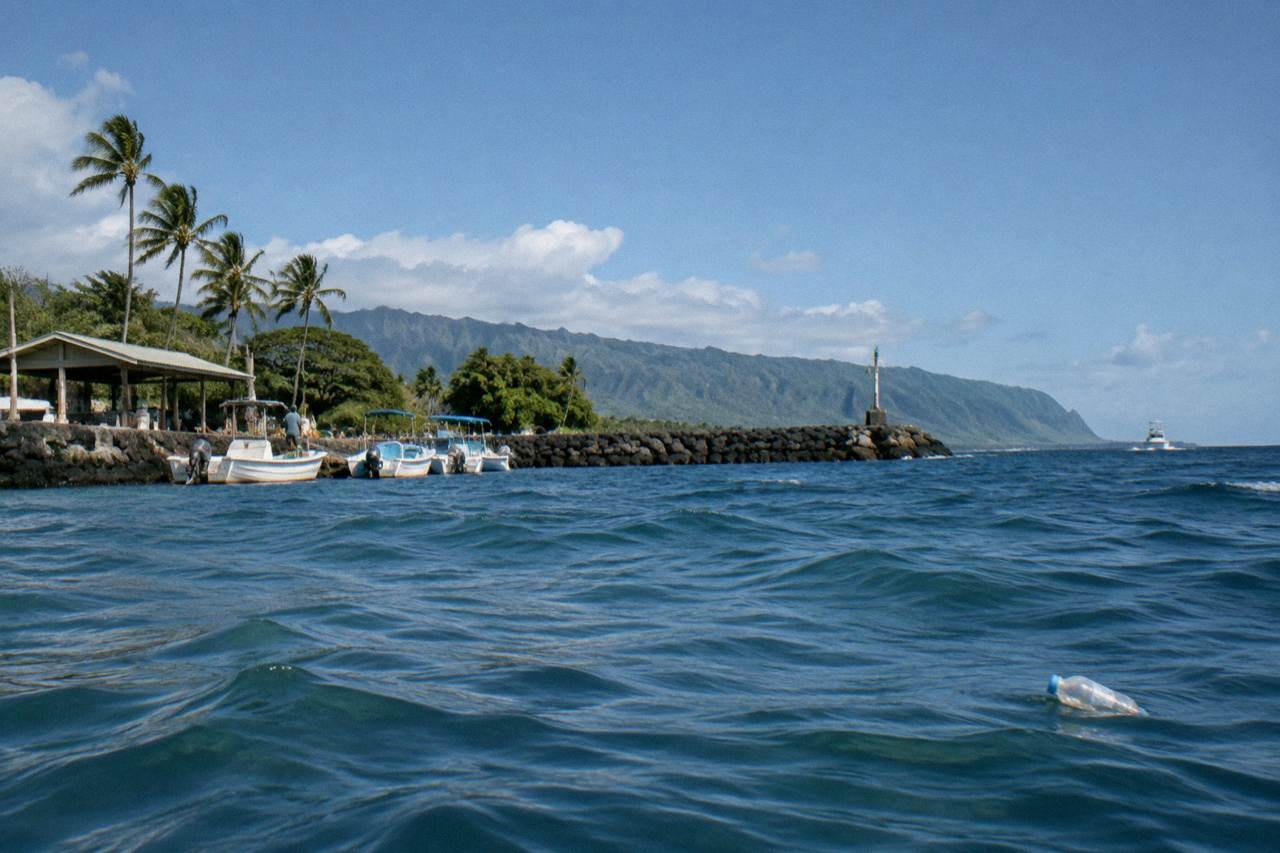
No, sharks are not a big problem in Hawaii, and the numbers back that up. The state tracks roughly six to ten confirmed shark incidents per year statewide, against millions of ocean swims, surfs, and dives. No fatalities have been found in DLNR's records for commercial North Shore shark tours, and Oahu has recorded none in broader nearshore records since 1994. The risk is real but small, and it is manageable with basic awareness.
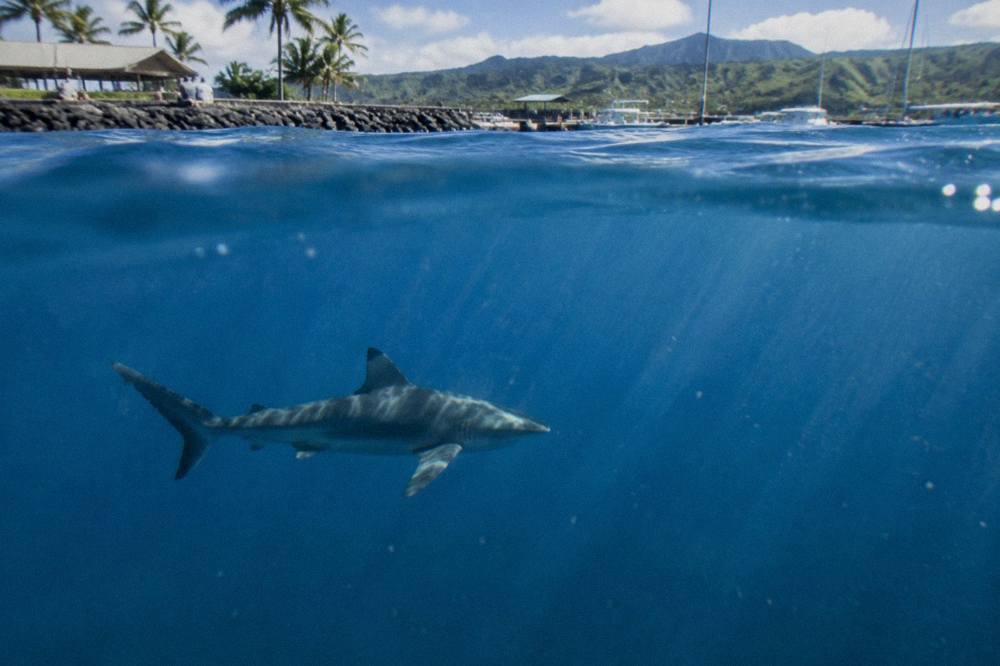
Hawaii gets around ten million visitors a year, and a huge share of them end up in the ocean, on beaches, in surf breaks, or on boats. Against that volume of ocean use, the state's Division of Aquatic Resources logs a handful of confirmed shark incidents annually. The Department of Land and Natural Resources publishes the full list, distinguishing provoked from unprovoked cases and excluding doubtful ones, and the totals stay low year after year. You can read the official DLNR incident list yourself; it is short enough to scan in minutes.
The perception gap comes from two places. First, every incident that does happen gets heavy news coverage, which is fair, but it makes a rare event feel frequent. Second, pop culture did Hawaii no favors. A certain blockbuster shark movie fixed the image of sharks as mindless attackers, while the actual animals off these islands are mostly mid-sized requiem sharks that ignore people, and a cage tour is the easiest way to see that behavior with your own eyes. The flagship option is the North Shore Shark Adventures steel-cage dive, rated 4.8 across 3,241 reviews, which puts you in the water with Galapagos and sandbar sharks while keeping a metal barrier between you and them.
The honest framing is this: sharks are a big presence in Hawaii, and a small problem. They are a big presence because Hawaiian waters sit in the middle of the Pacific and hold a genuinely rich shark fauna. They are a small problem because the overwhelming majority of human-shark interactions end with the shark swimming away and the human never noticing it was there.
If you want to see that for yourself rather than take it on faith, these are the three tours this site compares first: the cage dive above, a cage-free swim for confident snorkelers, and a smaller-operator alternative.
How Many Shark Incidents Happen In Hawaii Each Year?
Statewide, DLNR confirms roughly six to ten shark incidents per year, a rate consistent with historical averages, and only a fraction involve injury serious enough to make news. In 2026 the Oahu entries include a surfer bitten at Cromwell's Beach in May and two non-injury board bites at Portlock and Ala Moana. That is the whole Oahu picture for the year in the official log, against daily ocean use by residents and visitors alike.
The DLNR list is the authoritative record, aligned with the International Shark Attack File's definitions for unprovoked cases. It excludes doubtful reports, boat strikes, and scavenge cases, so the numbers are not inflated by double counting. It also separates provoked from unprovoked incidents, which matters a great deal for interpreting the shark tour record we will get to below. An unprovoked incident is one where the person was simply swimming, surfing, or diving and the shark initiated contact. A provoked incident is one where the person was handling, feeding, chumming, or otherwise interacting with the shark.
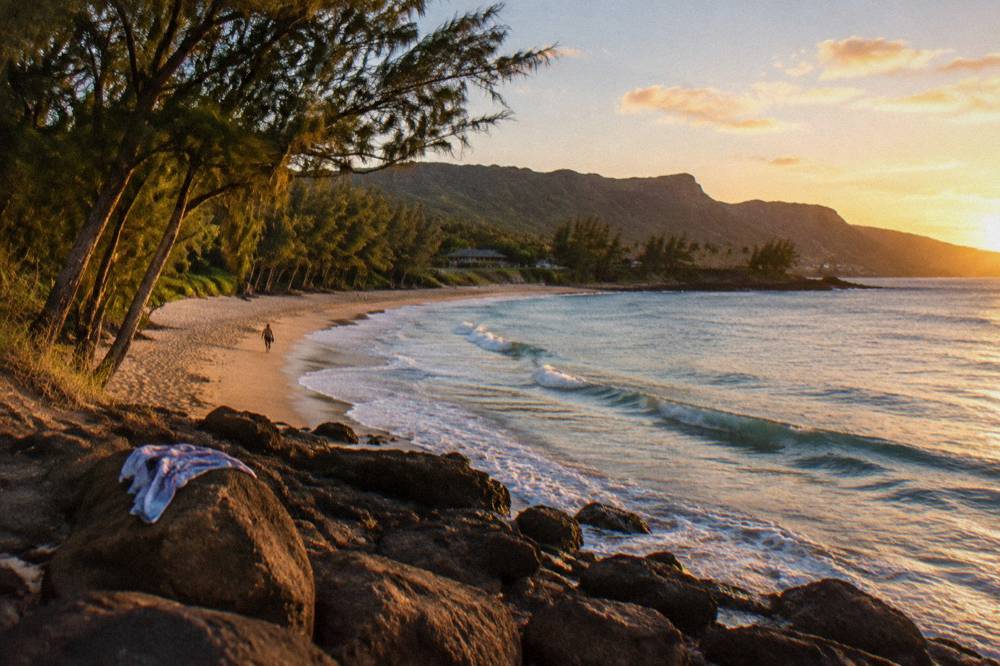
Geographically, the risk is not evenly spread. Maui has historically accounted for a large share of Hawaii's serious incidents, a pattern researchers have linked to its shelf geography and turtle and seal populations. Oahu sees more total ocean use than any other island but fewer of the serious cases, and no Oahu fatality appears in the broader records since 1994. For a deeper look at that specific question, this site has a full article on when Hawaii's last fatal shark attack was.
A few patterns run through the incident log that are worth knowing before you swim anywhere in Hawaii. They do not change the headline, which is that incidents are rare, but they explain where the small real risk concentrates.
| Pattern | What the record shows | Practical takeaway |
|---|---|---|
| Time of day | More incidents in low light periods, dawn and dusk | Mid-morning to mid-afternoon swims carry the least risk |
| Activity | Surfers and swimmers dominate the log | Staying in groups and avoiding murky water helps |
| Water clarity | Murky, turbid water appears repeatedly in incident reports | Skip the ocean after heavy rain or near stream mouths |
| Provocation | Provoked cases cluster around feeding and handling | Never feed or grab a shark, which is also illegal in state waters |
| Island | Maui leads serious cases historically; Oahu has had none fatal since 1994 | Risk varies by island, but stays low everywhere |
None of this requires fear. It requires the same situational awareness you would apply to rip currents or reef cuts, which statistically injure far more Hawaii visitors than sharks ever have.
Curious what it is actually like to be in the water with sharks on purpose, under an operator's supervision? The cage experience answers that question safely.
What Does The Safety Record For Commercial Shark Tours Look Like?
Clean, at the level the state publishes. No fatalities on Oahu North Shore commercial shark tours have been found in DLNR's records. Every documented tour-related bite off Haleiwa in the log is classified as provoked, meaning it happened during supervised shark-interaction activity, not as a random attack on a swimmer. No unprovoked fatalities or major incidents were attributed to permitted cage or cageless tours in 2025 or 2026.
That deserves unpacking, because it sounds too good. The tours off Haleiwa attract sharks to the boat on purpose, in deep water three miles or more offshore, and put people in cages or in open water beside them. DLNR's log documents a small number of bites over the years connected to these "swimming with sharks" operations, and every one is classified as provoked. In plain terms, the state does not count a bite on someone who deliberately entered the water beside baited sharks the same way it counts a bite on a surfer who never invited the interaction. The provoked classification is honest bookkeeping, not a cover-up, and it is the reason the tour record and the general public record look so different.
The aggregate picture is what matters for a visitor deciding whether to book. Permitted operators run under DLNR commercial use permits, carry the standard commercial passenger vessel obligations, and operate in federal waters outside the three-mile state boundary. A 2026 enforcement case shows the state takes the permit system seriously, fining an unpermitted operator $10,000 for unauthorized commercial activity on the North Shore. The permitted companies are the visible, inspected, insured ones, and they are the only ones you should book with.
For a booking that lines up with those requirements, this North Shore shark cage tour comes from a permitted operator working under the same commercial use rules outlined above.
For readers weighing the cage versus open-water question, this site's comparison of cage and cageless shark diving on Oahu breaks down the trade-offs in detail. The short version: the steel cage removes essentially all contact risk, while the cage-free swims rely on trained guides, species behavior, and group positioning.
One of the most-reviewed cage-free operators is worth knowing about here, since the cage-free record is the part of the industry people worry about most.
One Ocean Diving's swim program, rated 4.8 across 515 reviews, is led by marine scientists, and the operator publicly claims more than fifteen years without an incident on its cageless program. A separate research-focused version of the trip, with sharks guaranteed and holds a 4.9 across 587 reviews. Those numbers describe a company that has run open-water shark encounters thousands of times, which is the strongest reassurance the aggregate record can offer.
Which Shark Species Actually Live In Hawaiian Waters?
Around forty species of sharks have been documented in Hawaiian waters, but the ones people actually encounter are a short list: Galapagos sharks and sandbar sharks dominate the North Shore tour scene, tiger sharks appear seasonally, and reef species like whitetip reef sharks live near shore. Great white sharks are not part of Hawaii's resident population and appear only as rare winter visitors, with very few confirmed records.
The DLNR maintains the official Hawaii shark species list, and it is the right place to check any claim about what swims here. The conservation statuses are worth knowing too: the Galapagos shark is listed as Near Threatened, the sandbar shark as Vulnerable, and the tiger shark as Near Threatened. These are animals under pressure, not an invading menace.
The species you are most likely to see on a North Shore tour are the two requiem sharks, typically in the five-to-fifteen-foot range, with Galapagos sharks frequently reported in groups of seven to twenty individuals. Reviews from the 2026 season describe them gliding inches from the cage, calm and investigative, without charging or attacking. Tiger sharks show up more often from late summer into fall, and a recent peer-reviewed analysis in Frontiers in Marine Science tied peak tiger sightings off Oahu's north coast to October, when mature females arrive from the Northwestern Hawaiian Islands. The same study connected that October peak to the seasonal rise in statewide tiger bite incidents, which is a useful fact: the one month with the most tiger activity is still a month with a handful of incidents across the entire state.
If you want the full species breakdown with photos and identification tips, see the guide to which sharks you will see on the Oahu North Shore. The key correction this site makes often: no commercial Hawaii tour shows great white sharks. If a question assumes great whites, the premise is wrong, and the real species list above is the honest answer.
Why Do Shark Tours Operate Three Miles Offshore?
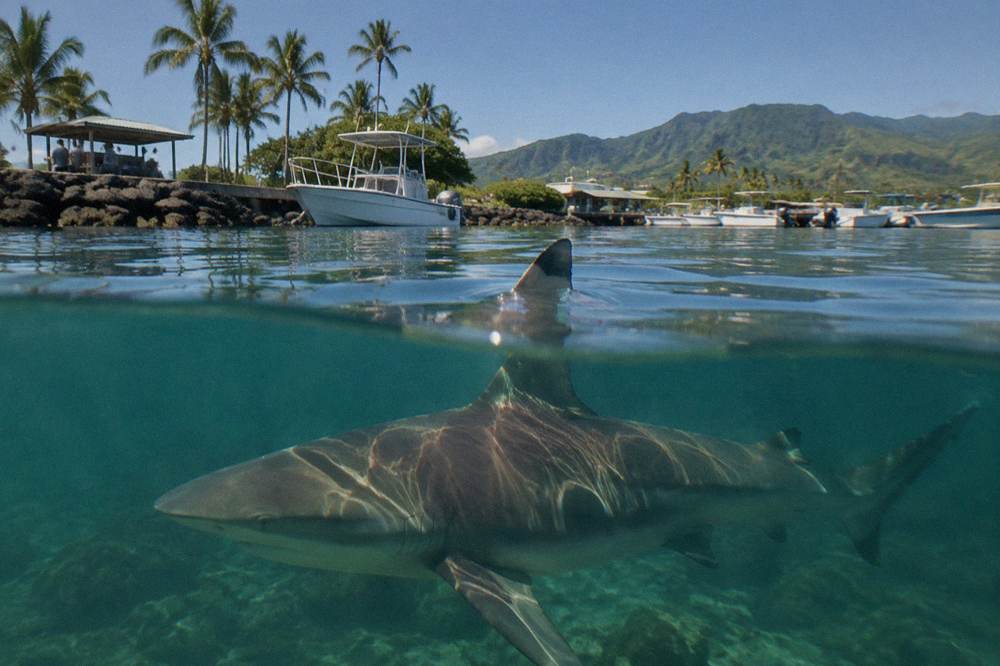
Because Hawaii law bans shark feeding in state marine waters, which run from the shoreline out to three nautical miles, so commercial tours run past that boundary into federal waters where the state ban does not apply. HRS §188-40.6, enacted in 2002, makes it unlawful to conduct any activity related to feeding sharks in state waters, with narrow exceptions for non-commercial cultural practice and permitted research.
The statute is worth reading directly, because it explains the entire geography of the industry. You can find the full text of HRS §188-40.6 on the Hawaii State Legislature's site. The law defines commercial activity broadly, covering guide services, charters, tours, and transportation, so a company running baited shark encounters inside three miles would be operating illegally. The tours you can book legally all depart from Haleiwa Boat Harbor and motor out to the deep pelagic water beyond the line, which is also, conveniently, where the sharks naturally aggregate.
Two further points complete the legal picture. A separate 2022 law, HRS §188-40.8, bans intentionally capturing, entangling, or killing any shark in state waters, reflecting how Hawaii's law treats sharks as animals to protect, not pests to fear. And no bill targeting commercial shark tours specifically has been found in the 2025 or 2026 legislative sessions. The regulatory framework is stable, the operators are permitted, and the sharks are protected. That combination, protection plus permitted viewing, is the opposite of a shark problem.
The practical upshot for you as a visitor: the boat ride out is part of the experience, roughly three miles of open ocean between the harbor and the dive site, and the water at the site is deep, blue, and clear. If you are planning the drive, the site's Waikiki to Haleiwa guide covers the logistics.
Hawaii Shark Encounters, rated 4.8 across 1,556 reviews. For a first shark experience, that simplicity matters as much as the cage itself.
How Do You Keep Your Personal Risk Low In The Ocean?
Follow the patterns in the incident data: swim in groups, avoid murky water, skip dawn and dusk sessions, stay away from stream mouths after rain, and never feed or touch a shark. If you are snorkeling a popular spot like Hanauma Bay, the risk is close to zero because conditions are monitored and the water is clear. The behaviors that show up in the log are specific and avoidable.
Hawaii's ocean risks are real, but sharks rank low on the list. Reef cuts, jellyfish, rip currents, and sun exposure send far more people to urgent care each year than sharks do, and the state's own signage reflects that hierarchy. The shark advice is not different in kind from the general advice: pay attention to conditions, know what is around you, and do not do anything obviously provocative.
The one behavior worth singling out is feeding. It is illegal in state waters for exactly this reason, it trains sharks to associate people with food, and it is the mechanism behind every provoked classification in the tour incident record. The licensed tours manage that risk professionally, with barriers, positioning, and species knowledge accumulated over thousands of trips. A random person chumming off a kayak is the scenario the law exists to prevent.
So, are sharks a big problem in Hawaii? The state's data says no. The species list says the sharks are here, the incident log says they almost never hurt anyone, and the tour record says you can meet them on purpose, thousands of people do it every year, and the state has never recorded a fatality on a permitted North Shore tour. That is not a problem. That is one of the more remarkable wildlife experiences in the United States, available an hour from Waikiki, and Shark Cage Diving Honolulu exists to help you book it with accurate numbers rather than movie fear.
The state's record makes the case, and the simplest way to test it is in the water, where a reserved spot on a North Shore cage dive puts the numbers in front of you instead of the script.
If you are comparing options, these are the three tours this site recommends side by side: the flagship cage dive, the cage-free swim, and the Slip 19 alternative.
Common Questions About Sharks In Hawaii
Are Sharks a Big Problem in Hawaii?
No. DLNR confirms roughly six to ten shark incidents per year statewide against massive daily ocean use, no Oahu fatality appears in broader records since 1994, and no fatalities on commercial North Shore shark tours have been found in DLNR's records. Sharks are a big presence in Hawaiian waters and a small problem for the people in them.
How likely am I to see a shark while swimming in Hawaii?
Very unlikely, and most people never do. Reef species like whitetip reef sharks rest under ledges during the day and avoid swimmers. The reliable way to see sharks in Hawaii is a commercial tour off Haleiwa, where Galapagos and sandbar sharks aggregate in deep water and are seen on the overwhelming majority of trips.
Which Hawaiian island has the most shark incidents?
Maui has historically accounted for a large share of Hawaii's serious incidents, while Oahu records more total ocean use with fewer serious cases and no fatality in broader records since 1994. Statewide totals stay in the single digits most years.
Are great white sharks found in Hawaii?
Not as residents. Great whites are rare winter visitors to Hawaiian waters, primarily offshore of Oahu and Maui between January and April, with very few confirmed records. No commercial Hawaii tour shows great whites; the North Shore tours feature Galapagos and sandbar sharks, with occasional seasonal tiger sharks.
Is it safe to go shark cage diving in Hawaii?
The aggregate record says yes. No fatalities on Oahu North Shore commercial shark tours have been found in DLNR's records, operators run under DLNR commercial permits, and the steel cage removes direct contact. Every tour-related bite in the state's log is classified as provoked, none fatal.
What should I avoid doing to lower shark risk?
Avoid swimming at dawn and dusk, in murky water, near stream mouths after rain, or alone. Never feed or touch a shark, which is illegal in state waters and is the behavior behind every provoked classification in the incident record. Swim in groups at monitored beaches and the risk drops to near zero.