Can You Do Shark Cage Diving In Hawaii?
Yes, shark cage diving is legal and running in Hawaii. Here is how the federal waters rule works, which sharks you meet, and how to pick a tour.
 By Shark Cage Diving Honolulu Editorial Desk, Honolulu shark cage diving charter research and booking desk
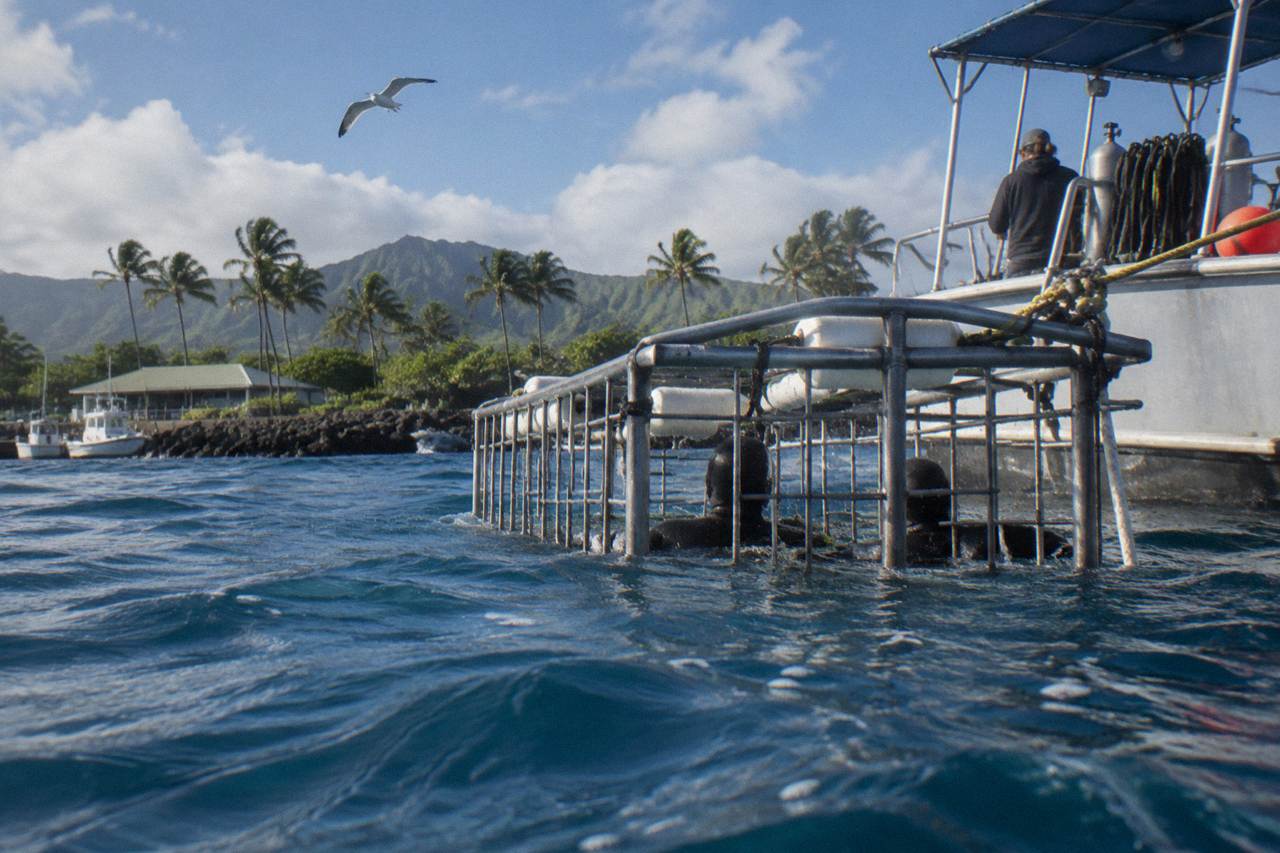
Can You Do Shark Cage Diving In Hawaii?
Yes, shark cage diving is legal, established and bookable in Hawaii, and it runs year-round out of Haleiwa Boat Harbor on Oahu's North Shore. Multiple licensed operators hold state commercial permits, carry hundreds of thousands of guests, and run roughly three miles offshore into federal waters, because Hawaii state law bans shark feeding inside three nautical miles of shore, which also applies to shark cage diving in Maui. There is no cage diving industry on the Neighbor Islands to speak of; Oahu is where the tours actually are.
That short answer hides one of the more interesting legal structures in American tourism. Hawaii is simultaneously the state with the strongest shark protection laws in the country and the home of a busy commercial shark encounter industry. Both things are true because of a line drawn in the ocean.
The state legislature passed HRS §188-40.6 in 2002, which makes it unlawful "to conduct any activity related to the feeding of sharks in state marine waters." State marine waters run from the shoreline out to three nautical miles. Beyond that line, federal law governs, and the state feeding ban does not apply. Commercial operators solved the puzzle in the obvious way: they motor past the line. The statute itself defines commercial activity to include charters, tours and guide services, so the exemption for traditional Hawaiian cultural practice, which is real, does not extend to paying guests. The full text of the feeding ban is published by the Hawaii State Legislature.
So when you book a cage dive on this site, such as the flagship North Shore Shark Adventures trip rated 4.8 across 3,241 reviews, you are booking a trip that exists in a specific legal pocket. Check availability to see current dates. This site, Shark Cage Diving Honolulu, exists to explain that pocket and help you pick within it.
The three options above cover the main formats: the classic steel-cage dive, a smaller-group cage dive, and a cage-free swim for anyone who decides the cage is not the point. Every price is on the operator's live listing rather than printed here, because rates shift with season and demand.
One premise worth correcting before it goes any further: the sharks are not great whites. Some people arrive expecting a South Africa or California style experience. The North Shore tours run on Galapagos and sandbar sharks, with occasional tiger sharks in late summer and fall. Great whites are rare winter visitors to Hawaiian waters at most and are not part of any commercial encounter. For a deeper look at the resident species, see what sharks you see off Oahu's North Shore.
Where Do Hawaii Shark Tours Operate, And Why Three Miles Offshore?
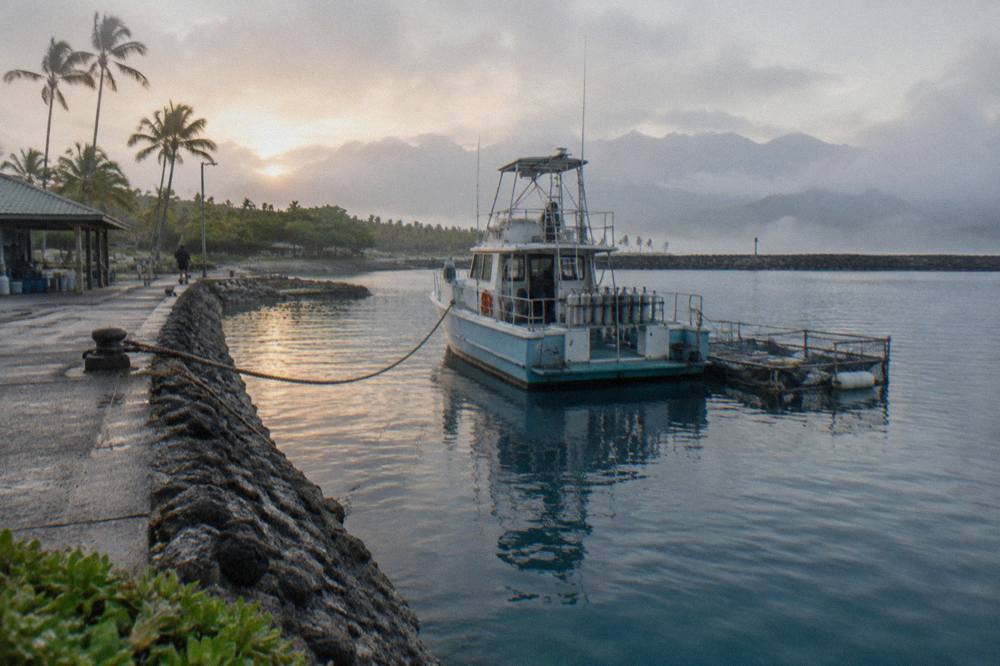
All the established commercial shark tours in Hawaii depart from Haleiwa Boat Harbor on Oahu's North Shore and run roughly three nautical miles offshore, which places them in federal waters outside the state's shark feeding ban. The state has issued a small number of commercial permits specifically for shark tours operating out of Haleiwa, so the industry is concentrated in one harbor on one island. That concentration is a direct consequence of the law, not a coincidence of geography.
The three-mile boundary is standard United States coastal law. States govern their marine waters from shore to three nautical miles; the federal Exclusive Economic Zone runs from three to two hundred nautical miles. Hawaii's feeding ban, its 2010 shark fin ban under HRS §188-40.7, and its 2022 prohibition on intentionally capturing or killing sharks in state waters under HRS §188-40.8 all stop at that line. The Western Pacific Regional Fishery Management Council publishes a plain-language comparison of the state and federal rules that makes the split explicit.
Out past the line, the ocean floor drops away. Tour sites sit over deep pelagic blue water, often described as hundreds of feet deep, with visibility that can exceed 150 feet on calm days. Sharks aggregate there naturally, partly around areas of historical crab-boat activity, so operators do not need to tow sharks around or stage anything artificial. The boat ride out takes a short while, the cage goes in the water, and the sharks come to the cage on their own terms.
The permitting side matters to you as a guest for one practical reason: a permitted operator is a vetted operator. DLNR's Division of Boating and Ocean Recreation issues the commercial use permits, and unauthorized commercial activity carries real penalties, including a $10,000 administrative fine in a 2026 case involving unpermitted North Shore operations. Booking through the operator's live listing keeps you on the permitted side of that line. If you want the full harbor picture, from parking to restrooms to the drive up from Waikiki, the Haleiwa Boat Harbor guide covers it in detail.
Which Sharks Actually Show Up Around A Hawaii Cage?
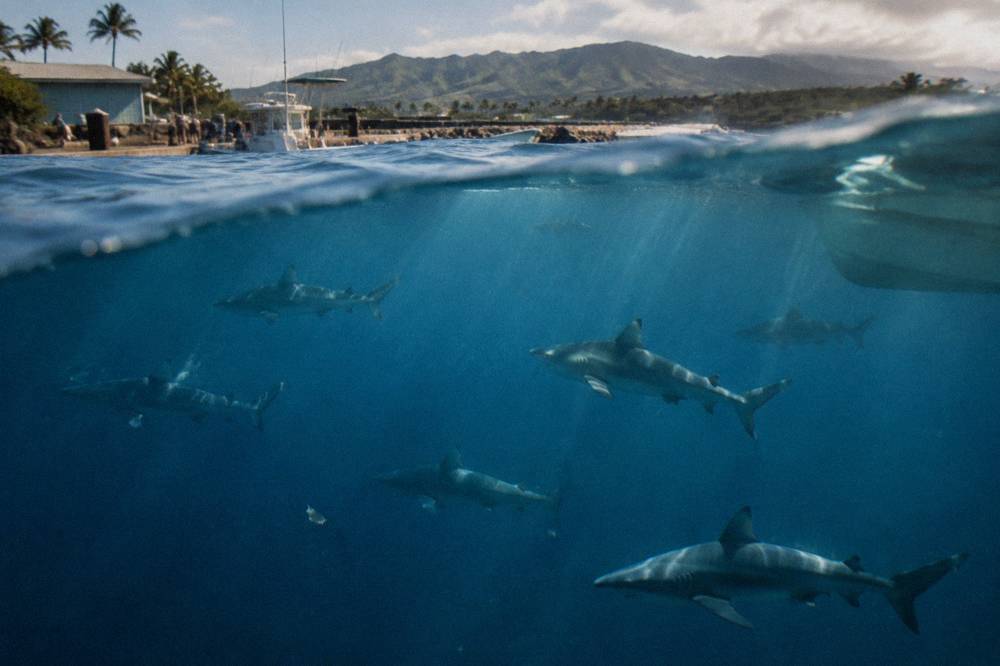
The two species you will almost certainly see are Galapagos sharks and sandbar sharks, both commonly reported at lengths from five to well over ten feet, often in groups of several individuals that circle the cage out of curiosity. Tiger sharks appear occasionally, mostly in late summer through fall. All three are confirmed residents of Hawaiian waters on DLNR's official species list, and none of them is a great white, which is not part of Hawaii's resident shark population.
The state's Division of Aquatic Resources maintains a verified species list for Hawaiian waters that includes the Galapagos shark, listed as Near Threatened by the IUCN, the sandbar shark, listed as Vulnerable, and the tiger shark, listed as Near Threatened. Whitetip reef sharks, blacktip reef sharks, scalloped hammerheads, blue sharks and oceanic whitetips also live in Hawaiian waters generally, though the deep pelagic tour sites off Haleiwa are dominated by the first three.
Behavior around the cage is the part that surprises people. Galapagos and sandbar sharks approach closely and calmly. Guest accounts from 2026 describe groups of seven to twenty individuals gliding within inches of the bars, investigating without charging. A recent baited-video research study around Oahu found sandbar sharks numerically dominating the inshore elasmobranch assemblage, with both sandbars and Galapagos sharks becoming more abundant at greater depth, which lines up with why the tours sit over deep water rather than near the reef.
Tiger shark seasonality is the one claim to hold loosely. Operators and divers consistently report better tiger odds from August through November, and a 2026 analysis in Frontiers in Marine Science tied peak October tiger sightings off Oahu's north coast to the partial migration of mature females. But month-level tiger seasonality is operator-reported rather than a DLNR-confirmed fact, so treat it as a favorable pattern, not a promise. The species question gets a fuller treatment in what sharks you see off Oahu's North Shore, including the cultural significance of sharks such as the god Kamohoaliʻi in Hawaiian tradition.
What Does A Cage Dive Off Oahu Actually Involve?
A typical cage dive is a half-day commitment: a drive from Waikiki of roughly 45 to 75 minutes up to Haleiwa, a short boat ride out to the deep-water site, and time in the cage in rotation with the rest of your group. You float at the surface holding the cage rails rather than sinking below, so no dive certification is required. Tours run year-round, with summer offering the calmest seas and winter swells occasionally forcing cancellations.
The drive is the first real decision. From Waikiki, the route runs west on the H-1, north on the H-2, then up the Kamehameha Highway through Wahiawa to Haleiwa, roughly 32 to 35 miles. Google Maps shows a fastest time of about 44 minutes; realistic planning is closer to an hour, and rush hours or big-surf days add more. Some tours solve the drive for you: Hawaii Shark Encounters, rated 4.8 across 1,556 reviews, and Haleiwa Shark Tours, rated 4.9 across 313 reviews, meets guests at Haleiwa Boat Harbor; travelers arrange their own way there.
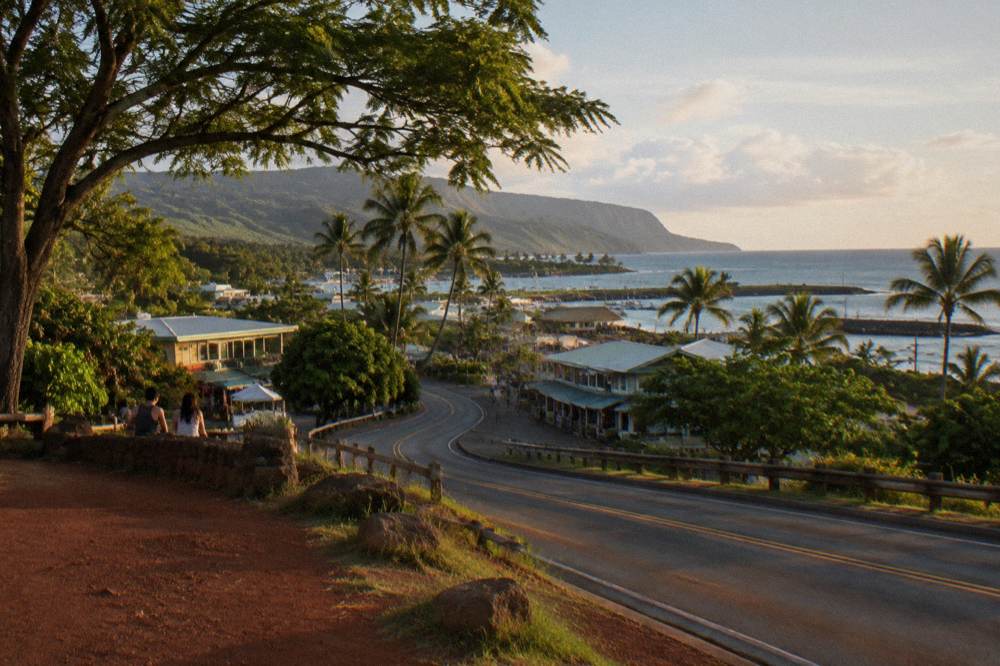
Once at the harbor, the logistics are simple. Haleiwa Boat Harbor has free parking, public restrooms and loading docks, and the town of Haleiwa sits right there for afterward, shave ice included. Out at the site, the cage floats at the surface. You climb in, hold on, and watch the blue fill with sharks. Don't expect food on board: most operators keep it to light snacks at most, and the flagship North Shore trip serves none.
Here is how the pieces usually fit together:
| Segment | What happens | Typical time |
|---|---|---|
| Drive from Waikiki | H-1 west, H-2 north, Kamehameha Highway to Haleiwa | 45-75 minutes |
| Check-in at Haleiwa Boat Harbor | Waivers, safety briefing, gear issue | 30 minutes |
| Boat ride to the site | Run offshore past the three-mile line into deep water | 15-20 minutes |
| In the cage | Surface floating, rotation by group | 20-45 minutes |
| Return to harbor | Ride back to Haleiwa Boat Harbor | 30-45 minutes |
Season shifts the odds of everything going smoothly. The North Shore takes big winter swells from November through April, with surf that can hit 15 to 50 feet at spots like Waimea Bay, and rough days mean bumpier rides or cancellations. May through September brings lighter trades, calmer seas and clearer water, with September often called the sweet spot. Water temperature stays comfortable year-round, roughly 75 to 76 degrees at the February and March cool end and around 80 to 81 degrees in September, per long-term averages for the area. The best time of year guide works through the full seasonal picture.
Is Cage-Free Shark Swimming Legal In Hawaii Too?
Yes, the same legal structure that permits cage diving also permits cage-free swims, and several Haleiwa operators run them in the same federal waters. Guests enter the water with mask and snorkel, no cage between them and the sharks, usually in small groups with a guide in the water. The roster on this site includes a 5.0-rated cageless swim across 1,179 reviews, a marine-scientist-guided option, and a research-focused trip that guarantees shark sightings.
The cage-free format deserves its own honesty. It is legal, permitted and popular, and the sharks that attend these swims are the same calm, curious Galapagos and sandbar sharks that circle the cages. It is also the format behind the incidents in DLNR's public log: every documented tour-related bite off Haleiwa has been classified as provoked, and no fatalities on commercial North Shore shark tours appear in DLNR's records. Those two sentences are the whole safety picture at the aggregate level, and the cage versus cageless comparison and the is cage-free diving safe piece cover what they mean in practice.
The research-flavored trips are the interesting middle path. One Ocean Diving's research tour, rated 4.9 across 587 reviews, guarantees shark sightings and includes and its swim trips are guided by marine scientists who frame the encounter around data collection and conservation. Island View Hawaii's cage-free swim, a perfect 5.0 across 1,179 reviews, is the flagship cageless pick on this site. Go Adventure Hawaii, at 4.8 across 153 reviews, includes a wetsuit top, and Ocean Outfitters Hawaii departs from Slip 19 with a 4.8 across 271 reviews.
How Do You Pick One Cage Dive From Waikiki?
Pick by transport first, format second. No rental car? Every tour meets at Haleiwa Boat Harbor, and travelers arrive by car, rideshare, or bus, so the field stays wide open. With a car, the flagship steel-cage trip from North Shore Shark Adventures carries the deepest review pool at 3,241 reviews and a 4.8 rating. If you want no cage at all, the cage-free swim with a 5.0 rating is the standout. Prices sit on each operator's live listing.
Transport is the hidden filter. A one-way rideshare from Waikiki to Haleiwa commonly runs $130 to $160, and return trips from the North Shore can be less reliable or pricier, so factor that into the ticket price when you compare tours (see Oahu Tour Sharks). A rental car, meanwhile, sampled around $64 per day base for a midsize before taxes and surcharges, gives you the whole North Shore afterward, which is a genuinely good afternoon.
That arithmetic is why plenty of visitors end up booking a North Shore shark tour instead of patching together rides both ways.
The roster comparison is what matters here:
| Tour | Format | Rating and reviews | Transport |
|---|---|---|---|
| North Shore Shark Adventures | Steel cage dive, no meal | 4.8, 3,241 reviews | Meet at Haleiwa |
| Hawaii Shark Encounters | Cage dive | 4.8, 1,556 reviews | Self-drive or rideshare |
| Haleiwa Shark Tours | Cage dive | 4.9, 313 reviews | Smaller groups, flexible schedule |
| Island View Hawaii | Cage-free swim | 5.0, 1,179 reviews | Meet at Haleiwa |
| One Ocean Diving research trip | Cage-free, research focus | 4.9, 587 reviews | Self-drive or rideshare |
Whatever you pick, book with the cancellation terms in view. Most listings on this roster allow free cancellation up to a day or so before departure, and winter bookings especially should be made with a weather plan, since North Shore swells cancel trips. If you are still weighing whether the experience justifies the cost, is shark diving in Oahu worth it works through that question directly.
Common Questions About Shark Cage Diving In Hawaii
Can You Do Shark Cage Diving in Hawaii?
Yes. Shark cage diving is legal and operating year-round in Hawaii, based out of Haleiwa Boat Harbor on Oahu's North Shore. Licensed operators run roughly three miles offshore into federal waters, where the state's shark feeding ban does not apply. Oahu is the only island with an established commercial cage diving industry.
Is shark cage diving legal in Hawaii?
Yes, with a specific legal mechanism. Hawaii banned shark feeding in state marine waters in 2002 under HRS §188-40.6, and state waters end three nautical miles from shore. Commercial tours hold DLNR permits and operate beyond that line in federal waters, where the state ban does not reach.
Which island has shark cage diving?
Oahu. The commercial shark tour industry in Hawaii is concentrated at Haleiwa on Oahu's North Shore, where DLNR has issued a small number of commercial permits specifically for shark tours. There is no comparable established cage diving industry on Maui, Kauai or the Big Island.
What sharks will I see in the cage?
Galapagos sharks and sandbar sharks are the consistent visitors, often in groups of several individuals ranging from about five to over ten feet. Tiger sharks appear occasionally, mostly from late summer through fall. Great whites are not part of Hawaii's resident shark population and are not part of any commercial tour.
Do I need dive certification to go in the cage?
No. The cage floats at the surface and you hold the rails while floating with a mask and snorkel. No dive certification, prior experience or strong swimming ability is required, and children can participate on age-appropriate tours.
When is the best time of year for cage diving in Hawaii?
May through September offers the calmest seas, clearest water and most reliable schedules, with September often cited as a sweet spot. Winter, November through April, brings large North Shore swells that can cancel trips, though sightings still happen on days the boats run.