Is Shark Diving In Oahu Worth It?
An honest value case for shark diving on Oahu: what the trip actually delivers, what it costs in money and time, and who it is genuinely worth it for.
 By Shark Cage Diving Honolulu Editorial Desk, Honolulu shark cage diving charter research and booking desk
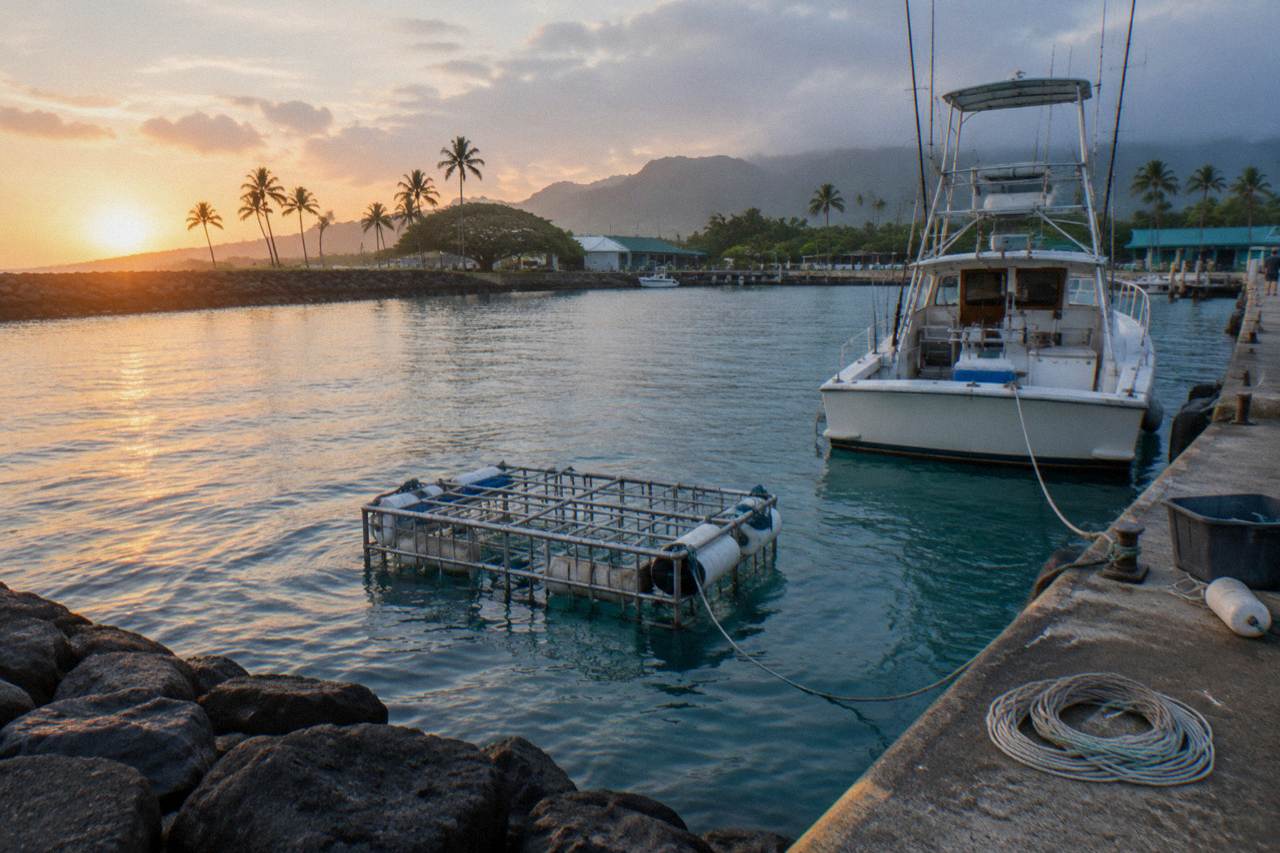
Is Shark Diving In Oahu Worth It?
For most travelers who want the experience of seeing wild sharks in open ocean, yes, it is worth it: the North Shore tours deliver reliable sightings of Galapagos and sandbar sharks roughly three miles offshore, in water that is often startlingly clear, at a price that is high for a half day but low compared with shark diving almost anywhere else in the world. The honest answer has two conditions attached. It is worth it if you actually want to be in the water with sharks, not just to say you did, and it is worth it if you pick a format that matches your comfort level, because a nervous swimmer in a cage-free program and a bored snorkeler in a cage are both spending the same money for a worse day.
The core of the value case is a simple fact that surprises people who arrive expecting a theme-park version of the activity. The boats out of Haleiwa do not go to an aquarium or a netted lagoon. They run about three miles past the state boundary into federal waters, over deep pelagic blue, because Hawaii law has prohibited shark feeding in state marine waters since 2002 and the operators work outside that line. The sharks you see are wild animals that aggregate at these offshore sites naturally, drawn to the area's history of fishing-boat activity rather than to a feeding schedule. That is a genuinely different product from a captive encounter, and it is the reason the sightings are as consistent as they are.
What the trip delivers, concretely: a 45-to-75-minute drive from Waikiki to Haleiwa Boat Harbor, a boat ride out, roughly 20 to 40 minutes in or beside the water with sharks circling at distances that are sometimes measured in inches, and a ride back with a small-town North Shore afternoon left over. Reviews from recent seasons describe groups of Galapagos sharks, often between seven and twenty individuals in a single account, gliding close and behaving calmly. Tigers show up less often and mostly in late summer and fall. Great whites do not factor in at all; they are rare winter visitors to Hawaiian waters and are not part of this experience, whatever the brochures from other countries imply.
What You Actually Get For The Money
A cage dive off Haleiwa typically costs in the low-to-mid hundreds per person, with every operator's exact price on the live listing, and what that buys is a boat charter share, crew, gear, and roughly half a day of a legally permitted commercial operation in deep ocean, not a ticket to an attraction. That framing matters because the comparison people reach for first, "it costs more than a luau," is the wrong comparison. A luau is a two-hour show with food. This is a small-group offshore boat trip with a crew of two or three, US Coast Guard-regulated as a commercial passenger vessel, carrying you three miles out and back.
To weigh that value honestly, check the live North Shore shark tour listing, where the operator's own details show exactly what the charter share includes.
The roster of operators is small, and the DLNR has indicated only about three commercial permits specifically for shark tours operating out of Haleiwa. That scarcity is part of what you are paying for. The flagship cage operation, North Shore Shark Adventures, holds a 4.8 rating across 3,241 reviews, which is a review pool large enough to mean something. Its price is on the listing rather than in any ad, which is standard for this market: operators adjust seasonally and by demand, and the live listing is the only place the current number is real.
Is the experience itself worth a few hundred dollars? The honest answer is that it depends on what you would otherwise do with the money and the day. If the alternative is another beach afternoon, the shark trip is clearly the more memorable spend. If the alternative is a full-island tour or a helicopter flight, you are comparing one intense hour against several diluted ones. Travelers who report regret tend to be the ones who booked the cheapest option without checking the format, then spent the trip cold, seasick, or unable to relax. Travelers who report it as a highlight almost all mention the same thing: the clarity of the water and the closeness of the animals exceeded what they imagined.
A useful way to sanity-check the price is to look at what the same money buys elsewhere in the shark-diving world. Great white cage dives in South Africa, Australia, or California run considerably more once flights and lodging are counted, and they carry no guarantee of an animal showing up. The Haleiwa tours, by contrast, run over an established aggregation site with year-round resident species, which is why sightings are described as consistent rather than lucky. You are paying less for a higher-probability encounter, with smaller sharks. Whether that trade is worth it is a preference, not a fact.
Cage Or Cage-Free: Which Format Delivers More
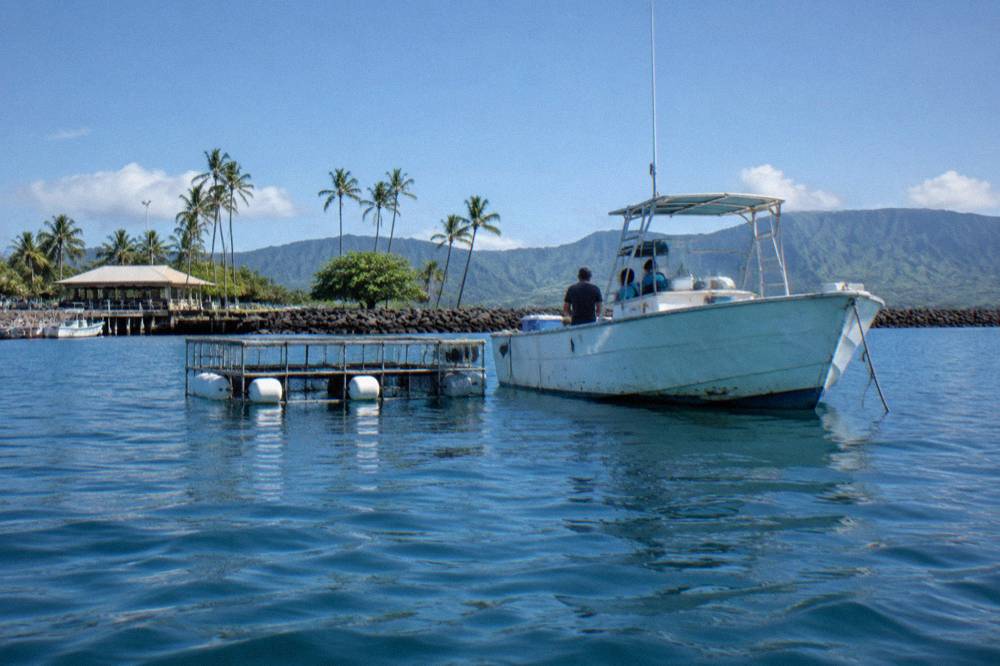
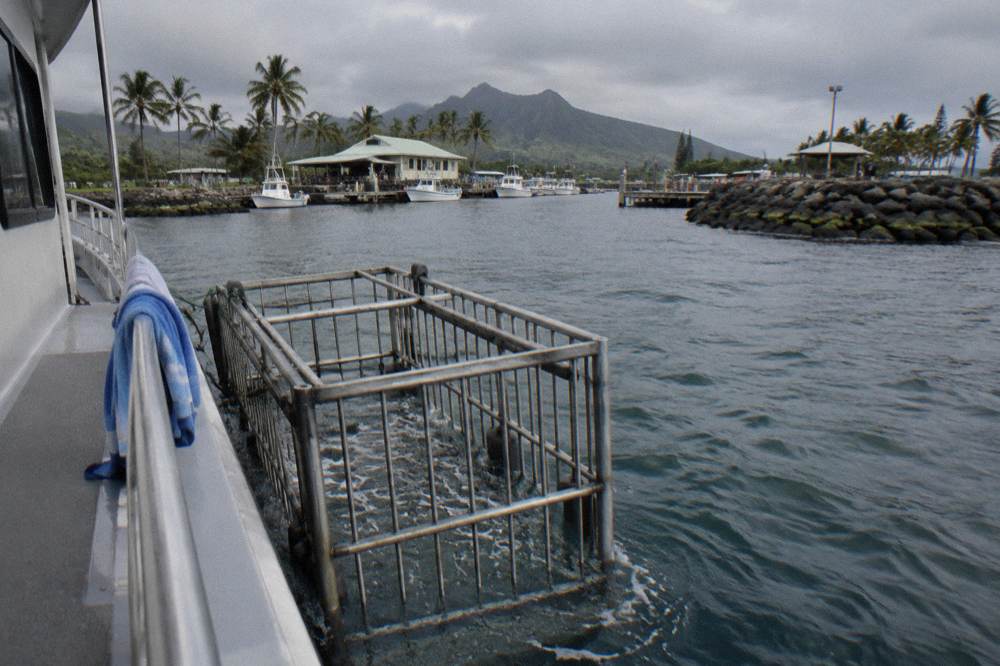
If your goal is the strongest possible memory and you are a confident snorkeler, the cage-free swims deliver more; if your goal is to see sharks up close with minimal anxiety, the cage delivers nearly the same animals with none of the nerves, and most first-timers are happier in the cage. This is the single biggest value lever on the island, bigger than operator choice, because the two formats produce genuinely different days at similar price points. The cage is a floating steel or aluminum structure attached to the boat; you stand in it in a mask and snorkel, with the bars between you and the sharks. The cage-free programs put you in the water with a guide, no barrier, relying on the animals' behavior and the crew's reading of it.
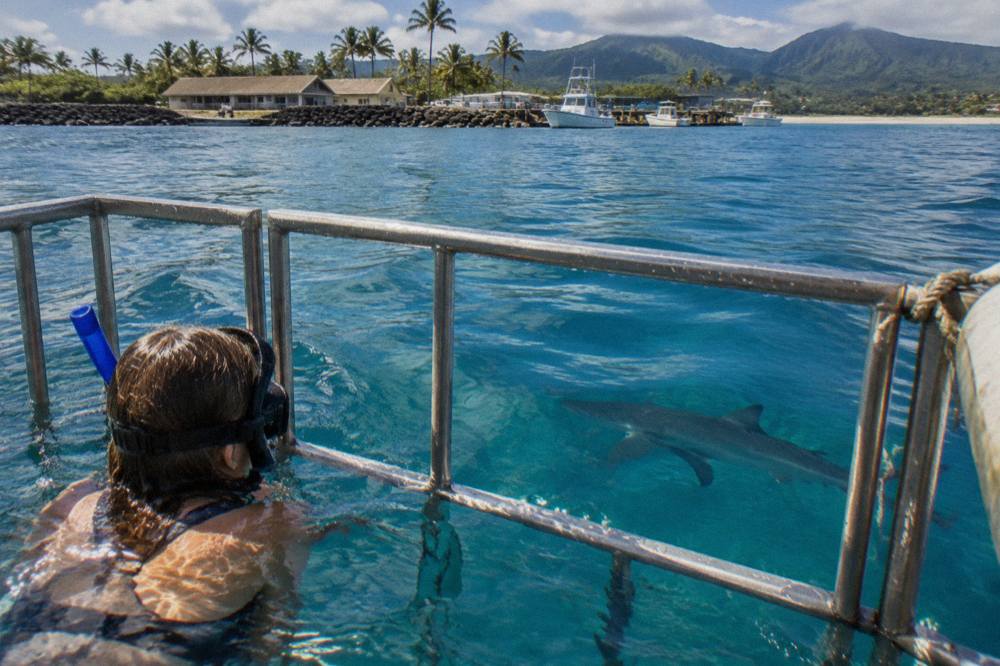
The cage-free side is led by Island View Hawaii, a small-group cageless swim that holds a 5.0 rating across 1,179 reviews, an unusually strong score for a pool that size. One Ocean Diving runs a marine-scientist-guided version rated 4.8 across 515 reviews, and its research-focused trip, rated 4.9 across 587 reviews, guarantees sharks and meets at Haleiwa Boat Harbor. The safety record behind both formats is better than most people assume: DLNR's incident log shows no fatalities for commercial North Shore shark tours, and the bites that have occurred on tour swims are classified by the state as provoked, meaning incidents tied to the activity itself rather than random attacks (see Fatal Attacks and Tours). A sober reader should note that "provoked" still means real injuries happened, on rare occasions, to people in the water with sharks.
For the cage side, the honest weakness is that a cage can feel like a cage. You are stationary, holding bars, watching rather than participating. Some reviews describe the cage time as shorter than expected, since the boat has a schedule and the group rotates. The counterweight is that the sharks come to the cage regardless, and for a nervous swimmer the bars convert terror into thrill. Our cage versus cage-free comparison for Oahu breaks the decision down in detail, including how each format handles kids and weak swimmers.
One Ocean Diving's standard swim, rated 4.8 across 515 reviews, sits between the two poles: it is cage-free but scientist-led, with a strong educational emphasis that some travelers love and others find slows the water time.
What The Trip Costs In Time And Travel
Budget a full half-day door to door: about 45 to 75 minutes each way between Waikiki and Haleiwa Boat Harbor, plus check-in, the boat run out and back, and water time, so a morning trip leaves you the afternoon and a late trip leaves you less than you might think. The drive is the part first-time visitors underestimate. Google Maps shows a fastest route of about 44 minutes over roughly 34.6 miles, but the practical range is wider: a Hawaii Guide summary lists about 45 minutes with no traffic and closer to an hour and ten typically, and the two-lane Kamehameha Highway sections through Wahiawa slow badly at rush hour. Big-surf days and summer weekends add more.
| Trip component | Typical time | Notes |
|---|---|---|
| Drive Waikiki to Haleiwa harbor | 45–75 min | Fastest route ~44 min via H-1 and H-2; longer at rush hour or on big-surf days |
| Check-in and safety briefing | 20–30 min | Arrive early; boats leave on schedule |
| Boat run to the offshore site | 15–20 min | Roughly 3 miles out into federal waters |
| In or beside the water | 20–40 min | Varies by operator and format |
| Return and change | 30–45 min | Includes rinse-off and wrap-up |
The good news is that the harbor end of the trip is pleasant and cheap. Haleiwa Boat Harbor has free parking, public restrooms, and a boat ramp, and the town around it is worth the stop on its own: shave ice, plate lunch, the historic Rainbow Bridge, and Haleiwa Beach Park a short walk away. If you are weighing whether the whole day is worth it, the North Shore is not a commute you endure for the sharks; it is a destination where the sharks happen to be the main event. Our Waikiki to Haleiwa guide covers the transport options in full.
Seasonality affects the time cost as much as the money. Summer, roughly May through September, brings calmer seas, lighter winds, and clearer water, which is why operators describe it as the most reliable window. Winter swells from November through April can make the run bumpier and push cancellation rates up, and a cancelled trip costs you the whole day you blocked out. September is sometimes called the sweet spot: calm conditions, strong shark activity, and thinner crowds than midsummer. Water temperature barely matters, ranging from about 75–76°F in the coolest months to around 80–81°F in September, swimmable year-round. More of these guides are collected on Shark Cage Diving Honolulu.
Who Should Skip It
Skip it if you are booking for someone else's bucket list, if you get seasick and will not medicate, or if you expect great whites, close-up photography, or a long in-water session, because those expectations are where the bad reviews come from. The one-star accounts follow a pattern. Someone booked under pressure from a partner. Someone spent the boat ride feeding the fish over the rail. Someone expected an hour in the water and got twenty minutes. Someone wanted dramatic photos and discovered that shooting sharks from inside a cage, in moving water, with a phone, produces blue smudges.
Each of those failures is avoidable, and avoiding them is part of the value case. Seasickness is manageable with medication taken before boarding, a point our seasickness guide for shark boat tours covers in detail. Photography expectations are set by our GoPro and photo tips guide, which is blunt about what works from a cage. In-water time is stated on each operator's listing, and the honest move is to read it before you pay rather than after. And great whites are simply not on the menu: the resident cast is Galapagos and sandbar sharks, typically five to fifteen feet, with occasional tiger sharks in the warmer months. If that cast does not excite you, no operator on this island can sell you a different one.
There is also an age-and-ability filter. Cage programs generally take children, and our age requirements guide lists the per-operator minimums, while cage-free programs usually require confident swimming and often set higher age floors. Booking a nine-year-old into a cageless swim because the cage time slots were full is how a memorable day becomes a rescue. Match the person to the format, not the other way round.
The Honest Verdict
Shark diving on Oahu is worth it for a specific traveler: someone who wants to see wild sharks in genuinely open ocean, can spend a few hundred dollars and a half-day without strain, and has chosen the format that fits their swimming ability and nerve, and for that traveler it is routinely described as a trip highlight rather than a line item. It is not worth it as an impulse booking, a box checked for social media, or a compromise purchase for a partner who does not want to go. The activity is too expensive and too intense to work as an obligation.
For travelers who fit that profile, the sensible next step is checking the North Shore shark tour listing to confirm the format details against their own comfort in open water.
The economics hold up better than most visitors expect. Compared with other once-in-a-trip spends on the island, the shark trips sit in the same band as a good luau or a short helicopter flight, and they deliver something neither of those can: an unscripted encounter with wild animals on their own terms, three miles from shore, in water with visibility that reviewers regularly describe as beyond anything they have snorkeled in. The scientific literature backs the reliability of the encounter rather than undermining it; a recent baited-video study around Oahu found sandbar and Galapagos sharks increasing in abundance with depth, exactly where these tours operate. The Frontiers in Marine Science analysis of long-term North Shore ecotourism data also documented strong seasonal tiger shark sightings, peaking in October.
Safety, the other half of any worth-it question, is best answered at the aggregate level. DLNR's incident log shows no fatalities for commercial North Shore shark tours, and the state's legal framework, including the shark feeding ban at HRS §188-40.6, is why the tours operate in federal waters over natural aggregation sites rather than chumming inside state waters. The system is regulated, permitted, and small. That is the product you are buying.
If you go, go deliberately. Pick the cage if you want the animals close and your heart rate manageable, pick a cage-free swim if you are a strong snorkeler chasing the stronger memory, book a summer or September morning for the calmest water, and give the North Shore the rest of the day it deserves. Done that way, the question stops being whether it was worth it somewhere over the deep blue, and becomes when you are coming back.
Common Questions About Shark Diving In Oahu
Is Shark Diving in Oahu Worth It?
For most travelers who want to see wild sharks in open ocean, yes. The Haleiwa tours deliver reliable sightings of Galapagos and sandbar sharks about three miles offshore in clear blue water, at a price comparable to other premium half-day activities on the island. It is worth it when you choose the right format for your swimming ability and nerve, and not worth it as an impulse booking or a box to check.
How much does shark diving in Oahu cost?
Exact prices are on each operator's live listing and vary by season and format, but expect a low-to-mid hundreds per-person range for a half-day trip. The flagship cage dive by North Shore Shark Adventures runs about 1.5 hours; add convenience for a modest premium.
Is cage-free shark swimming safe?
DLNR's incident log shows no fatalities for commercial North Shore shark tours, and documented bites on tour swims are classified as provoked incidents rather than unprovoked attacks. Cage-free programs are guide-led and rely on reading animal behavior. The cage adds a physical barrier and suits nervous or less confident swimmers.
What sharks will I see on an Oahu shark dive?
Galapagos sharks and sandbar sharks, typically five to fifteen feet long, are the consistent residents, often in groups of seven or more. Tiger sharks appear occasionally, mostly in late summer and fall. Great whites are not part of the experience; they are rare winter visitors to Hawaiian waters and are not seen on these tours.
When is the best time of year to go?
May through September offers the calmest seas, lightest winds, and clearest water, with September often cited as a sweet spot for combining good conditions with thinner crowds. Winter swells from November through April can make trips bumpier and raise cancellation rates, though sightings still happen year-round.
How long does the whole trip take?
Budget a half day door to door. The drive from Waikiki to Haleiwa Boat Harbor runs 45 to 75 minutes each way, and check-in, the boat run out, water time, and the return add two to three hours on top. A morning trip leaves you the afternoon to explore Haleiwa town and the North Shore.